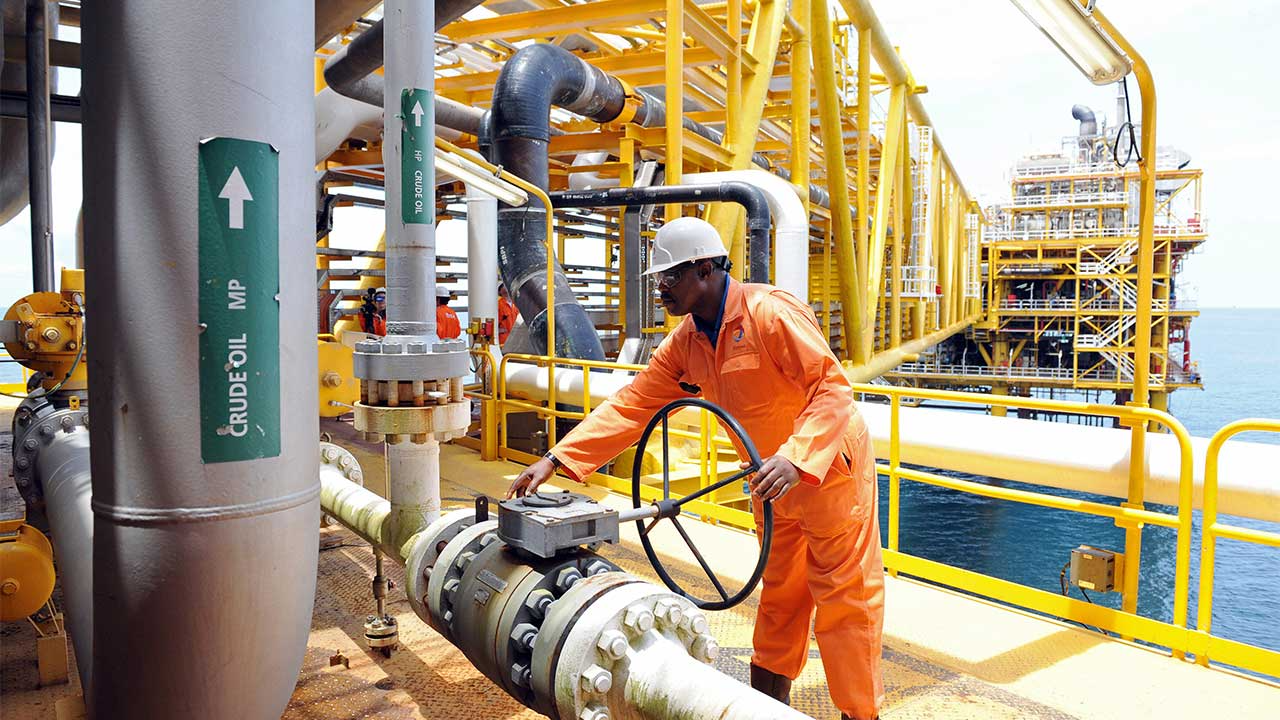
Oil price drop is biting exporters disproportionately with Nigeria and other oil export dependent economies taking the heat.
A steep drop in crude oil prices largely due to the U.S. President Donald Trump’s tariffs is reportedly squeezing budgets of emerging market oil exporters, analysts said, while the potential economic slowdown could also curb any benefits for importers.
Key oil exporting states including Gulf countries, Nigeria, Angola, Venezuela and to some degree Brazil, Colombia and Mexico will feel the pain of losing a chunk of hard-currency revenues, investors said.
Concerns about the impact of a tit-for-tat trade war on global growth and demand for oil sent Brent crude prices plummeting by more than 20 per cent within a week to a four-year low after Trump announced his sweeping tariffs on April 2.
Nigeria is however joining other petrostates and oil producing countries to swing action towards reversing the consistent crash in oil prices which is threatening economies of oil dependent economies.
The April market rout, which crashed oil prices into the low $60s per barrel, is creating additional fiscal challenges to petrostates and oil-producing countries heavily dependent on oil revenues, on top of any tariff-related hardships.
As Brent Crude prices sank to $63 per barrel, major producers in the Gulf region, as well as Nigeria and Brazil, are looking to contain the fallout from the price plunge. Russia’s central bank has already signaled that the oil price decline could hit its economy hard.
Nigeria’s 2025 budget, which was approved at N54.35 trillion, relies heavily on oil revenue, with projections indicating that oil will contribute 56 per cent of government income.
The budget targets a crude oil production of 2.06 million barrels per day, including condensate, and pegs the oil price at $75 per barrel for the year. However, concerns have been raised about the budget’s feasibility due to challenges like pipeline vandalism and declining investments, which could impact the projected production levels.
Additionally, the global crude oil price has recently fallen below the $75 benchmark, further raising concerns about the budget’s implementation.
The 2025 budget is a substantial N54.35 trillion, with oil revenues projected to be a significant portion of government income. The budget aims for a production level of 2.06 million barrels per day of crude oil and condensate.
The budget is based on a benchmark oil price of $75 per barrel.
Significant challenges, including pipeline vandalism, oil theft, and declining investment, threaten the feasibility of reaching the 2.06 million barrels per day production target.
Also, a decline in the global oil price to below the $75 benchmark raises concerns about the budget’s revenue projections and overall implementation.
In summary, Nigeria’s 2025 budget is heavily reliant on oil revenues, but challenges to oil production and a decline in global oil prices raise concerns about the budget’s feasibility and potential impact on various government programs and projects.
Turkey, India, Pakistan, Morocco and much of emerging Europe relying on oil imports are set to see some benefits from lower prices of crude. “Losers will be hit relatively harder than the upside seen in importing countries,” said Thomas Haugaard, portfolio manager for emerging market debt at Janus Henderson Investors. Oil exports often contribute considerably to public finances which will spill over into credit risk premiums.”
Current oil prices are well below the average budget assumptions of $69 across main oil exporters’ year-ahead projections, as calculated by Morgan Stanley, flagging Angola and Bahrain as the countries most sensitive. Angola is already feeling the pinch.
It had to pay $200 million last week after JPMorgan issued a margin call on the southern African nation’s $1 billion total return swap, the finance ministry said. The total return swap is a loan issued by the lender last December, backed by Angola’s dollar bonds.
“The current context has affected the commodities market and emerging market Eurobonds, including the trading level of Angolan Eurobonds, and has triggered a margin call. Angola fulfilled its obligation on time and in cash,” the ministry told Reuters on Monday.
Angola opted for the collateralised loan to manage liabilities at a time when its Eurobond market access faced uncertainties due to high external debts to a range of foreign creditors including China and other commercial lenders.
Like other so-called frontier issuers, average yields on Angola’s dollar bonds have surged to double digits in the selloff of risky assets following the U.S. tariffs.
The International Monetary Fund classifies Angola’s debt as being at risk of high debt distress, but the Angolan government said the country’s debt trajectory remains solid and on a stable path.
We’ve got the edge. Get real-time reports, breaking scoops, and exclusive angles delivered straight to your phone. Don’t settle for stale news. Join LEADERSHIP NEWS on WhatsApp for 24/7 updates →
Join Our WhatsApp Channel