
The Association of Nigerian Female Students (ANFS) has endorsed President Bola Ahmed Tinubu and Vice President Kashim Shettima for a second term in 2027, urging the federal government to strengthen policies on girls’ education, student welfare and women’s economic empowerment.
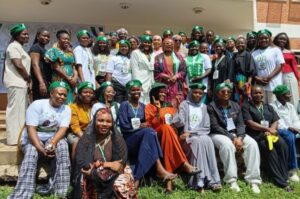
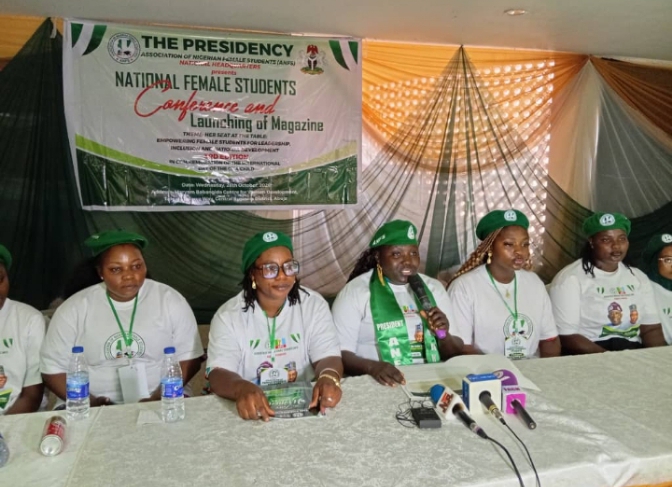
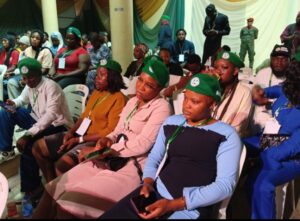
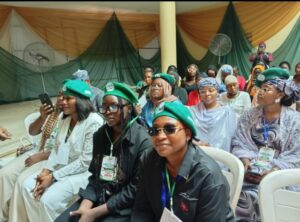
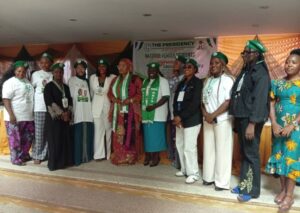
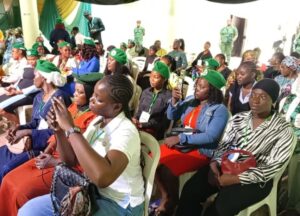
The association announced its position at the National Female Students Conference held at the Women Development Centre in Abuja, where stakeholders discussed educational access, leadership development, student welfare and economic opportunities for female students.
Speaking at the conference, the National President of ANFS, Comrade Peter Attracta Precious, said the endorsement was informed by government policies and programmes that the association believes could expand educational opportunities and improve the welfare of female students.
She said the association’s support was based on its preference for continuity in policies affecting education and women’s development, while calling for improved implementation and accountability.
“Our support is therefore forward-looking. We want to see existing opportunities strengthened, implementation gaps addressed and more attention given to female students who remain vulnerable to educational and economic exclusion,” she said.
The association identified the Nigerian Education Loan Fund (NELFUND) as a major intervention capable of helping students overcome financial barriers to higher education.
It noted that the student loan application portal opened in May 2024, while disbursements began in February 2025. According to the association, NELFUND’s published impact dashboard had reported approximately 440,000 female beneficiaries.
ANFS said the scheme could enable eligible students from financially disadvantaged backgrounds to pursue university education and other approved tertiary programmes.
“When a young woman has the intellectual capacity to become a doctor, accountant, lawyer, engineer or technology professional, her family’s financial circumstances should not automatically determine whether she can pursue that dream,” the association stated.
It, however, called for improved accessibility, timely disbursement, transparency and monitoring to ensure that eligible female students understand the application process and the scheme’s terms and conditions.
The association also acknowledged interventions by the First Lady, Oluremi Tinubu, through the Renewed Hope Initiative, particularly programmes addressing menstrual hygiene and girls’ school attendance.
It cited the Flow with Confidence initiative, launched in October 2025, which provided a one-year supply of sanitary pads to approximately 370,000 schoolgirls in rural communities.
It also referenced a federal government announcement in October 2026 on the distribution of two million packs of sanitary towels and learning materials to girls in public basic education schools.
According to ANFS, menstrual poverty remains a barrier to girls’ education, affecting attendance, confidence and participation in classroom activities.
“A girl should not have to miss classes because she cannot afford a basic menstrual hygiene product,” the association said, urging the government to ensure transparent distribution, effective monitoring and sustained access to essential hygiene products.
ANFS further highlighted alternative education programmes designed to support girls whose schooling had been interrupted by poverty, early pregnancy, early marriage and social stigma.
It cited the Empower Girls Osun initiative and the renovation of the Alternative High School for Girls in Agboju, Lagos State, as interventions aimed at widening access to education.
The association also recognised the Adolescent Girls Initiative for Learning and Empowerment (AGILE), a World Bank-supported programme implemented in partnership with the Nigerian government to improve girls’ access to secondary education, digital literacy and life skills.
Although the programme predates the current administration, ANFS said its continued implementation remained important to efforts to improve girls’ educational outcomes.

It similarly highlighted the Nigeria for Women Programme, including an expansion announced in February 2026, as relevant to women’s economic participation and the preparation of female students for entrepreneurship and financial independence.
The association urged the government to strengthen programmes on digital literacy, science, technology, engineering and mathematics (STEM), vocational training, child protection and economic empowerment.
It also listed improved student financing, quality education, safe learning environments, protection against gender-based violence, menstrual health and greater participation of female students in policymaking among its priorities.
ANFS called for stronger collaboration among the Ministries of Education and Women Affairs, educational institutions, development partners and student organisations, stressing that female students should have a voice in decisions affecting their welfare and educational advancement.
“Equality must not remain a slogan. It must be reflected in access to education, protection from harmful practices, opportunities for leadership and the ability of girls to pursue their ambitions,” the national president added.
The association maintained that its endorsement of the Tinubu-Shettima ticket would not diminish its responsibility to advocate for female students, insisting that policy continuity must be accompanied by measurable progress and efforts to close implementation gaps.
Earlier, the Minister of Women Affairs and Social Development, Imaan Sulaiman-Ibrahim, reaffirmed the Federal Government’s commitment to creating equal opportunities for female students across the country.
She said President Tinubu had prioritised child development, child protection and student welfare, identifying the student loan scheme as one of the initiatives helping students from different backgrounds, including orphans, access higher education.
The minister urged female students to pursue economic empowerment, pointing to opportunities in agriculture, mobile businesses, the gas sector and online businesses.
She also said the government was strengthening the care economy to ensure that unpaid care work performed by women was recognised and valued.
Sulaiman-Ibrahim disclosed that memoranda on menstrual hygiene, the care economy and violence against children were being presented to the Federal Executive Council.
The conference also featured the election of new national executives, with Comrade Okwuchukwu Joy emerging as the association’s new president.
ANFS said the conference provided a platform to address challenges confronting female students, including campus safety, gender-based violence, school retention and access to economic opportunities.
It also highlighted the launch of its magazine as a means of amplifying female students’ voices, showcasing their achievements and providing information on academics, mentorship, entrepreneurship and advocacy.
The association called on government agencies and other stakeholders to sustain collaboration with female students’ organisations to ensure that no girl was left behind in Nigeria’s education system.
It said investment in girls’ education and women’s empowerment remained essential to national development, reaffirming its guiding principle: “One Voice. One Movement. One Future.”
We’ve got the edge. Get real-time reports, breaking scoops, and exclusive angles delivered straight to your phone. Don’t settle for stale news. Join LEADERSHIP NEWS on WhatsApp for 24/7 updates →
Join Our WhatsApp Channel