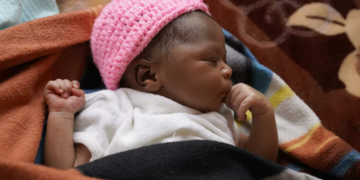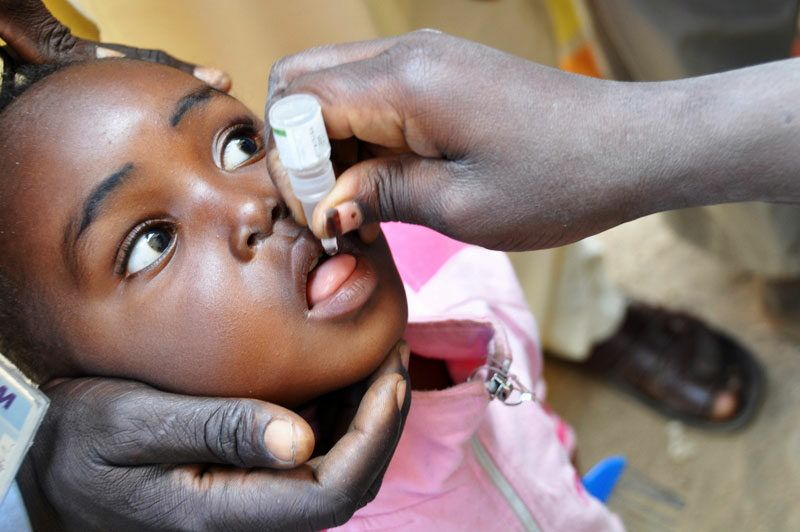
Commemoration of World Immunisation Day underpins the importance and critical role immunisation plays in protecting lives, preventing diseases and building a healthier global community.
Every year, the global community raises awareness about the importance of vaccines, which experts describe as Lifesavers, highlighting their critical role in ensuring children’s survival and healthy development.
Children who miss routine vaccinations are at much higher risk of dying from common childhood illnesses like pneumonia, diphtheria, meningitis and polio.
As a newspaper, we recognise that immunisation is a cornerstone for public health, saving millions of lives annually. For many Nigerian children, a routine vaccine can mean the difference between life and death, as vaccines provide the necessary foundation for children to thrive and attain full development.
We also acknowledge that Nigeria’s immunisation status has shown significant progress over the years, with the rate of children receiving at least one vaccine increasing; however, full immunisation coverage remains a challenge.
For example, the rate of children receiving at least one diphtheria, tetanus, and pertussis-containing vaccine (DTP1) rose from 42 per cent in 2000 to 70 per cent in 2023.
The current Immunisation schedule in Nigeria highlights thus; at birth- BCG, OPV 0, HBV 6 weeks- OPV 1, PCV 1, Rotavirus 1, Pentavalent 1 10 weeks- OPV 2, PCV 2, Rotavirus 2, Pentavalent 2 14 weeks- OPV 3, PCV 3, IPV, Pentavalent 3 6 months- Vitamin A 9 months- Measles, Yellow fever, Meningitis vaccine 1 year- Vitamin A at 6 and 9 months.
The schedule aims to protect children from serious diseases, such as polio, measles, and tuberculosis. In 2021, only 36 per cent of children aged 12-23 months were fully vaccinated, and 18 per cent had received no routine immunisations.
We recognise that the country is working towards its 2028 national target of 80 per cent full coverage for all routine antigens, with initiatives in place to address barriers and reach “zero-dose” children.
According to the 2021 Multiple Indicator Cluster Survey (MICS), over 6.2 million Nigerian children have missed all routine vaccines in the past five years.
Sadly, Nigeria has the highest burden of unvaccinated children in the world, with an estimated 2.1 million “zero-dose” children as of 2023; those who have not received a single routine vaccine.
Many of these children are tucked away in remote villages, displaced camps, and conflict-ridden communities, particularly in the North East and North West region of the country.
In places like Borno and Yobe, insecurity, poor infrastructure, and misinformation have combined to create vast immunisation deserts.
According to UNICEF, out of 200 local government areas classified as high-priority nationwide, 10 are in the North East; two in Yobe and eight in Borno.
UNICEF estimates that over 400,000 children in these LGAs have never received a single vaccine. A UNICEF Health Officer, Bashir Elegbede, described the children in these regions as the most vulnerable and the most at risk of dying from vaccine-preventable diseases.
While primary health care centres are crucial for routine immunisation as they provide accessible, affordable, and often free vaccination services for vaccine-preventable diseases, a substantial number of children are underimmunised or receive no vaccines at all whereas primary healthcare was established essentially to bring health closer to the people, in the community, and through their full participation.
Despite ongoing efforts, the challenge remains immense.Lack of political will and commitment, inadequate funding, low community involvement, and restricted scaling up of cost-effective interventions are a few of the difficulties facing routine immunisation.
Recently, the federal government revealed that immunisation in Nigeria suffers an annual cumulative funding gap of $430m.
The director-general, Budget Office, Taminu Yakubu, emphasised the need for legislation that requires the country to attain self-sufficiency in the local production of vaccines and the acquisition of distribution infrastructures.
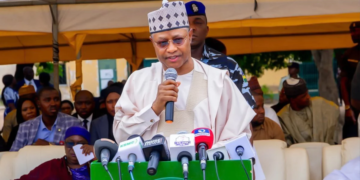
Highlighting the dire situation facing Nigeria’s immunisation efforts, the chairman of the Senate Committee on Primary Health Care, Senator Ibrahim Lamido, noted that despite significant advancements in other areas of health, immunisation has suffered from insufficient financial support, resulting in local facilities, like the Bio Vaccine Company in Lagos, being abandoned.
“Vaccines should be produced locally, but this is no longer the case,” Lamido pointed out, emphasising that revitalising these facilities is essential for ensuring a reliable and consistent supply of vaccines.
The senator stressed that enhancing local production would reduce the country’s dependency on external sources, which can be unpredictable and costly.
He also addressed the issue of funding, calling on the Nigerian government to release counterpart funds for immunization.
We reiterate that revitalising these facilities is essential for ensuring a reliable and consistent supply of vaccines as this will not only enhance local production but also reduce the country’s dependency on external sources, which can be unpredictable and costly.
In our opinion, collective efforts will be needed if Nigeria is to reach its national target of 80 percent coverage of all routine antigens by 2028.
Public health experts have called for urgent investment in routine immunisation, better health education, and stronger vaccine supply chains.
In the words of Lamorde, if we spend more on vaccines and immunisation, we will spend less on curing diseases, and that means more money to spend on other sectors.
We’ve got the edge. Get real-time reports, breaking scoops, and exclusive angles delivered straight to your phone. Don’t settle for stale news. Join LEADERSHIP NEWS on WhatsApp for 24/7 updates →
Join Our WhatsApp Channel