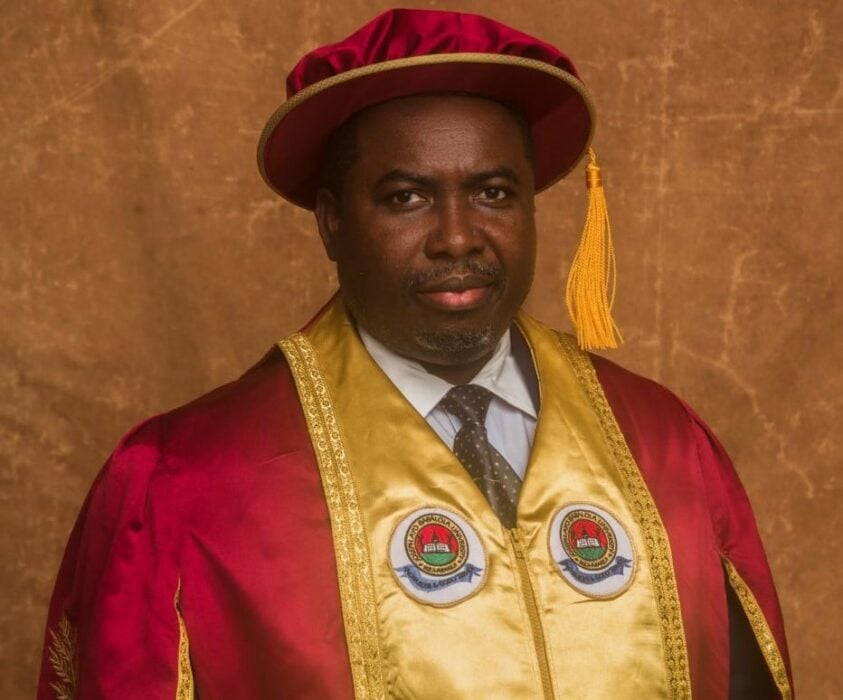
The November 8 Anambra State governorship election will go down as one of the first real test of the new Independent National Electoral Commission (INEC), under the leadership of Professor Joash Ojo Amupitan (SAN). His predecessor,Professor Mahmood Yakubu, who had been at the helm during many of Nigeria’s recent elections is receiving mixed reviews. He was commended for his efforts at introducing technological innovations like Bimodal Voter Accreditation System (BVAS)and the INEC Result Viewing (IReV) result portal, but was criticised for the persistent challenges related to logistics, transparency, and the politicisation of the electoral process. For the new INEC Chair and his team, the poll served as both a baptism of fire and a revealing measure of their capacity to restore confidence in Nigeria’s electoral process after years of declining public trust. What happened in Anambra provides valuable lessons—not only for INEC, but also for the nation’s political class and voters ahead of 2027.
The election was largely peaceful and orderly, compared with past exercises in the state. There were fewer reports of ballot snatching, late arrival of materials, or systemic failure of technology. The BVAS functioned in most polling units, and the results were uploaded to the IReV portal in real time, allowing observers to follow the process with a degree of transparency that has become the Commission’s new hallmark.
In a country where opacity has long been the norm, that alone is progress worth noting. The Centre for Democracy and Development, (CDD) described the elections as a critical test of Nigeria’s democratic resilience, institutional integrity, and political competitiveness.
However, the poll also revealed the stubborn persistence of old vices that continue to undermine electoral integrity. Reports from both domestic and international observers point to widespread vote-buying, intimidation of voters in some flashpoints, and the open circulation of cash around polling centres.
The CDD in a statement said that the election was marred by widespread vote buying, with cash and digital transfers ranging from N2,000 to N10,000 offered to influence voters. These infractions may not have reversed the outcome, but they once again exposed the failure of law enforcement agencies to curb transactional politics and the inability of the electoral system to punish offenders. Technology can sanitise aspects of voting, but it cannot yet transform political culture.
That is where the test for the new INEC chairman truly lies. The Commission’s credibility no longer depends solely on conducting a technically sound election; it depends on whether it can work with other institutions to make electoral laws bite.
Nigerians are weary of post-election assurances that offenders will be prosecuted. The country needs to see visible deterrence. Without accountability, vote-buying will remain the most potent weapon of manipulation, particularly in a struggling economy where poverty has eroded citizens’ independence.
Another troubling feature of the Anambra election was the low voter turnout. Over 2.8 million voters were registered for Saturday’s off-cycle governorship election, up from 2.65 million in 2023. However, only 598,229 of the 2,788,864 registered voters were accredited, representing a 21.4 per cent participation rate, despite a relatively calm atmosphere. This apathy, while not new, is symptomatic of a deeper malaise: citizens no longer believe their votes matter. Restoring that faith requires consistent performance by INEC across successive elections, clear communication with the electorate, and partnerships with civic groups to rebuild voter education. A transparent process alone is not enough; voters must feel that their participation counts.
To the Commission’s credit, it handled logistics better than in several recent by-elections, and it maintained regular communication with stakeholders. But it must go further. The new INEC leadership should treat the Anambra experience as a field laboratory—a chance to identify and fix structural weaknesses in manpower, training, and inter-agency coordination. The lessons must inform the planning for future off-cycle elections in Edo and Ondo States before the next general polls. INEC must also invest more in staff discipline and technology backup to avoid disruptions in difficult terrains.
The political class, too, must share the blame and responsibility. No amount of innovation by INEC can succeed if politicians continue to treat elections as a cash-based transaction rather than a civic exercise. Parties that preach reform while financing vote-buying stand exposed before history.
Civil society and the media must sustain pressure on both INEC and the political actors to internalise democratic ethics. Democracy survives only when its stakeholders hold one another accountable.
For Nigeria, the Anambra election was a symbolic crossroads. It demonstrated that reform is possible, but it also reminded the nation that reform is fragile. The new INEC chairman deserves commendation for a relatively credible process under difficult circumstances. Yet, commendation must be accompanied by expectation. Nigerians expect a commission that not only conducts elections, but also builds integrity into the political system itself.
Ultimately, the Anambra governorship election should be viewed as a mirror reflecting the dual realities of Nigerian democracy: institutional progress coexisting with moral decay. The first can be measured in procedures and technology; the second, in values and behaviour. If the new INEC leadership is to justify the public’s cautious optimism, it must move beyond technical improvements to institutional enforcement. That is how confidence is built—one election at a time, one precedent at a time.
The verdict from Anambra, therefore, is mixed but hopeful. INEC passed the test of process but still struggles with the test of culture. As the Commission reviews the election and publishes its report, it must confront the difficult truth that credibility is earned not only by conducting elections efficiently, but by ensuring that every vote is protected from the corrupting influence of money and fear. Only then can Nigerians begin to believe again that their democracy works—and that those who manage it are worthy of their trust.
We’ve got the edge. Get real-time reports, breaking scoops, and exclusive angles delivered straight to your phone. Don’t settle for stale news. Join LEADERSHIP NEWS on WhatsApp for 24/7 updates →
Join Our WhatsApp Channel