Nigeria’s 36 states and the Federal Capital Territory (FCT) collected N2.37 trillion in Value Added Tax allocations in the first half of 2026, a rise of N451.25 billion, or 23.48 per cent, over the same period last year. Most of that increase has nothing to do with the economy growing and everything to do with arithmetic. Under the tax reforms that took effect on January 1, the Federal Government’s share of distributable VAT fell from 15 per cent to 10, while the states’ share rose from 50 per cent to 55. On the H1 numbers alone, that shift moved about N215.72 billion from Abuja’s side of the ledger to the states’.
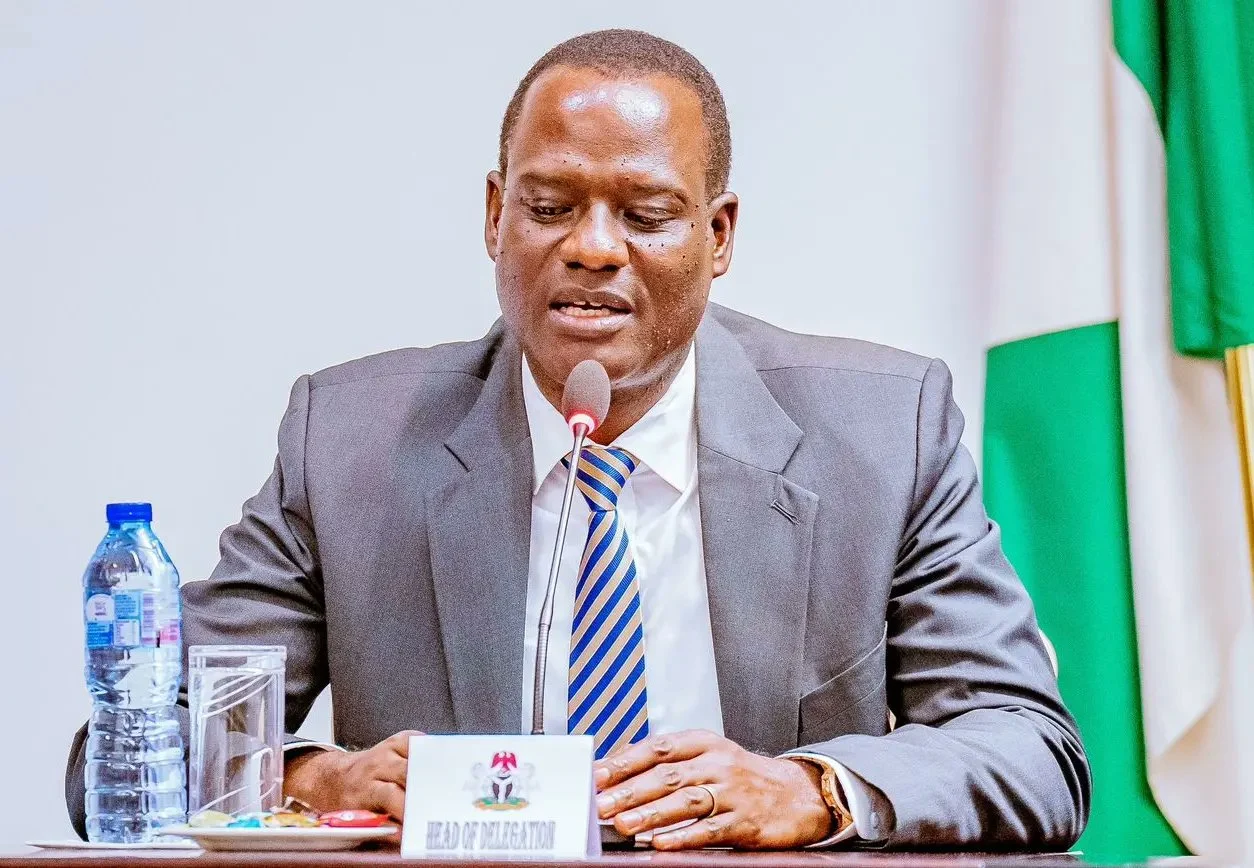
The Minister of Finance, Taiwo Oyedele, has projected that states could collectively earn more than N4 trillion from VAT this year once the reform runs its full course. He also asked, at the launch of the BudgIT State of States report, the only question that actually matters here: “Will this money be spent, or will it be invested?”
We think that question deserves a more honest answer than most state governments are likely to give voluntarily. The figures behind the windfall tell their own story about how unevenly VAT is generated across the federation. Lagos alone accounted for N1.81 trillion of the N3.78 trillion generated nationwide in the first half of the year, just under half the entire pool. Rivers followed a distant second at N560.04 billion, with Oyo, the FCT and Bayelsa rounding out the top five. At the other end, states such as Abia, Enugu, Cross River and Bauchi each generated under N15 billion over six months, a fraction of what Lagos alone collects most months.
VAT, unlike the derivation-based sharing that applies to oil revenue, is distributed nationally through a formula rather than paid back strictly to the state where it was generated, and that is precisely why the argument over how VAT should be shared has produced court battles before, most notably the dispute between Rivers State and the Federal Inland Revenue Service a few years ago.
The scale of the disparity in these new numbers all but guarantees that argument will return, and the federal government would be wise to have an answer ready before a state government takes the matter back to court rather than to a negotiating table.
For now, the reform has delivered a genuine fiscal gain to states, and this newspaper welcomes it in principle. State governments have long complained, with justification, that they carry responsibilities, healthcare, primary education, rural roads, that outstrip the resources Abuja hands down to them. A larger share of VAT revenue is one legitimate answer to that complaint.
But a bigger allocation is not the same as better governance, and Nigeria’s states do not have a strong record of converting windfalls into outcomes. The former Chartered Institute of Bankers chairman, Prof Segun Ajibola, made the obvious but necessary point when he called for each state to set up a desk specifically to account for its increased VAT allocation and publish the results. That should not be a novel suggestion. It should be the minimum expected of any government spending public money, and the fact that it needs saying at all tells Nigerians something about how little transparency currently exists around state budgets once allocations land in state treasuries.
A N4 trillion national pool split across 36 states and the FCT does not remake any single state’s finances on its own. It is a supplement to internally generated revenue, not a substitute for building one, and states that treat this year’s VAT bump as a reason to relax their own revenue collection efforts will have squandered an opportunity rather than seized one.
The other side of this ledger belongs to the Federal Government, and here the warnings carry more weight than the celebration. The Nigeria Economic Summit Group’s chief executive, Dr Tayo Aduloju, has cautioned that leaving the VAT rate unchanged while reducing the number of taxes collected risks weakening the government’s revenue base over time. The International Monetary Fund’s 2025 Consultation Report on Nigeria goes further, estimating that the decision not to raise the VAT rate could cost the Federal Government as much as 0.5 per cent of GDP in forgone revenue, and warning that without alternative financing, other tiers of government may eventually be forced to cut spending or lean harder on their own revenue efforts.
The Fund does at least acknowledge the government’s reasoning, that raising VAT now, in the middle of worsening poverty and food insecurity, would hit ordinary Nigerians at the worst possible time. That is a defensible trade-off for this year. It is not one Nigeria can make indefinitely without eventually finding another way to fund the gap the IMF has flagged.
None of this should distract from the reform’s genuine achievement. Shifting five percentage points of the VAT pool toward states while sparing citizens a rate increase is, on balance, a responsible piece of policy, and the Federal Government deserves credit for choosing it over the easier option of raising the tax outright.
But a policy’s design is only half the story. The other half is what 36 governors and their finance commissioners do with the money once it lands, and on that count, Nigerians have every reason to withhold judgement until the accounting desks Professor Ajibola is asking for actually publish something. Until states can show where this money went, the honest answer to the finance minister’s question is that nobody outside those state treasuries currently knows.
We’ve got the edge. Get real-time reports, breaking scoops, and exclusive angles delivered straight to your phone. Don’t settle for stale news. Join LEADERSHIP NEWS on WhatsApp for 24/7 updates →
Join Our WhatsApp Channel