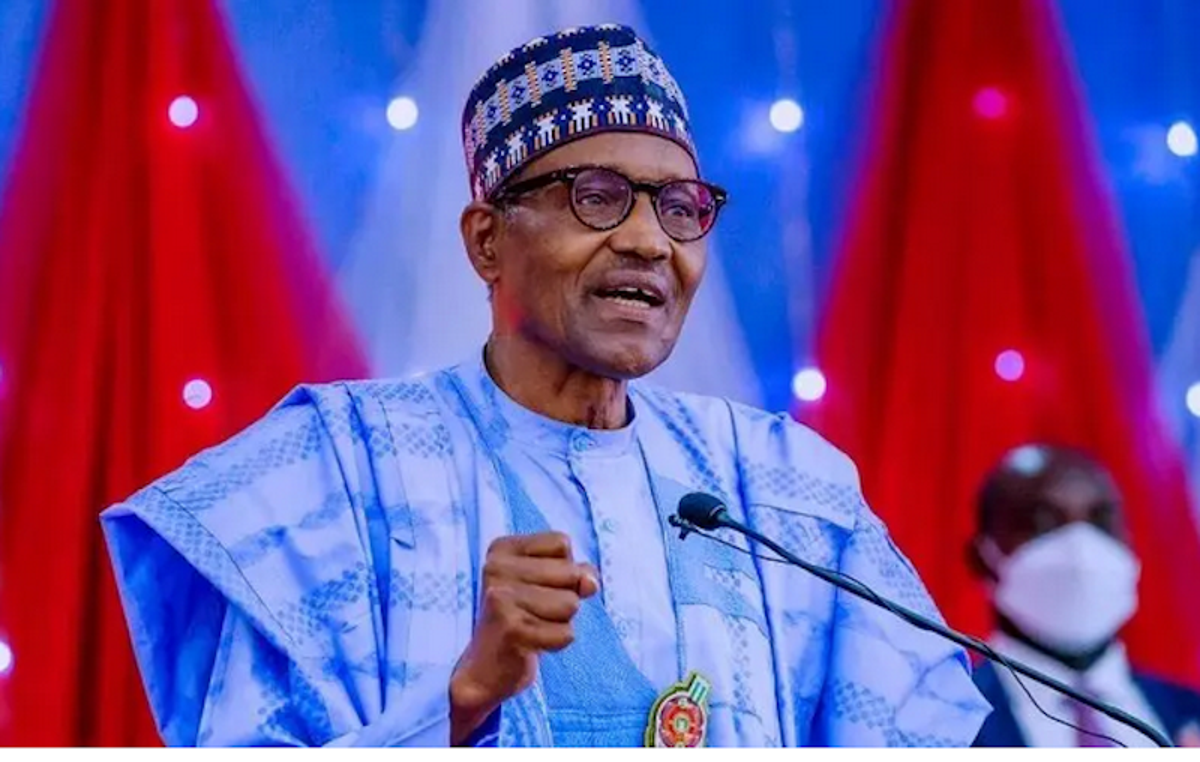
Former President Muhammadu Buhari approved the naira redesign policy as a measure aimed at addressing vote-buying during elections, and not to target any political party, according to a new book on his administration.
The disclosure is contained in a new book, ‘From Soldier to Statesman: The Legacy of Muhammadu Buhari’, written by Dr. Charles Omole, Director-General of the Institute for Police and Security Policy Research (IPSPR), and presented in Abuja on Monday.
According to the book, the naira redesign policy became a major issue during the latter part of Buhari’s administration, with sections of the public and political actors interpreting the policy as being directed against the ruling party ahead of the 2023 general election.
However, the book quoted the then Director-General of the Department of State Services (DSS), Yusuf Bichi, as explaining that the policy was linked to concerns by security agencies over the role of cash in elections.
The book stated that the proposal for the naira redesign was put forward by the then chairman of the Economic and Financial Crimes Commission (EFCC), with the objective of limiting the use of cash for vote-buying.
According to the account, Buhari accepted the rationale behind the proposal and approved the policy.
The book further stated that Buhari was confident that the then presidential candidate of the All Progressives Congress (APC), Asiwaju Bola Tinubu, would win the election, and therefore did not view the policy as a threat to his party.
As controversies and accusations emerged over the intent of the naira redesign, the book said Buhari ordered an internal review of the policy’s origins and implementation.
According to the author, Buhari directed that reports on the matter be submitted directly to him, citing concerns about possible misrepresentation of facts.
The book noted that Buhari maintained that law enforcement agencies should act within their mandates and that the state should not be used to favour or disadvantage any political actor.
The naira redesign policy, the book stated, was conceived as part of efforts to address the influence of money in elections rather than as a partisan political action.
We’ve got the edge. Get real-time reports, breaking scoops, and exclusive angles delivered straight to your phone. Don’t settle for stale news. Join LEADERSHIP NEWS on WhatsApp for 24/7 updates →
Join Our WhatsApp Channel