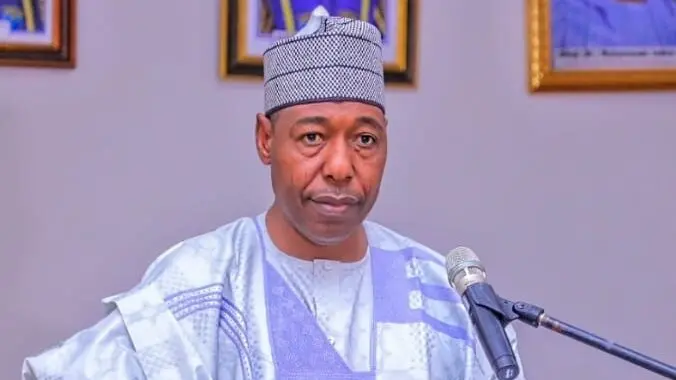
Governor Babagana Zulum’s announcement on December 9, 2025, offering a N500,000 cash grant to each returning refugee from Cameroon’s Minawao camp, emerges as a bold step in addressing Borno State’s enduring displacement crisis. During his visit to the camp, Zulum assured refugees of bolstered security in resettled areas like Gwoza, emphasising federal collaboration for a dignified voluntary repatriation process.
This package includes an additional N100,000 for women-headed households, along with irrigation kits and improved water sources to revive agricultural livelihoods ravaged by over a decade of Boko Haram insurgency. Minawao camp, hosts over 80,000 refugees as of March 2025—predominantly Nigerians fleeing violence since 2014 and serves as the focal point, with an estimated 12,000 eligible for this incentive.
This move underscores a humanitarian imperative, yet it lays bare the protracted suffering of Nigeria’s displaced populations, where insecurity, inadequate support, and systemic failures have turned exile into a generational ordeal. As Borno grapples with the legacy of conflict, this initiative demands scrutiny, revealing a pattern of piecemeal efforts amid federal neglect and the urgent need for comprehensive accountability.
The crisis in Nigeria’s Northeast paints a devastating picture of human endurance. Boko Haram’s onslaught, beginning in 2009 and intensifying by 2014, has uprooted millions, forcing families into camps across borders. In Cameroon alone, Minawao has swelled to accommodate waves of refugees, with recent figures indicating around 76,000 residents by November 2025, many enduring substandard conditions like overcrowding, limited access to education, and chronic food insecurity. Similar strains persist in Chad and Niger, where thousands more Nigerian refugees languish, though Zulum’s current pledge targets primarily those in Minawao.
Available report indicate that within Nigeria, over 2.2 million people remain internally displaced in the Northeast as of mid-2024 with Borno bearing the brunt—hosting the majority in makeshift settlements plagued by violence, disease, and malnutrition. Returnees often face re-traumatisation: homes destroyed, farmlands mined, and communities fractured.
Zulum’s grant aims to mitigate these by providing startup capital for shelter and farming, building on prior repatriations such as the 5,199 refugees who returned from Cameroon in 2021 and 2023 under UNHCR’s tripartite framework.
This reflects a pragmatic shift, prioritising economic reintegration to reduce dependency on aid and foster self-reliance in a region rich in agricultural potential.
The positives of Zulum’s plan warrant commendation, yet they must be weighed against entrenched challenges. By offering direct cash transfers, the initiative tackles immediate barriers to return, enabling families to rebuild without bureaucratic delays. The focus on agriculture—through kits and water infrastructure—aligns with Borno’s pre-conflict economy, potentially restoring food security for communities decimated by insurgency. This builds on Zulum’s track record of resettling IDPs within Nigeria, where thousands have been relocated to safer zones with housing and vocational support. Critically, it eases the burden on host nations like Cameroon, where Minawao’s saturation has strained resources, leading to calls for decongesting the camp. In a broader sense, it embodies Nigeria’s resilient ethos, transforming displacement into a catalyst for unity and reconstruction. However, the establishment’s portrayal of this as a comprehensive solution crumbles under scrutiny. Security assurances ring hollow amid Boko Haram’s resurgence, with ongoing attacks displacing thousands and exposing returnees to reprisals.
Amnesty International’s 2023 reports highlight persistent human rights violations in the Northeast, including arbitrary detentions, sexual violence, and inadequate protection for returnees, underscoring that voluntary repatriation risks becoming coerced without verifiable safety.
A deeper critique exposes systemic vulnerabilities. Past returns have often led to re-displacement; for instance, many repatriated in the early 2020s faced renewed threats, as documented in humanitarian assessments. The grant’s scale—potentially aiding 12,000 from Minawao alone—raises concerns over transparency and corruption, a perennial issue in Nigerian aid distribution where diversions by officials have starved vulnerable populations. While Zulum’s administration has implemented monitoring mechanisms, federal oversight remains lax, allowing inefficiencies to persist.
Moreover, the plan overlooks the profound psychological toll: a 2024 study in Nature Mental Health reveals that over 70 per cent of displaced individuals have endured trauma, manifesting in depression, anxiety, and Post Traumatic Stress Disorder (PTSD), yet psychosocial services are woefully underfunded. Women and children, comprising a significant portion of refugees, face heightened risks, including gender-based violence and child malnutrition, as evidenced in UNHCR snapshots. The establishment narrative—of resource constraints justifying slow progress—masks a deeper indifference, where political priorities eclipse human rights. Federal agencies like the National Commission for Refugees, Migrants and Internally Displaced Persons (NCFRMI) and the military have touted successes, but ground realities tell of abandoned camps and unfulfilled promises.
In this light, this newspaper demands a radical overhaul to ensure the initiative’s sustainability. The federal government must scale up support, extending similar incentives to refugees in Chad and Niger while bolstering military operations to secure border areas. Transparent audits, involving independent bodies like the UNHCR and civil society, are essential to prevent graft in grant disbursement. Zulum’s plan should integrate comprehensive psychosocial programs, partnering with NGOs to provide counseling and community healing initiatives.
Legislators must enact reforms to the NCFRMI framework, mandating real-time monitoring and penalties for mismanagement. State and local authorities, often sidelined, should collaborate with traditional leaders to identify needs and facilitate reintegration, ensuring aid reaches the most vulnerable without favoritism. The judiciary could play a role by expediting cases related to land disputes for returnees, preventing further conflict.
Borno’s refugee return initiative, while inspiring, is a clarion call for broader accountability. Nigeria’s displaced, numbering millions, deserve more than incentives—they require a secure, dignified path home. As insecurity lingers and trauma festers, the time for decisive action is now. Let governors, federal entities, and international partners prove their commitment by placing human lives above politics, turning exile’s despair into lasting stability and national cohesion.
We’ve got the edge. Get real-time reports, breaking scoops, and exclusive angles delivered straight to your phone. Don’t settle for stale news. Join LEADERSHIP NEWS on WhatsApp for 24/7 updates →
Join Our WhatsApp Channel