Recently, the federal government disclosed that at least 15.2 million housing units across Nigeria are structurally defective. These are homes that are not habitable because they do not meet acceptable standards of safety, access to basic services, infrastructure, and durability.
When houses fall short of acceptable standards, including those related to safety, they are anything but shelter. Sadly, that is what the mind-boggling data released by the federal government symbolizes.
If this inconvenient truth tells us anything, it is that though the nation has an estimated housing deficit of 17 million, it faces a greater challenge beyond the loud cry for more houses.
The fact is that Nigeria faces a dual housing challenge, characterized by both quality and quantity issues, which are closely linked to the high cost of building materials amid very weak or compromised regulations.
Most Nigerians, especially the working class, who reside in the urban slums scattered across almost all the major cities in the 36 states and the Federal Capital Territory (FCT) have one sad tale or another to share regarding access to accommodation.
It is incontrovertible that a significant portion of most lower-level workers’ income is spent on accommodation, as homeowners increasingly raise the cost of rentals.
The cost of building materials has made it extremely difficult for many, including key stakeholders in the real estate sector, to undertake the construction of mass and affordable housing units that could help meet the needs of many low and middle-income earners.
At the core of Nigeria’s housing challenge are the twin issues of quantity and quality, and solving them requires the cooperation of all key stakeholders, as the government alone cannot achieve this.
The government must step up action by putting in place measures that guarantee safety, provide basic services, and infrastructure. Other stakeholders must support the government. Until there is cooperation between the two, bridging the housing deficit and ensuring the quality of houses will remain an illusion.
Fundamentally, in our opinion, the cooperation must focus on a holistic approach to revamping issues related to access to land, housing finance, and infrastructure.
Countries that are serious about addressing their citizens’ housing needs are very deliberate in their actions. They have realized that, as a fact, no government can address the housing challenge alone just as they insist that the government must drive the process.
The Nigerian government can and should consider this approach. For example, what is preventing both the national and subnational authorities from initiating a large-scale construction programme for public housing for millions of low-income citizens who migrate to cities?
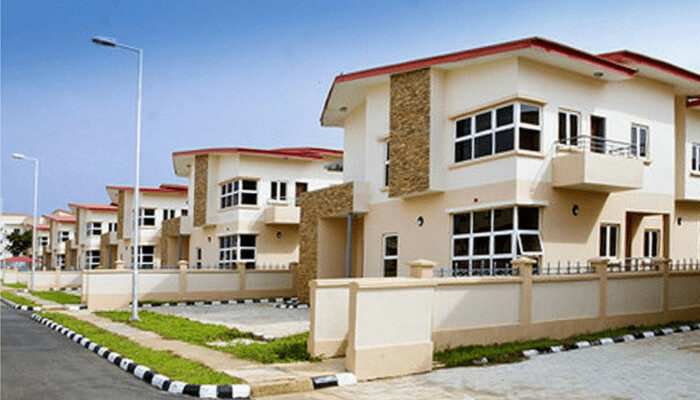
In Nigeria, the approaches of successive governments in addressing the housing challenges have been at best lip service, with some of the completed mass houses still left unoccupied because they are too expensive for the target section of the population.
For instance, in Lafia, the capital of Nasarawa State, two housing estates completed and inaugurated by the federal government in the last four years, in Ungwar Rere and Kwandere, have remained unused.
The projects were launched under the National Housing Programme (NHP) in collaboration with the Federal Mortgage Bank of Nigeria (FMBN), the Nigeria Labour Congress, the Trade Union Congress, and the Nigeria Employers’ Consultative Association’s National Affordable Housing Project, as part of measures to address the country’s housing deficit.
With these houses, constructed by the immediate past administration of the Late President Muhammadu Buhari, remaining unoccupied, the federal government’s much-discussed mass housing scheme, which it claimed to have started building 10,000 units across 14 states and the Federal Capital Territory, appears hollow.
Notably, housing plays a crucial role in promoting economic growth, social stability, urban resilience, and human dignity. This much cannot be overstated. Housing development is closely tied to urban development and economic growth. Shelter ranks above other basic needs, coming after food and clothing.
Regrettably, in our view, inflation, characterized by persistent rises in the costs of building materials, construction expenses, and home prices, has further deteriorated the Nigerian housing sector, rendering houses unaffordable for many.
The country’s current housing policy has failed. It is plagued by weak regulation, leading to incidents of building collapse. The revelation that the nation has 15 million structurally defective houses means that unless concerted efforts are made to address this issue, the country should prepare for more building collapses. That will be a double jeopardy for a nation that barely has enough to go round.
The Ministry of Housing and Urban Development must drive the process and provide the nation with an explanation on the measures being taken to address this bleak picture. That is the real issue, not just quoting data.
We’ve got the edge. Get real-time reports, breaking scoops, and exclusive angles delivered straight to your phone. Don’t settle for stale news. Join LEADERSHIP NEWS on WhatsApp for 24/7 updates →
Join Our WhatsApp Channel