Recently , the Office of the Secretary to the Government of the Federation (OSGF), directed the suspension of all actions relating to the proposed ban on sachet alcohol and 200 million litre pet bottle products, pending the conclusion of consultations and the issuance of a final directive.
The office said it was carefully examining all relevant factors, including legislative resolutions, economic implications, public health concerns, and the broader national interest, to ensure a balanced, lawful, and well-coordinated outcome.
This directive is coming on the backdrop of the resolution on sachet alcohol ban reached by the Nigerian Senate, Ministry of Health and Social Welfare, and the National Agency for Food and Drug Administration and Control (NAFDAC).
NAFDAC blamed the proliferation of high-alcohol-content beverages in sachets and small containers to products’ easy accessibility, affordability, and concealable, leading to widespread misuse and addiction among minors and commercial drivers.
This public health menace has been linked to increased incidences of domestic violence, road accidents, school dropouts, and social vices across communities.
This newspaper recalls that in December 2018, NAFDAC, the Federal Ministry of Health, and the Federal Competition and Consumer Protection Commission (FCCPC) signed a five-year Memorandum of Understanding (MoU) with the Association of Food, Beverage and Tobacco Employers (AFBTE) and the Distillers and Blenders Association of Nigeria (DIBAN) to phase out sachet and small-volume alcohol packaging by January 31, 2024.
The moratorium was later extended to December 2025 to allow industry operators to exhaust old stock and reconfigure production lines.
Earlier, while affirming Senate’s resolution, NAFDAC’s director general, Prof. Mojisola Christianah Adeyeye, said the Senate resolution aligns with the spirit and letter of that agreement and with Nigeria’s commitment to the World Health Organistion’s (WHO)Global Strategy to Reduce the Harmful Use of Alcohol (WHA63.13, 2010), to which Nigeria is a signatory.
According to her, the ban is not punitive but protective, aimed at safeguarding the health and future of Nigerian children and youth.
“The decision is rooted in scientific evidence and public health considerations. We cannot continue to sacrifice the well-being of Nigerians for short-term economic gains. The health of a nation is its true wealth,” she said.
NAFDAC reiterates that only two categories of alcoholic beverages are affected by this regulation—spirit drinks packaged in sachets and small-volume PET/glass bottles below 200ml.
As is to be expected, the proposed ban has thrown up conversations in the public space mainly on the backdrop of economic considerations.
A 2024 Nigeria Demographic and Health Survey (NDHS) indicate that alcohol consumption in Nigeria shows significant volume growth, with over 19 billion liters expected in 2025, driven by factors like rising income and changing lifestyles, though data suggests high rates among youth (around 62 per cent of 18-29 year olds) and varying regional patterns, with Northern zones showing high heavy consumption in specific demographics despite cultural factors, and the market value projected to reach billions for beer alone, with beer consumption growing steadily.
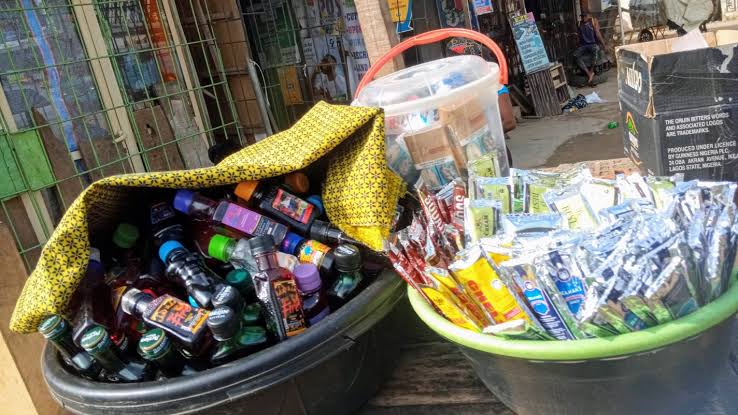
Sachet alcoholic beverages are inexpensive, single-serving portions of liquor (like gin, rum, or schnapps) sold in small, sealed plastic pouches, popular across Nigeria for their affordability and portability.
Research indicate that availability and affordability of sachet liquor has significantly increased adolescents’ access to alcohol in Nigeria.
Many of the social deviants and high incidence of crime in the country are alcohol induced, including addiction, impaired development, and violence, especially among youth.
Alcohol use by adolescents is a major health concern and the primary contributor to the leading causes of adolescent death.
Harmful use of alcohol is linked with non-communicable diseases like cancer, liver diseases; infectious diseases like tuberculosis; injuries and accidents.
We recognise that these sachets, often 30ml, 35ml, or 50ml, provide easy access to high-strength alcohol consumption by adolescents.
Also, in the class of psychoactive substances like tobacco, Indian hemp, morphine, cocaine, heroin, alcohol, caffeine, barbiturates, amphetamines, alcohol is the most commonly used by adolescents.,
According to the National Library of Medicine, alcohol is the most widely used psychoactive substance and it has been an integral part of many cultures for thousands of years, even till this present time.
It notes that it’s the only psychotropic substance accepted and even encouraged by society, and so it is readily available and certainly not helped by improvements in marketing and sales of alcohol industry over the years.
Nonethless, while we acknowledge the adverse effects on health, the proposed ban will have far-reaching implications on the economy, given it’s fragility presently.
The ban on sachet alcoholic drinks is expected to have significant negative impacts on local businesses, including substantial job losses, closure of indigenous companies, and an increase in the illicit alcohol market.
Warning against the decision, the Manufacturers Association of Nigeria (MAN) said the production and sale of sachet alcoholic beverages could lead to the loss of over N1.9 trillion investments by indigenous companies and 500,000 direct, and five million indirect jobs.
It said a ban would also literally yield the market to the influx of foreign brands, which are mostly smuggled and spart from possible unwholesomeness, this will be at the expense of excluded domestic producers and loss of revenue for the government.
In our opinion, there should be a nexus between the regulators and the manufacturers
While we acknowledge that alcohol -related health risks remain, we also point out that with the ban in place, consumers may turn to illegal means of obtaining alcohol, potentially leading to a rise in crime and public disorder.
In addition to that is regulatory challenges as evidenced by poor outcomes in the country, it is also a potential for corruption
as law enforcement agencies might be bribed to overlook illegal sales, undermining the intent of the ban in the first place
While we emphasise the need for supportive measures, such as education and rehabilitation, to address the issues associated with alcohol consumption, there should be balanced approaches to alcohol regulation that consider both public health and economic realities.
We call for consideration of broader impacts of such bans and the importance of comprehensive alcohol regulation that addresses the root causes of abuse rather than just focusing on accessibility.
We’ve got the edge. Get real-time reports, breaking scoops, and exclusive angles delivered straight to your phone. Don’t settle for stale news. Join LEADERSHIP NEWS on WhatsApp for 24/7 updates →
Join Our WhatsApp Channel