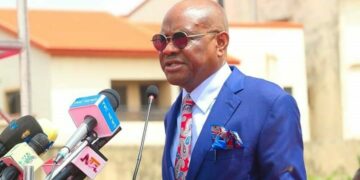
Former Secretary to the State Government (SSG) in Katsina, Dr Mustapha Inuwa, has launched a scathing attack on state governments’ control of local government funds, describing the practice as unconstitutional, illegal and a direct assault on grassroots development.
Speaking during an interview with journalists, Inuwa, who is also a chieftain of the African Democratic Congress (ADC), said the Nigerian Constitution gives no room for states to withhold or centrally manage funds meant for local councils, stressing that “no Supreme Court ruling is needed” to understand what is already clear in law.
He recalled that under the administration of the late President Umaru Musa Yar’Adua, Katsina local governments received 100 per cent of their allocations, allowing councils to independently execute projects based on local needs.
“Not a single kobo was withheld,” Inuwa said, noting that several current top state officials, including the governor, chiefs of staff and commissioners were themselves former local government chairmen who benefited from full financial autonomy.
According to him, the state government’s role at the time was limited to monitoring and auditing, not project imposition or fund control, explaining that the Joint Account Committee was created for coordination and transparency, not as a tool to seize local government resources.
Inuwa clarified that lawful deductions from council funds only occurred when backed by state assembly laws and mutual agreement, citing contributions for primary school teachers’ salaries, Emirate Councils and ecological funds. He said such deductions were transparently calculated, openly discussed and promptly remitted, with balances paid to local governments the same day.
Describing the current system as an impeachable offence, the ADC chieftain blamed state interference for what he called the “forced uniformity” of projects across councils.
He faulted directives compelling local governments to fund projects such as mosque rehabilitation or cemetery procurement, regardless of local priorities.
“Each local government has its peculiar problems – roads, water, sanitation – not one-size-fits-all projects dictated from the state,” he said.
Inuwa also accused the state assembly of abandoning its oversight role, alleging that lawmakers who should hold the executive accountable are instead being awarded contracts.
“How do you supervise a contract you are executing yourself?” he asked.
Appealing directly to the governor, Inuwa reminded him of his achievements as a former local government chairman, including the construction of a multi-storey primary school, urging him to respect the same autonomy he once enjoyed.
He warned that continued centralisation of local government funds has paralysed grassroots economies, stifled small businesses and left communities stagnant. He also raised concerns over alleged inflated procurement costs, particularly in the purchase of official vehicles for council chairmen.
Inuwa called on the Katsina State government to restore full financial independence to local governments, insisting that true development, accountability and local empowerment can only thrive when councils control their own resources.
However, reacting to the claims, the director-general to Governor Dikko Umaru Radda on media, Maiwada Damallam, dismissed the allegations as politically motivated and based on a misunderstanding of constitutional provisions.
According to the governor’s media aide, the issue of local government financial autonomy is often “misrepresented for political convenience,” stressing that the Constitution allows joint planning and execution of development projects by state and local governments.
He cited Section 7, Subsection 3 of the 1999 Constitution, which empowers state governments to establish mechanisms for collaboration with local councils in planning and development.
“In line with this constitutional provision, Katsina State has established the State Joint Planning Board for State and Local Governments, which guides cooperation between the two tiers according to the law establishing it,” he stated.
He insisted that Katsina State is not withholding local government funds, arguing that such claims reflect either a sincere or deliberate ignorance of the constitutional framework governing state, local government relations.
“By no stretch of imagination should Katsina State be seen as withholding local governments’ funds,” he said, adding that the legal validity of Section 7(3) explains why no court case has been filed to challenge its applicability.
We’ve got the edge. Get real-time reports, breaking scoops, and exclusive angles delivered straight to your phone. Don’t settle for stale news. Join LEADERSHIP NEWS on WhatsApp for 24/7 updates →
Join Our WhatsApp Channel