In November 2025, the White House, official residence of the President of the Inited States of America (USA), unveiled President Donald Trump’s second-term National Security Strategy (NSS), a 33-page blueprint heralding a return to “America First” amid claims of unprecedented global achievements.
Trump’s introductory letter boasts of reversing “weakness, extremism, and deadly failures” in mere nine months, citing border fortifications, military reforms, alliance revitalisation, and the resolution of eight international conflicts. While the document charts a course for U.S. dominance through economic nationalism and selective engagement, scrutiny reveals a blend of tangible steps, inflated victories and potential pitfalls, particularly for Africa, where the NSS signals a pivot from aid to investment.
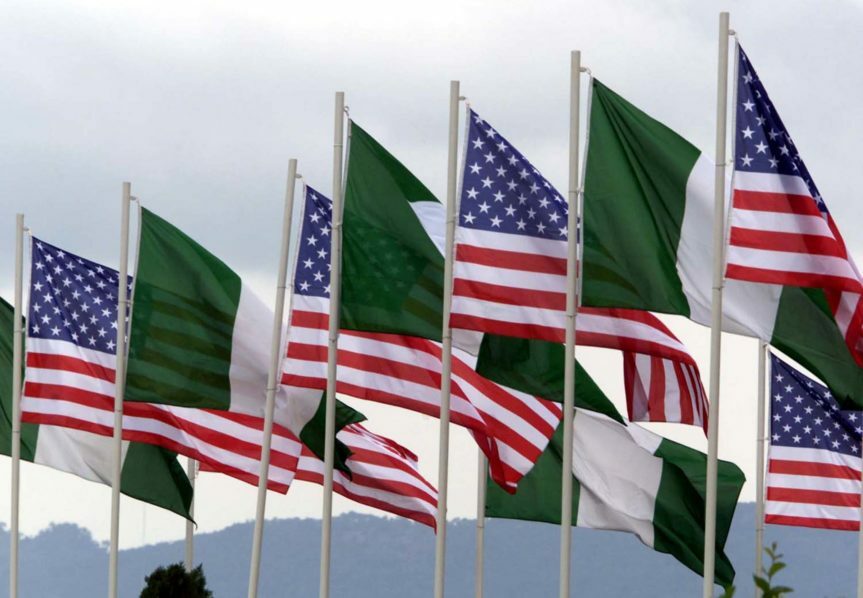
For Nigeria, positioned at the Sahel’s volatile crossroads, this shift demands urgent introspection, as outlined in recent policy analyses. The strategy’s transactional lens could marginalise Nigeria unless it asserts her strategic value, exposing systemic vulnerabilities while opening doors for autonomous diplomacy.
The NSS’s core narrative positions Trump as a peacemaker and revitaliser. Domestically, it touts military deployment to the border, purging “radical gender ideology” from the armed forces, a $1 trillion military investment, and designating drug cartels as Foreign Terrorist Organisations.
Internationally, it highlights NATO’s pledge to elevate defence spending to five per cent of Gross Domestic Product (GDP), energy independence via deregulation, tariffs on critical industries, and Operation Midnight Hammer’s strike on Iran’s nuclear sites. Fact-checking affirms several moves: Executive orders in January 2025 labelled Mexican cartels as terrorists, enabling enhanced operations. Border troops surged to over 7,000 by April, aiding deportations. Transgender military bans were reinstated early in the term. The June Hague Summit secured NATO’s five percent of commitment by 2035. June’s Operation Midnight Hammer delayed Iran’s nuclear programme significantly. Yet the $1 trillion defence proposal, reliant on budgetary manoeuvres, faces congressional scrutiny.
Trump’s boldest claim, resolving eight conflicts, warrants caution. Listed are Cambodia-Thailand, Kosovo-Serbia, Democratic Republic of Congo (DRC)-Rwanda, Pakistan-India, Israel-Iran, Egypt-Ethiopia, Armenia-Azerbaijan, and Gaza. U.S. mediation yielded results in some: Gaza’s October 2025 ceasefire, with hostages freed under Trump’s 20-point plan. Israel-Iran’s June truce followed U.S. strikes, averting regime change. Armenia-Azerbaijan’s August White House accord included the “Trump Route.” DRC-Rwanda’s December pacts persist despite skirmishes. Pakistan-India’s halt to airstrikes holds.
However, Cambodia-Thailand’s July ceasefire unravelled by December, Egypt-Ethiopia’s Nile dispute, more negotiation than war, stalls despite Trump’s July involvement. Kosovo-Serbia involved no active fighting; claims of prevention remain opaque. This selective framing underscores how the NSS amplifies fragile deals as triumphs, potentially eroding credibility.
Regionally, the strategy extends a “Trump Corollary” to the Monroe Doctrine for hemispheric dominance, counters China in Asia via the Quad, urges Europe’s “civilisational self-confidence” against migration and regulation, and reframes the Middle East from conflict to economic ties via expanded Abraham Accords. Africa’s treatment, confined to the document’s closing pages, epitomises the shift: decrying past focus on “liberal ideology,” it advocates transitioning from aid to investment in natural resources, energy, and minerals. Engagement prioritises “select countries” for conflict mediation (e.g., DRC-Rwanda, Sudan) and warns of Islamist resurgence without long-term U.S. commitments. Favouring “capable, reliable states,” it eyes nuclear energy, LNG, and critical minerals for U.S. profits, amending acts like AGOA for mutual trade.
This Africa pivot, while pragmatic, lays bare risks for Nigeria, as dissected in a number of policy analysis on U.S. strategic posture. No longer a “development challenge,” Nigeria is cast as a potential regional anchor, but only if it proves “performance, not promise.” With France retreating, UN missions waning, and U.S. eschewing permanent presence, Nigeria faces a “self-help” Sahel, marked by coups, jihadist hybridisation, bandit-terror nexus, and ecological stressors amplifying threats.
The analyses warns of security burdens without backing: Nigeria could stabilise the region’s intelligence or tech transfers, risking marginalisation from fragmented architecture and civil-military rifts. Extractive investments threaten enclave economies absent local value mandates.
Yet opportunities abound. Nigeria can reposition as a “security-plus” partner, linking counterterrorism to energy diplomacy, with gas and LNG as regional goods. Reduced ideological pressure grants autonomy for multi-aligned ties, free from sanctions. A Sahel-focused analysis echoes this, framing the zone as Nigeria’s “structural extension,” not periphery. Threats like trans-Sahel arms flows and farmer-herder conflicts demand integrated responses; failure invites spillover to economic cores. Nigeria’s vulnerabilities, disjointed commands, trust deficits, porous borders, must transform into assets via doctrine consolidation.
Resolution demands action. Nigerian policymakers must heed recommendations: Publish a unified Sahel strategy blending military, borders, corridors, and resilience. Shift diplomacy to “value-proposition,” emphasising Nigeria’s irreplaceable enablers. Revive ECOWAS as convenor, not mere troop donor. Forge negotiation units for investments mandating processing and jobs. Bolster internal legitimacy through civilian protection and reforms, essential for “preferred partner” status.
Federal entities like the Foreign Affairs Ministry and the office of the National Security Adviser should expedite audits of U.S. engagements, ensuring transparency.
Trump’s NSS, ambitious yet overstated, tests Nigeria’s adaptability in a “harder, more honest” world. As Sahel instability narrows the window, Nigeria must proactively shape outcomes, proving competence over size. Let the presidency, legislators, and agencies prioritise coherence, turning U.S. selectivity from threat to catalyst for sovereignty and stability.
We’ve got the edge. Get real-time reports, breaking scoops, and exclusive angles delivered straight to your phone. Don’t settle for stale news. Join LEADERSHIP NEWS on WhatsApp for 24/7 updates →
Join Our WhatsApp Channel