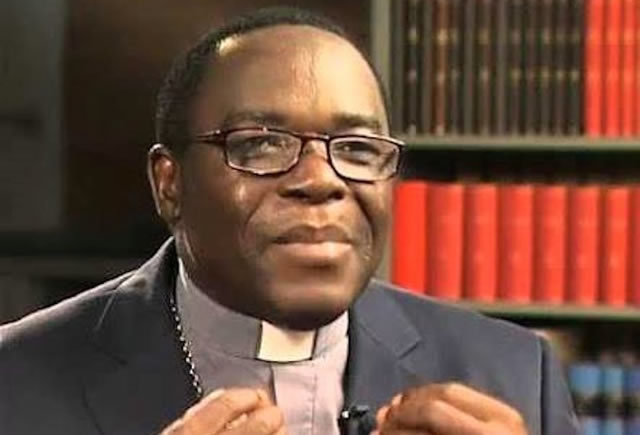
In the often turbulent landscape of Nigerian public discourse, one figure has remained a constant, trenchant, and morally anchored voice: Bishop Matthew Hassan Kukah.
More than just the Catholic Bishop of the Sokoto Diocese, Kukah has carved a unique space as a priest-professor whose pulpit extends far beyond the church altar, directly into the heart of the nation’s most pressing issues.
His involvement in national affairs is profound and multifaceted. Bishop Kukah is not a distant critic but has often been at the negotiating table. He served as a secretary to the landmark National Political Reform Conference and was a pivotal member of the Ogoni-Shell Reconciliation Commission, demonstrating a commitment to practical peacebuilding.
However, it is his fearless, prophetic homilies and writings that have made him most salient. In a nation deeply fractured by ethnicity, religion and governance failures, Kukah speaks with rare bluntness.
He directly critiques government failures, from insecurity and corruption to poor economic management, sparing no administration, whether military or democratic, and holding all to account against the principles of justice and the common good.
What makes him particularly notable is his unique position as a Christian leader in Nigeria’s predominantly Muslim North. Residing in Sokoto, the seat of the Caliphate, his very presence is a symbol of interfaith possibility.
While his critical statements sometimes draw heated reactions, they are grounded in a universalist critique of power, rather than faith. His annual Christmas messages have become national events, anticipated for their incisive, literary and often searing analysis of the state of the nation.
What truly sets Bishop Kukah apart is his unique fusion of roles: he is a priest, a social critic, a scholar with a PhD from the University of London, and an intellectual. He deploys theology, political science and deep cultural insight to diagnose Nigeria’s ailments.
His courage is not of the politician but of the moral witness, speaking truth to power from a platform built on faith and intellectual rigour, not political ambition.
This formidable character was forged in early life. Born in 1952 in what is now Kebbi State, Kukah grew up in a mixed Christian-Muslim community, an experience that undoubtedly shaped his later commitment to dialogue.
After early education in Kaduna, he entered the seminary, studying theology and later pursuing sociology. His academic journey and early exposure to Nigeria’s complex social fabric laid the groundwork for the bishop who would forever see the link between faith, justice and the imperative to speak out. From those humble beginnings emerged one of Nigeria’s most consistent and compelling moral compasses.
We’ve got the edge. Get real-time reports, breaking scoops, and exclusive angles delivered straight to your phone. Don’t settle for stale news. Join LEADERSHIP NEWS on WhatsApp for 24/7 updates →
Join Our WhatsApp Channel