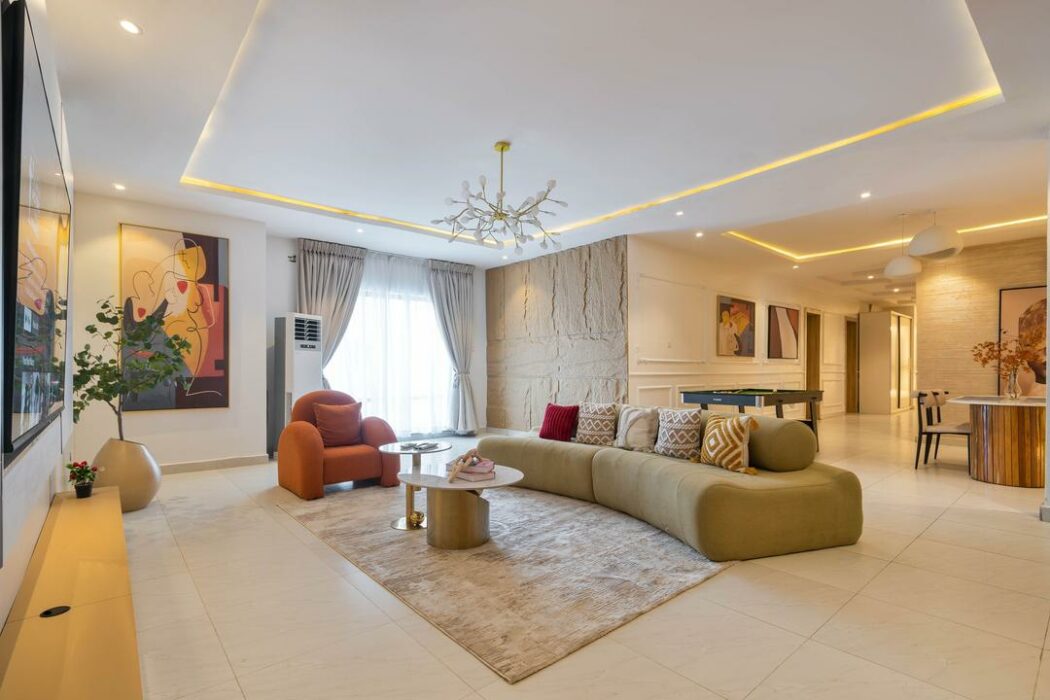
The Lagos real estate market is entering one of its most intense cycles in years, with short-let accommodations emerging as the hottest segment ahead of the annual “Detty December” rush.
From serviced apartments and Airbnb listings to fully furnished short-let homes, demand is being driven by a convergence of tourists, diaspora Nigerians, multinational executives, and opportunistic investors positioning themselves for peak-season returns.
Findings by LEADERSHIP indicate that demand for rental homes, particularly serviced apartments, has climbed to levels unseen in the past decade. Industry data corroborate this trend, showing that over 70 per cent of Lagos residents, in a city estimated to have 24 million people, live in rented accommodation. That underlying rental pressure is now being amplified by seasonal inflows of visitors and investors targeting short-stay properties in prime neighbourhoods.
Across highbrow and emerging corridors such as Ikoyi, Victoria Island, Lekki Phase I, Banana Island, Ajah, Ibeju-Lekki, and even waterfront zones like Snake Island, developers and landlords are reporting near-full bookings for December, with enquiries already spilling into the first quarter of the new year. Real estate analysts say the signal is clear: Lagos’ short-let market is no longer a fringe opportunity but a core investment play.
The surge is being fuelled in part by a renewed wave of diaspora capital. Nigerians returning home for the holidays are not only seeking temporary accommodation but also scouting for long-term property investments, especially in areas benefitting from infrastructure expansion.
According to Dr Saheed Mosadoluwa, property expert and Chief Executive Officer of Harmony Gardens and Estate Development Ltd, the Lekki–Epe corridor remains the epicentre of this transformation.
“With Detty December just around the corner, the race to secure a slice of Ibeju-Lekki’s future is heating up,” Mosadoluwa said.
“Property values along the Lekki–Epe axis will continue to climb because the fundamentals are strong and irreversible.”
He pointed to landmark projects such as the Dangote Refinery, the Lekki Free Trade Zone, tax-credit road infrastructure, and the proposed Lekki–Epe International Airport as the catalysts reshaping demand dynamics. “These are not speculative drivers. They are real, capital-intensive investments that permanently change land value,” he added.
Beyond festive travel, Lagos’s stature as West Africa’s commercial nerve centre is reinforcing demand for quality short-stay housing. Multinational firms expanding operations, international consultants, and project-based expatriates increasingly prefer serviced apartments to hotels, citing privacy, flexibility, and cost efficiency.
“This is no longer just about December parties,” said Mr Tunde Balogun, a Lagos-based real estate analyst with over 15 years’ experience in the market. “Short-lets have become institutionalised. Corporations are budgeting for them, and investors are building portfolios around them.”
Balogun noted that while Ikoyi and Victoria Island remain premium destinations, spillover demand is rapidly lifting Lekki and its environs. “Once the core is saturated or overpriced, investors look 20 to 30 minutes away, and that’s where the smart money is going.”
The current macroeconomic environment has also altered buyer behaviour. With tighter credit conditions and higher interest rates, many investors are favouring off-plan developments and flexible payment structures.
Mosadoluwa acknowledged this shift, explaining that developers able to offer structured financing are gaining a competitive edge. Harmony Gardens, he said, has leaned into this reality through innovative products such as its Harmony Renewed Hope Mortgage System and the Ibile Traditional Mortgage System, both designed to provide longer tenors and single-digit interest rates.
“People still want to invest, but they want predictability,” he said. “Flexible plans are what keep the market moving.”
Beyond numbers, developers are under pressure to demonstrate credibility in a sector long plagued by fraud, title disputes, and poorly planned estates. Mosadoluwa said part of the company’s strategy is to combine advocacy with delivery, complementing regulatory efforts by the Lagos State Real Estate Regulatory Authority (LASRERA) to sanitise the sector.
“Our focus is not just selling land,” he said. “We are building communities that blend urban living with neighbourhood charm.”
He cited the firm’s ongoing developments, collectively branded as “The Seven Citadels of Joy” in Ogba-Idunnuds, as examples of estates designed to bridge Lagos’ housing gap through verified titles, infrastructure, and affordable payment structures.
As Detty December approaches, short-let rates are already climbing in hot zones such as Ikoyi, Victoria Island, and Lekki Phase I. Property managers report that fully furnished two-bedroom apartments that went for ₦120,000 per night earlier in the year are now being quoted significantly higher for peak dates.
For investors, proximity is key. Estates within a 20- to 30-minute drive of these hubs are becoming increasingly attractive, offering a balance between acquisition costs and rental yields.
“Smart investors are looking beyond hype,” said Mrs Funke Adeyemi, a short-let operator managing over 30 units across Lekki and Ikoyi. “They ask about drainage, flood history, power supply, security, and even energy efficiency. The market has matured.”
Mosadoluwa echoed this point, noting that buyers are becoming more discerning. Harmony Gardens’ extensive portfolio of verified, titled land, he said, has positioned it to meet these expectations, with a growing emphasis on sustainable designs that protect long-term asset value.
While Detty December remains the immediate catalyst, analysts argue that the broader trend extends well beyond the festive season. Lagos’ population growth, infrastructure rollout, and diaspora engagement suggest sustained momentum for both rental and ownership markets.
“The December rush is a spotlight, not the whole story,” Balogun said. “What we are seeing is the consolidation of Lagos as a serious short-let and residential investment destination.”
For investors, the message is blunt: the window for early entry into prime and emerging corridors is narrowing. For tenants and visitors, competition for quality accommodation is only getting fiercer.
As Mosadoluwa put it, “Lagos remains West Africa’s most lucrative property hub, but the smart money is already moving to where tomorrow’s value will be created.”
We’ve got the edge. Get real-time reports, breaking scoops, and exclusive angles delivered straight to your phone. Don’t settle for stale news. Join LEADERSHIP NEWS on WhatsApp for 24/7 updates →
Join Our WhatsApp Channel