The tragic irony of Nigeria’s Unity schools is becoming impossible to ignore. These Federal Government Colleges—institutions originally designed to bring together children from across ethnic and religious divides—are collapsing not primarily because we lack resources, but because we cannot execute the most basic responsibilities of governance.
The Nigeria Governors’ Forum recently disclosed that states left ₦800 billion of their 2024 education budget unspent. Read that again. Eight hundred billion naira sat idle while schoolchildren studied under leaking roofs, slept in hostels without mattresses, and learned from demotivated teachers who hadn’t received promotions in years. This wasn’t money we didn’t have. This was money we had but couldn’t figure out how to spend on the children whose futures depend on it.
States collectively increased their education budgets by 53 per cent this year, jumping from ₦2.4 trillion to ₦3.6 trillion. That sounds impressive in a budget speech. But the utilisation rate tells the real story: only 67 per cent of 2024’s education budget was actually spent. The rest got trapped in what officials politely call “unexecuted capital projects”—a bureaucratic euphemism for failure.
This implementation gap explains why Unity schools, which once commanded national respect, have become institutions that parents actively avoid when they can afford alternatives.
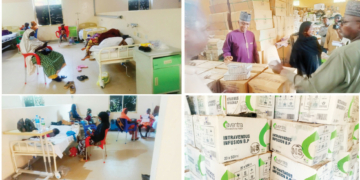
Federal Government College Sokoto, Queens College Lagos, Government College Ibadan—these names used to guarantee academic excellence and competitive university placement. What do they represent now? Overcrowded classrooms, laboratories without equipment, hostels that violate basic dignity, and teaching staff who are either poorly paid ad-hoc workers or permanent employees waiting for promotions that never materialise.
In the opinion of this newspaper, the decline didn’t happen overnight. Unity schools became what they are today through sustained neglect, disguised as budget constraints. But the NGF’s admission reveals the lie at the heart of this neglect: we’re not constrained by available funds. We’re constrained by our inability to convert budget lines into actual classrooms, functional science labs, decent accommodation, and adequately compensated teachers.
Nigeria’s education spending accounts for 3 per cent of GDP, which is well below the global benchmark of 4 to 6 per cent. The federal and state education allocations remain below UNESCO’s recommended 15 to 20 per cent of total budgets. But here’s what makes the situation more frustrating: even these inadequate allocations aren’t being fully deployed. We’re failing to meet the low standards with money that has already been approved.
Sadly, instead of treating education as the national emergency it clearly is, we watch Unity schools deteriorate into institutions that middle-class parents flee when they can scrape together private school fees.
The schools now struggle with problems that would have been unthinkable three decades ago: inadequate water supply, non-functional toilets, hostels so overcrowded that students sleep on floors, and rising incidents of bullying and other vices that thrive in environments where basic order has broken down.
Insecurity has compounded these institutional failures. Many parents now hesitate to send their children to distant boarding schools, no matter how prestigious those schools once were.
The situation with the teaching staff deserves particular attention. Unity schools are hiring unmotivated, poorly paid ad-hoc staff because they cannot attract or retain qualified teachers under current conditions.
Yet there are glimmers of possibility buried in the governors’ forum data. Projections for 2026 indicate that six states—Lagos, Kano, Enugu, Kaduna, Katsina, and Abia—plan to allocate a combined ₦1.8 trillion to education. Some of these states are promising to devote between 20 and 32 per cent of their budgets to the sector. If two-thirds of states actually meet the 15 per cent global benchmark in 2026 as projected, that would represent meaningful progress.
But the question remains: what’s the point of increased allocations if we can’t execute the projects they’re meant to fund? What good does a 69 per cent increase in capital allocations do when the previous year’s capital projects remain unexecuted? This is where accountability must begin. State houses of assembly need to stop treating budget implementation as an administrative detail and start demanding answers about why approved education projects remain incomplete year after year.
The Ministry of Education, both at the federal and state levels, must be held to measurable performance standards.
In our view, every governor who presides over significant education budget underspending while schools in their state lack basic facilities should be asked to explain why. The explanations given—bureaucratic processes, procurement delays, contractor failures—are not acts of God. They are symptoms of administrative systems that nobody has bothered to fix because the consequences fall on children who don’t vote and parents who lack political leverage.
Nigeria’s Unity schools can be revived, but not through speeches at education forums or promises of increased allocations. They’ll be revived when we start treating budget execution as seriously as budget announcements, when education commissioners face consequences for leaving billions unspent. At the same time, schools are crumbling, and when we acknowledge that the demographic time bomb we’re sitting on makes education reform a national security issue, not just a talking point.
The schools that once symbolised Nigeria’s commitment to unity and excellence are now monuments to governmental failure. Fixing them requires more than money—though proper funding helps. It requires officials who understand that unspent education budgets represent stolen futures, and that the children studying in these collapsing institutions deserve better than our excuses.
We’ve got the edge. Get real-time reports, breaking scoops, and exclusive angles delivered straight to your phone. Don’t settle for stale news. Join LEADERSHIP NEWS on WhatsApp for 24/7 updates →
Join Our WhatsApp Channel