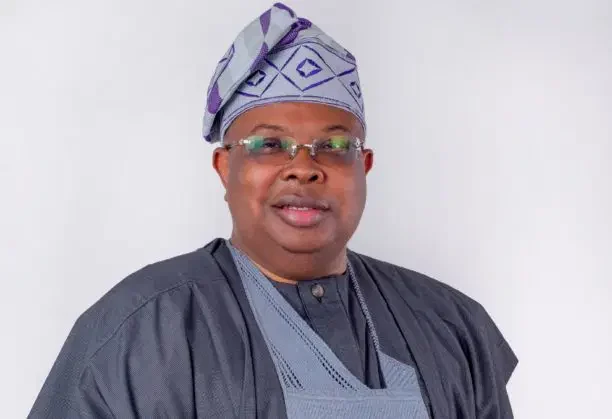
Chairman of the National Tax Policy Implementation Committee, Joseph Tegbe, has said Nigeria’s long running struggle with weak revenue mobilisation and fiscal instability may be set for a turnaround as a new tax regime which took effect from January 1, 2026, seeks to overhaul the country’s fractured fiscal architecture.
According to him, the sweeping reforms contained in the Nigerian Tax Acts 2025 are designed to stabilise the economy, modernise fiscal administration and reconnect economic activity more effectively to the state.
Tegbe noting that Nigeria’s fiscal problems are rooted less in resource scarcity than in structural weakness, said for decades the country operated a system overly dependent on volatile oil revenues, weakened by poor administration and fragmented across multiple layers of government.
This, he said, has left the country in a paradoxical position of being resource rich but institutionally constrained. “The goal is to create a more predictable fiscal environment that supports production, protects critical sectors and promotes economic sustainability,” Tegbe said.
Tegbe, who is also director general and global liaison of the Nigeria China Strategic Partnership, stressed that the policy thrust goes beyond revenue generation. “We are not just focused on raising revenue, but on creating a stable and modern economy that benefits all Nigerians,” he said.
He furthered that a key pillar of the new tax framework is the protection of low income earners and small businesses, adding that the tax free threshold has been raised to N800,000, while small enterprises will enjoy simplified compliance regimes and targeted reliefs.
He said the measures are expected to preserve livelihoods, encourage more businesses to operate within the formal economy and allow enterprises to grow organically. The reforms also extend to critical sectors such as healthcare, education and agriculture through the expansion of zero rated items under the value added tax framework. Tegbe said this would ease cost pressures on operators in these sectors and improve access to essential inputs.
Nigeria’s approach, he added, mirrors experiences in countries such as South Korea, Singapore and Rwanda, where tax reforms formed the foundation for long term economic development and stronger fiscal systems.
While acknowledging concerns raised by some stakeholders about possible effects on low income earners and small businesses, Tegbe maintained that the reforms are progressive and carefully calibrated.
“The tax reforms are not a blunt instrument for raising funds. They are designed to promote economic sustainability, improve fiscal architecture and support long-term development,” he said.
He added that successful implementation would depend on transparent engagement with stakeholders, careful execution and continuous evaluation, noting that if properly managed, the tax overhaul could fundamentally reshape Nigeria’s fiscal landscape and support sustainable economic growth.
We’ve got the edge. Get real-time reports, breaking scoops, and exclusive angles delivered straight to your phone. Don’t settle for stale news. Join LEADERSHIP NEWS on WhatsApp for 24/7 updates →
Join Our WhatsApp Channel