
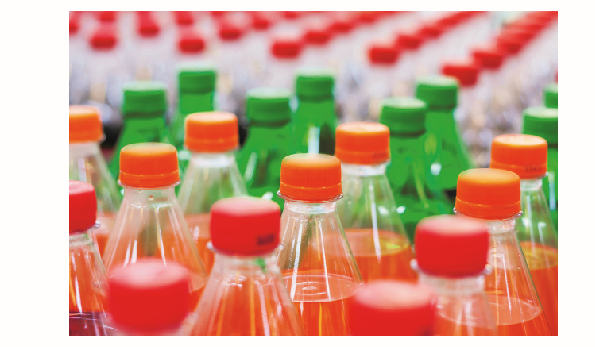
The Centre for the Promotion of Private Enterprise (CPPE) has cautioned against renewed calls to introduce additional taxes on sugar-sweetened non-alcoholic beverages.
The centre’s chief executive officer, Dr Muda Yusuf, who gave the warning, said that such a move could harm Nigeria’s manufacturing sector and weaken the country’s fragile economic recovery.
According to Dr Yusuf, the proposal for a sugar-specific tax is misplaced, economically risky, and weakly supported by empirical evidence, especially given Nigeria’s current macroeconomic challenges.
“While public health challenges such as diabetes and cardiovascular diseases undoubtedly warrant urgent attention, the proposition of a sugar-specific tax is not adequately contextualised within Nigeria’s prevailing structural, social and macroeconomic realities,” Yusuf said.
CPPE chief noted that advocacy for sugar taxation in Nigeria is primarily driven by externally derived policy templates linked to global health institutions, stressing that international best practice does not support sugar taxes as a sustainable or standalone solution to non-communicable diseases in economies like Nigeria.
He described the food and beverage industry as the backbone of Nigeria’s manufacturing sector, with the non-alcoholic beverages segment playing a vital role. Citing data from the National Bureau of Statistics, CPPE said the industry contributes about 40 per cent of total manufacturing output.
“The food and beverage industry is a critical driver of industrial growth, employment and value creation. Beyond factory operations, the sector sustains an extensive value chain that supports millions of livelihoods across farming, logistics, retail and hospitality.”
According to him, any policy that undermines the sector would have far-reaching consequences, including job losses, declining household incomes, reduced investment and setbacks to poverty reduction efforts.
The group further argued that manufacturers of non-alcoholic beverages are already heavily burdened by taxes and operating costs. Yusuf said the industry is subject to multiple fiscal obligations, including company income tax, value-added tax, excise duties, levies on profits and imports, and numerous state and local government charges.
“High energy costs, prohibitive logistics expenses, exchange rate volatility and elevated interest rates compound these fiscal pressures. The cumulative effect has been rising production costs, shrinking margins and higher prices for consumers,” he said.
CPPE disclosed that retail prices of many non-alcoholic beverages have already increased by about 50 per cent over the past two years, even without the introduction of any new sugar tax. On public health outcomes, the organisation maintained that sugar taxes deliver limited benefits unless they form part of broader lifestyle and structural interventions.
Yusuf identified poor diet quality, physical inactivity, sedentary lifestyles, urban design and genetic factors as the major drivers of diabetes and cardiovascular diseases in Nigeria. “While taxation may marginally influence consumption patterns, it does not address these root causes. Conversely, the economic costs of additional taxation are immediate, tangible and potentially severe.”
He urged policymakers to adopt more sustainable and development-friendly approaches, including lifestyle and nutrition education, community-based health programmes, promotion of physical activity, encouragement of fruit and vegetable consumption, healthy food subsidies and urban planning that supports active transportation.
We’ve got the edge. Get real-time reports, breaking scoops, and exclusive angles delivered straight to your phone. Don’t settle for stale news. Join LEADERSHIP NEWS on WhatsApp for 24/7 updates →
Join Our WhatsApp Channel