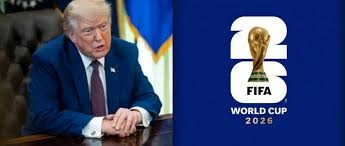
The United Kingdom has declined to immediately join United States President Donald Trump’s proposed Board of Peace, citing concerns over the possible involvement of Russian President Vladimir Putin.
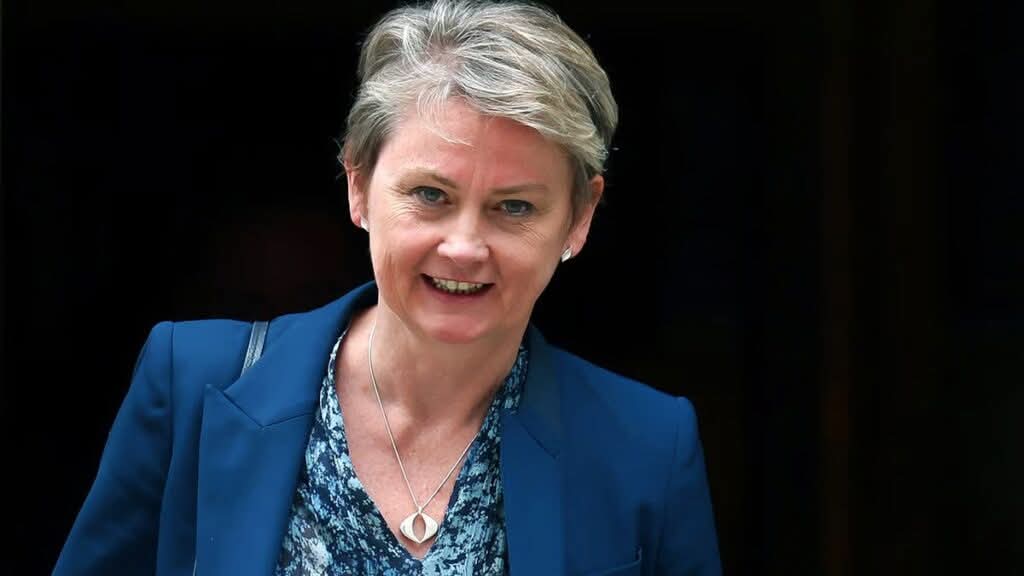
UK Foreign Secretary, Yvette Cooper, disclosed that although Britain was invited to become a signatory to the initiative, it would not be doing so at the planned signing ceremony held on the sidelines of the World Economic Forum(WEF) in Davos.
Speaking on the BBC’s Breakfast programme from Davos, Cooper said the UK “won’t be one of the signatories today,” describing the proposal as “a legal treaty that raises much broader issues” beyond its initial framing as an effort to end the Israel-Hamas war in Gaza.
She acknowledged that the UK strongly supports President Trump’s 20-point plan aimed at ending the conflict in Gaza, adding:
“That’s why we are also clear we want to play our part in phase two of the Gaza peace process.”
However, Cooper stressed that Britain remained uneasy about Russia’s potential role in the new body.
“We do also have concerns about President Putin being part of something that’s talking about peace when we’ve still not seen any signs from Putin that there will be commitment to peace in Ukraine,” she said.
According to her, Putin has shown no willingness “to come and make that agreement and that’s where the pressure needs to be now.”
President Trump announced in Davos that Putin had accepted an invitation to join the Board of Peace, although the Russian leader has yet to confirm this, saying earlier that Moscow was still studying the proposal.
The Board of Peace, originally unveiled by the White House as part of a plan to rebuild Gaza and shape its future governance, has drawn attention after a leaked copy of its founding charter suggested a far wider mandate. The document describes the body as “an international organisation that seeks to promote stability, restore dependable and lawful governance, and secure enduring peace in areas affected or threatened by conflict.”
Notably, the charter makes no reference to Gaza or Palestinian territories and appears designed to assume some functions traditionally associated with the United Nations.
Under the leaked provisions, the charter would come into force once three states formally agree to be bound by it. Member states would serve renewable three-year terms, while permanent seats would be available to countries contributing $1 billion (£740 million). The document further designates President Trump as chairman, granting him authority to appoint executive board members and establish or dissolve subsidiary bodies.
Last Friday, the White House named seven members of the founding Executive Board, including US Secretary of State Marco Rubio, Middle East envoy Steve Witkoff, Trump’s son-in-law Jared Kushner, and former UK Prime Minister Tony Blair.
Several countries, including Saudi Arabia, Turkey, Egypt, Israel, Pakistan and Qatar, have indicated willingness to join the initiative, while the Vatican confirmed that the Pope has received an invitation.
Meanwhile, UK-US diplomatic relations have faced strain in recent days following Trump’s threat to impose tariffs on European nations over his demand for US control of Greenland. The US president later appeared to soften his stance, announcing that Washington was exploring a potential deal on Greenland after talks with NATO allies, dropping the proposed tariffs and ruling out the use of force.
Cooper welcomed the apparent reversal, noting that the UK and its European partners had put forward “positive, constructive proposals” on Arctic security.
On the Ukraine conflict, the foreign secretary reiterated Britain’s firm position, aligning with other UK cabinet ministers who have expressed unease over Putin’s potential role in the Board of Peace while Russia’s invasion of Ukraine continues. The UK remains one of Ukraine’s strongest allies and, alongside France, has signed a declaration of intent to deploy troops should a peace agreement be reached.
As diplomatic efforts continue, President Trump and Ukrainian President Volodymyr Zelensky are expected to meet in Davos, with Trump reiterating his belief that both Putin and Zelensky are close to a deal to end the war.
Show quoted text
We’ve got the edge. Get real-time reports, breaking scoops, and exclusive angles delivered straight to your phone. Don’t settle for stale news. Join LEADERSHIP NEWS on WhatsApp for 24/7 updates →
Join Our WhatsApp Channel