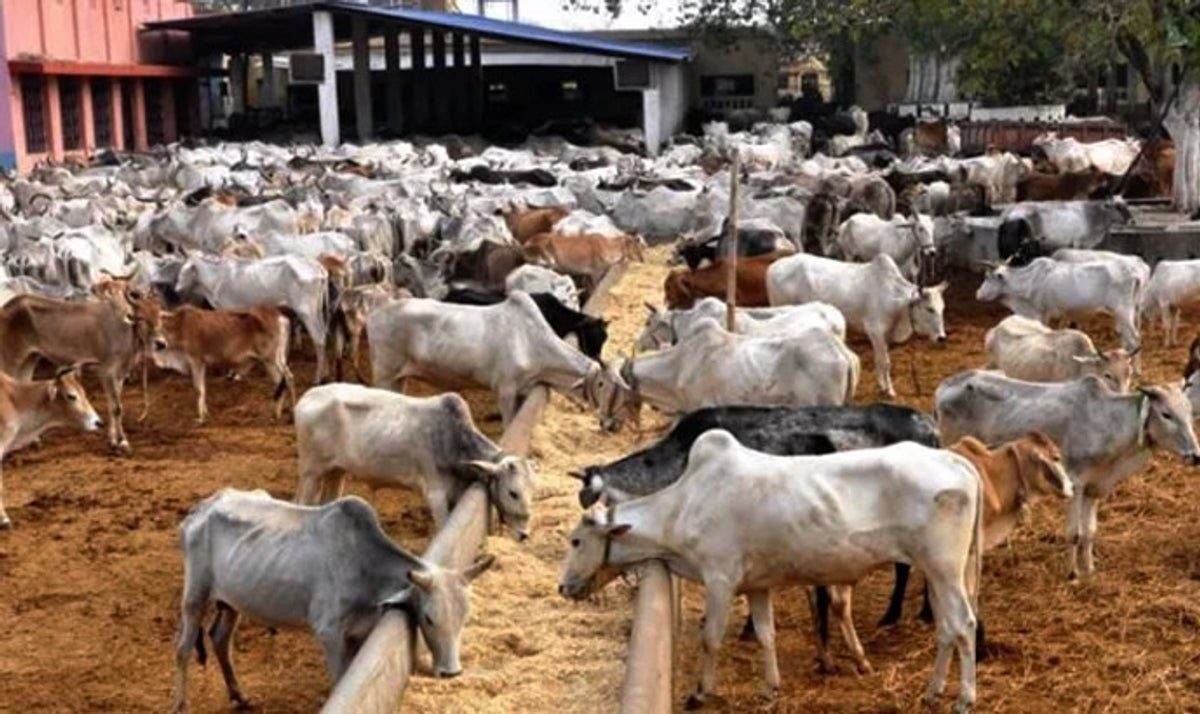
The federal government has commissioned new pasture, feed and water infrastructure at the National Animal Production Research Institute (NAPRI), Shika, Kaduna State, to address structural constraints that limit livestock productivity and food security.
The facilities, delivered under the Livestock Productivity and Resilience Support Project (L-PRES), are designed to improve feed availability, pasture development and access to water, key factors driving low livestock output and rising production costs.
At the event yesterday, the minister of Livestock Development, Idi Mukhtar Maiha, said the intervention aligns with the federal government’s Renewed Hope Agenda and aims to strengthen Nigeria’s livestock production base.
According to him, inadequate feed supply and poor pasture development have continued to undermine animal productivity, climate resilience and the competitiveness of the livestock value chain.
“Feed and pasture development remain critical to improving livestock productivity in Nigeria. These facilities are intended to enable NAPRI to deliver practical, demand-driven solutions that will strengthen animal production systems and enhance food security,” the minister said.
The infrastructure includes a 500-tonnes-per-annum hay storage facility, a pasture seed processing unit with a capacity of 10 tonnes per hour, a 20-tonnes-per-annum pasture seed drying facility, and four solar-powered boreholes with drinking troughs within NAPRI.
An additional solar-powered borehole was also provided at one of the institute’s outstations in Yobe State.
Maiha charged NAPRI to ensure optimal utilisation of the facilities, stressing the need for research outputs that are commercially viable and responsive to farmers and private sector needs.
“NAPRI must continue to lead in developing and disseminating innovations that support commercial, competitive and environmentally friendly animal production systems. Our focus is to ensure research outcomes translate into real value for farmers, jobs for our youth and improved livelihoods,” he said.
He stressed the importance of market-driven research, innovation commercialisation and stronger partnerships to unlock the livestock sector’s full potential.
The national project coordinator of L-PRES, Dr Sanusi Abubakar, said the interventions fall under the project’s institutional and innovation system-strengthening component aimed at boosting the capacity of key research institutions.
Abubakar disclosed that additional upgrades are ongoing at NAPRI, including improvements to artificial insemination and embryo transfer facilities, dairy and poultry units, as well as indigenous sheep and goat projects.
He added that the World Bank has rated the project satisfactory, with prospects for additional financing.
In his remarks, the vice-chancellor of Ahmadu Bello University, Prof. Adamu Ahmed, described NAPRI as central to national efforts to modernise livestock production, address climate challenges and strengthen food systems.
Similarly, the Acting Director of NAPRI, Prof. Mohammed Rabiu Hassan, pledged that the facilities would be fully utilised to advance research, innovation and the dissemination of practical solutions to boost livestock productivity.
Also, the director-general of the Nigerian Institute of Leather and Science Technology (NILEST), Dr. Auwal Mustapha Imam, said improved livestock breeds would enhance leather quality and support efforts to scale up production through private sector partnerships.
The event attracted senior government officials, including the Special Adviser to the President and Coordinator of the Presidential Livestock Reform Initiative, Prof. Attahiru Jega, as well as traditional rulers, academics and other stakeholders.
We’ve got the edge. Get real-time reports, breaking scoops, and exclusive angles delivered straight to your phone. Don’t settle for stale news. Join LEADERSHIP NEWS on WhatsApp for 24/7 updates →
Join Our WhatsApp Channel