“The old world is dying, and the new one struggles to be born: now is the time of monsters” – Antonio Gramsci
For decades, scholars and policymakers warned that the world was entering a phase of systemic transition. That moment is no longer approaching; it is here. The world as we once understood it has ended, and what replaces it is unsettled, contested and volatile.
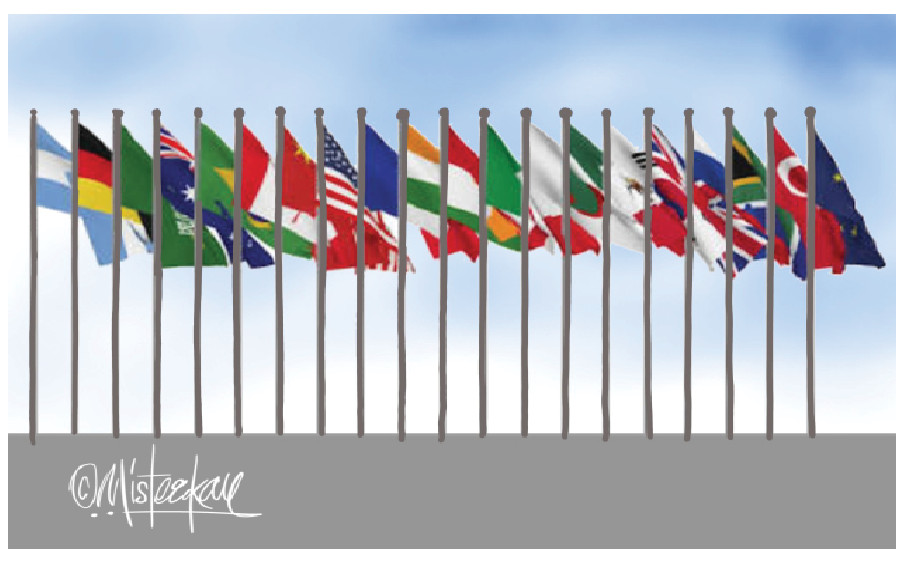
This is not a routine change in diplomatic tone or global priorities. It is a reordering of power, economic influence and ideological authority. A new world order or several overlapping, competing ones are emerging. At its heart are fundamental questions about who holds power, whose values shape global norms, and who gets to decide the rules.
For Nigeria and Africa, this is not an abstract geopolitical conversation played out in Washington, Beijing, Moscow or Brussels. It is already reshaping our economy, our diplomacy, our security choices and the future available to our young population. The danger before us is not choosing wrongly but failing to choose at all.
The Contest for Supremacy
For nearly eight decades after the Second World War, the United States stood at the centre of global affairs. It designed the architecture of international politics and economics, including the United Nations, the World Bank, the IMF, the Bretton Woods system and set the parameters of global engagement.
The end of the Cold War appeared to confirm American dominance. Francis Fukuyama’s The End of History and the Last Man captured a widely held belief that liberal democracy and free-market capitalism had triumphed permanently. That belief has not merely weakened; it has collapsed.
America remains immensely powerful: militarily unmatched, technologically innovative and economically significant, but it is no longer singularly decisive. Domestic polarisation, economic inequality, strategic overstretch and wavering commitment to multilateral leadership have constrained its influence. Unilateral military interventions and an increasingly transactional foreign policy have eroded trust and moral authority.
For Nigeria, this matters deeply. The assumption that the West, particularly the United States, would always underwrite global stability, champion democratic norms, or act as a guarantor of order no longer holds. The global sheriff is no longer patrolling with the same confidence, and in some cases has stepped back entirely.
Into this vacuum has stepped China, the most consequential challenger to U.S. global primacy. From a largely agrarian society in 1978, China has risen to become the world’s second-largest economy, with ambitions extending far beyond growth statistics.
China’s strategy is comprehensive: economic statecraft through the Belt and Road Initiative; technological competition in artificial intelligence, 5G, quantum computing and renewable energy; rapid military modernisation; and the projection of an alternative governance model that rejects Western liberal prescriptions.
In Africa and particularly in Nigeria, China’s presence is visible and tangible. Railways, roads, ports, power projects and digital infrastructure carry Chinese fingerprints. Beijing speaks the language of delivery and pragmatism, not lectures. For a country desperate to close its infrastructure gap, this has been attractive.
But China’s engagement is strategic, not charitable. Loans come with long-term obligations. Infrastructure brings leverage. Political neutrality often masks quiet expectations. Nigeria now sits at the intersection of competing global interests — dependent on Chinese financing while still reliant on Western markets, security partnerships and financial credibility.
The challenge is no longer whether Nigeria should engage China. That decision has been made. The question is whether Nigeria can engage from a position of strategy rather than desperation.
Africa’s Strategic Moment
Unlike the Cold War era, today’s global landscape is not defined by rigid blocs. Many states are choosing strategic autonomy over automatic alignment.
Across Africa, Asia and Latin America, countries are asserting agency. They are demanding development on their own terms, respect for sovereignty and partnerships that prioritise domestic needs over great power rivalry. This explains Africa’s refusal to line up neatly behind Western positions on global conflicts and the renewed relevance of platforms like BRICS and South–South cooperation.
Europe, shaken by Brexit and the war in Ukraine, is rearming and recalibrating. Russia, rejecting the post-Cold War settlement, has chosen disruption as a strategy of relevance. Middle powers like India, Brazil, Indonesia, Turkey and South Africa are carving out pragmatic, interest-driven roles, cooperating without surrendering autonomy.
Africa must learn from this approach, no longer merely a theatre for global competition; it is becoming an actor. With 1.4 billion people, vast mineral wealth and the youngest population on earth, the continent has leverage even if it has not always used it wisely. The African Continental Free Trade Area is the clearest signal yet that Africa understands the stakes of this new era. In a world of fractured supply chains and regionalised trade, Africa’s ability to trade with itself is no longer optional; it is existential.
For Nigeria, AfCFTA offers a route beyond oil dependency toward manufacturing, services and regional leadership. But this will require energy security, infrastructure, policy coherence and industrial strategy, not speeches.
Nigeria’s Foreign Policy Reckoning
Nigeria once punched above its weight in global affairs, from anti-apartheid struggles to peacekeeping across West Africa. Today, that influence has diminished, not because Nigeria lacks relevance, but because it lacks coherence.
In a world of shifting power and shrinking consensus, foreign policy can no longer be ceremonial. It must be strategic, economically grounded and unapologetically interest driven.
Nigeria must confront uncomfortable questions: What does non-alignment mean in a multipolar world? How do we balance competing partnerships without becoming a pawn? How do we convert population size, market scale and diaspora strength into bargaining power? Without answers, Nigeria will continue to be shaped by global forces rather than shaping outcomes.
The new global disorder is already battering Nigeria’s economy. Supply chain disruptions, inflation and energy market volatility have deepened household hardship. The Russia–Ukraine war pushed food and fertiliser prices upward. Global interest rate hikes have worsened debt stress.
At the same time, the global energy transition is rewriting the future of oil, which is Nigeria’s primary economic lifeline. The window to diversify is narrowing and Nigeria must prepare for a world where oil no longer dominates.
The Real Battlefields: Technology, Energy and Influence
Supremacy today is not primarily military. It is systemic. Technology is the most decisive arena. Control of data, artificial intelligence, digital infrastructure and standards will define economic competitiveness and national security. Nigeria’s youthful population and vibrant tech ecosystem offer promise, but without deliberate investment and policy support, we risk remaining consumers rather than creators.
Energy is another fault line. As developed countries accelerate green transitions, Nigeria must navigate climate demands without sacrificing development, leveraging gas as a transition fuel while investing in renewables. Influence itself is contested through culture and narrative. Nigeria’s soft power: Nollywood, Afrobeats and fashion is globally resonant yet largely disconnected from strategic diplomacy or economic planning.
The danger of this moment is fragmentation with rival blocs, competing standards and perpetual instability. For vulnerable economies, this means greater exposure to shocks. But there is also opportunity. A multipolar world, if managed wisely, can create space for new voices, fairer systems and reformed global institutions. It can allow Nigeria to negotiate from relevance rather than dependency.
That outcome is not automatic. It demands leadership that understands global dynamics and connects them to domestic realities. The world as we knew it is over; Nigeria and indeed Africa as a whole must choose its place in what comes next.
We’ve got the edge. Get real-time reports, breaking scoops, and exclusive angles delivered straight to your phone. Don’t settle for stale news. Join LEADERSHIP NEWS on WhatsApp for 24/7 updates →
Join Our WhatsApp Channel