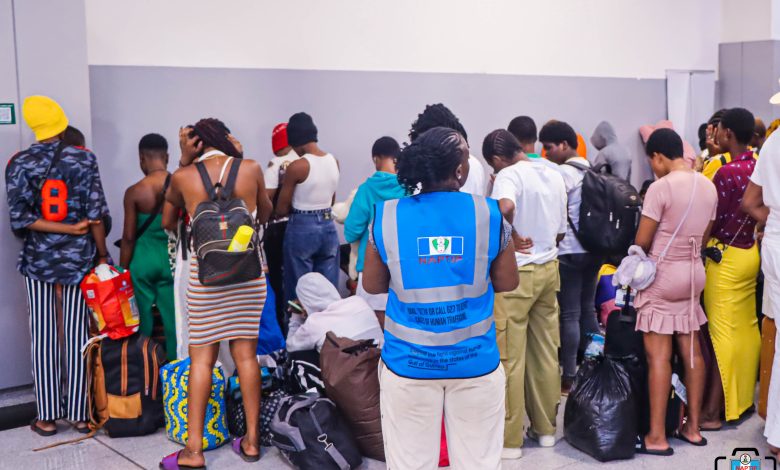
Reports of human trafficking in Nigeria are increasing at an alarming rate, exposing a grim reality that the crime remains widespread and largely unchecked.
Of particular concern is the growing incidence of child trafficking, which continues to occur across the country with disturbing regularity.
From rural communities to major urban centres, cases of abducted, trafficked, and exploited children are reported almost daily, raising serious questions about the effectiveness of existing safeguards.
Regrettably, this is happening despite the presence of several government agencies and organisations mandated to combat human trafficking.
These include the National Agency for the Prohibition of Trafficking in Persons (NAPTIP), the Nigerian Police Force (NPF), the Nigeria Immigration Service (NIS), the Network Against Child Trafficking, Abuse and Labour (NACTAL), and the Department of State Services (DSS), all of which collaborate on enforcement, victim protection, and public awareness.
Last year, the National Human Rights Commission (NHRC) reported disturbing levels of child rights violations nationwide. Child trafficking, abduction, and abandonment featured prominently in its monthly dashboards.
It is instructive to note that between January 2024 and January 2025 alone, over 86,000 child rights violations were recorded, underscoring the urgency of the crisis. Reports released in May, August, and November 2025 further identified child trafficking, abduction, and sexual abuse as major concerns across the country.
Child trafficking is a grave violation of human rights with profound and long-lasting consequences for children, families, and communities. Many trafficked children are forcibly removed from their families, resulting in deep emotional distress and the breakdown of family structures.
Often, these children are subjected to forced labour, sexual exploitation, or illegal adoption, leaving them with severe emotional trauma, physical health challenges, and lasting psychological scars.
We recognise that child trafficking is a complex phenomenon driven by factors such as poverty, lack of education, unemployment, and social instability. However, understanding these drivers must not excuse inaction.
Recent cases highlight the scale of the problem. Earlier this year, the Nigerian Police Force announced that it rescued 76 boys and girls and foiled an attempted attack and kidnapping in the Kasuwan Magani area of Kaduna State. Preliminary investigations revealed that the suspects were transporting the children to different parts of the country for child labour and other forms of domestic work.
Around the same period, the Nasarawa State Police Command rescued four abducted children in the Karu Local Government Area. According to the command’s Public Relations Officer, SP Ramhan Nansel, the children were kept in confinement before the police intervened.
Perhaps most disturbing are revelations involving orphanages institutions meant to serve as safe havens for vulnerable children but increasingly exposed as conduits for trafficking.
Recently, the Federal Capital Territory (FCT) Administration sealed Divine Hope Orphanage and Less Privileged Home in Kagini, Abuja, over allegations of illegal child trafficking and related welfare violations.
Preliminary investigations reportedly linked the orphanage to a case involving four siblings—Joefreey Kasal Asoja (11), David Mtsewe Asoja (7), Joy Elsan Asoja (4), and Joseph Asoja (2)—who were allegedly stolen from Ado in Nasarawa State and taken to Gwagwalada in the FCT.
Investigators also uncovered alleged collaboration between the orphanage and Anderson Archibong, Executive Secretary of the National Council of Child Rights Advocates of Nigeria (NACCRAN), who is currently at large.
Against this backdrop, NAPTIP’s disclosure that it secured 93 convictions and rescued 120 trafficked children last year is both commendable and sobering.
The agency also intercepted over 2,500 potential victims who were deceived, recruited, and trafficked for exploitation within and outside Nigeria figures that underscore the magnitude of the challenge.
The consequences of child trafficking extend far beyond individual victims. According to experts, trafficked children often endure physical and psychological abuse, exploitation, and neglect. The loss of childhood and denial of basic rights severely undermine their development and future prospects.
Child trafficking also perpetuates poverty and social inequality. Most victims come from marginalised backgrounds, and their exploitation deprives society of potential contributors to the economy. Without education or skills training, these children are trapped in cycles of deprivation, limiting national workforce potential and increasing dependence on social services.
Beyond economics, child trafficking undermines social cohesion, public trust, and safety, while strengthening organised criminal networks that complicate law enforcement and divert resources from development.
Needless to say ,child trafficking is a multifaceted problem with devastating consequences for individuals and society. Addressing it requires a comprehensive approach involving education, support for vulnerable families, effective law enforcement, institutional accountability, and international cooperation. Public awareness must also be strengthened to mobilise collective action.
Above all, parents and guardians must remain vigilant and take greater responsibility for the protection of their wards. Nigeria’s children deserve safety, dignity, and the opportunity to grow. Failing to protect them is a failure of society itself.
We’ve got the edge. Get real-time reports, breaking scoops, and exclusive angles delivered straight to your phone. Don’t settle for stale news. Join LEADERSHIP NEWS on WhatsApp for 24/7 updates →
Join Our WhatsApp Channel