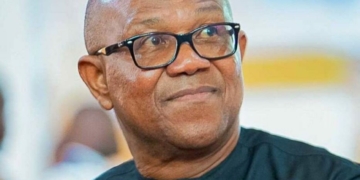

Africa AI Transformations Coach and Thought Leader, Adeoye Abodunrin, has said that 93 per cent of Nigerians use Artificial Intelligence tools to learn and understand complex topics, compared with a global average of 74 per cent,
Abodunrin, drawing from the Google & Ipsos report, “Our Life with AI: Helpfulness in the Hands of More People,” while speaking to journalists at a media briefing in Lagos, noted that Nigeria is rapidly emerging as a global leader in AI adoption, with usage patterns showing deep integration into learning, work, entrepreneurship and everyday problem-solving.
According to him, 88 per cent of Nigerian adults have used an AI chatbot, far above the global average of 62 per cent.
The report further revealed that 91 per cent of Nigerians use AI to assist with their work, while 80 per cent leverage the technology to explore new business ideas or career transitions, nearly double the global average of 42 per cent.
In addition, 91 per cent believe AI is positively impacting learning and access to information, with 95 per cent saying students and educators are likely to benefit, while 80 per cent express excitement about AI’s possibilities.
“These figures show that Nigerians, especially young learners, professionals and entrepreneurs, are not only adopting AI at scale but using it purposefully for growth and opportunity,” Abodunrin noted.
He said the impressive adoption rates also underscore the urgent need for governments and institutions to design policies that align AI tools with social realities such as trust, incentives, cultural norms and decision-making patterns unique to African societies.
“Behavioural economics helps us understand how people actually interact with AI systems, what motivates adoption, and how policies shape outcomes across diverse communities. Without these insights, AI strategies risk leaving behind the very people they aim to empower,” he said.
Abodunrin further urged African governments, policymakers and institutions to deliberately embed behavioural economics into Artificial Intelligence (AI) strategies, warning that technology-driven reforms without human-centred design could widen inequality across the continent.
He said Africa’s AI future must not be built solely on algorithms, data and infrastructure, but on a deep understanding of human behaviour, decision-making processes and socio-cultural realities that shape how people adopt and trust technology.
He stated that most AI strategies on the continent focus on technology acquisition while overlooking the behavioural incentives that influence adoption, productivity and confidence in public systems.
“AI will only deliver inclusive growth in Africa if we design systems that understand how Africans think, decide, trust and adapt. Without behavioural economics, AI policies may look impressive on paper but fail.”
According to him, behavioural economics provides governments with the tools to design AI-enabled policies that work in real African environments, cutting across digital identity systems, financial inclusion platforms, healthcare delivery, education, taxation and public service reform.
“Africa does not suffer from a lack of ideas or talent. What we often miss is alignment, aligning technology with behaviour, culture and incentives. Behavioural intelligence is what turns AI from a shiny tool into a development engine, he explained.
“AI holds immense potential for Africa, but we cannot prioritise infrastructure and algorithms while ignoring the human behaviour that determines how these technologies are used, trusted and adopted by citizens. In the AI era, behavioural insight is not optional; it is fundamental to inclusive growth, innovation and social impact,” he said.
Abodunrin added that his call comes at a time when Nigeria and other African countries are witnessing rapid digital transformation and are increasingly positioned to shape the future of innovation on the continent, urging leaders to embed behavioural science into AI governance, invest in AI literacy, ensure ethical frameworks, and support locally relevant solutions.
“AI should amplify African strengths, not widen global divides. When behavioural economics informs AI strategy, we unlock not just smarter technology but smarter societies,” he said.
We’ve got the edge. Get real-time reports, breaking scoops, and exclusive angles delivered straight to your phone. Don’t settle for stale news. Join LEADERSHIP NEWS on WhatsApp for 24/7 updates →
Join Our WhatsApp Channel