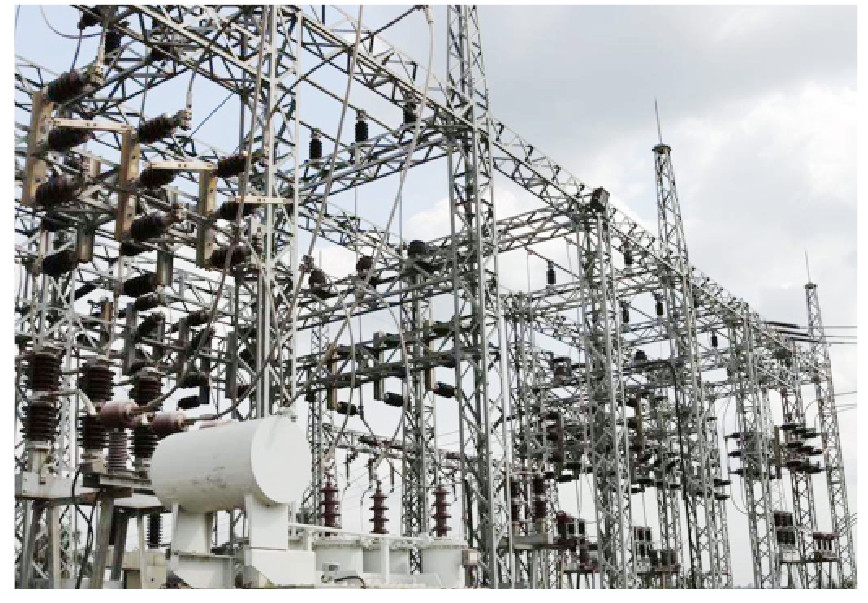
Say persistent grid collapses, erratic electricity supply disrupting businesses, households nationwide
BY OLUSHOLA BELLO AND KINGSLEY OKOH, Lagos
Manufacturers and small business owners across the country have raised the alarm over the persistent instability of electricity supply from the national grid, warning that the situation is forcing factories and production companies to depend heavily on diesel generators, thereby pushing production costs to unsustainable levels and threatening industrial output.
The worsening power crisis has resulted in rising production costs, reduced competitiveness, and a slowdown in economic growth.
Some business owners who spoke with LEADERSHIP Sunday expressed concern that they have had to increase their diesel spending to fill the gap left by the dwindling power supply from the national grid, thereby adding to their already staggering N676.6 billion energy spend in the first half of 2025.
Data from the Manufacturers Association of Nigeria (MAN) indicates that local manufacturers spent N676.6 billion on energy in the first half of 2025 and N1.11 trillion on alternative energy sources in 2024, representing a 42.3 per cent increase.
While data for the second half of 2025 and the first month of this year are unavailable, manufacturers insist that persistent grid collapses and erratic electricity supply continue to disrupt businesses and households nationwide.
Speaking with LEADERSHIP Sunday in Lagos, a small bakery owner, Aisha Bello, vented her frustrations.
“We’ve been running on generators, burning about N30,000 in diesel every two days just to keep up with operations—but with this shutdown, blackouts will mean additional costs on diesel.”
In Abuja, a textile workshop proprietor, Chinedu Okeke, lamented that the poor power supply was snuffing life out of his business.
“My five sewing machines grind to a halt without power, costing me N70,000 weekly in lost orders and fuel,” he said.
In Nyanya, a suburb of the Federal Capital Territory, Abuja, a frozen foods dealer, Fatima Adeleke, shared her plight: “Freezers full of fish and chicken thaw out during outages, leading to massive waste.
“The last grid collapse cost me N150,000 in spoiled stock alone; diesel can’t keep up with 24/7 cooling needs, and passing these hikes to customers is impossible in this economy.”
Manufacturers Association of Nigeria (MAN) President Francis Meshioye warned that erratic public power supply had become a major structural bottleneck for manufacturers, compelling firms to rely heavily on alternative energy sources to keep factories running.
“Without grid fixes, the sector’s resilience could be further stretched, despite modest gains in capacity utilisation and exports,” he said.
Gas powers over 80 per cent of thermal generation, leaving the system vulnerable to such halts, pipeline sabotage, and shortages.
LEADERSHIP Sunday recalls that the grid collapsed almost monthly in 2024, but the situation improved in 2025 when only two major collapses were recorded.
More troubling still, in early 2026, the grid had already collapsed at least twice. This pattern of instability reflects deep-seated structural weaknesses within the power sector and underscores the urgent need for decisive intervention.
Persistent grid collapses and erratic power supply have continued to disrupt businesses and households across the country, forcing many Nigerians to rely on alternatives such as generators and solar power.
The national grid has a total installed generation capacity of 13,625 megawatts. Still, the power generation companies (GenCos) have only been able to produce between 4,000MW and 5,000MW, which is insufficient to cater for the country’s over 200 million population.
Experts estimate that Nigeria needs at least 30,000MW to achieve a sufficient power supply.
According to industry experts, the core issues fueling poor power supply include outdated infrastructure, vandalism, inadequate maintenance, and insufficient investment in generation capacity.
Industry groups have repeatedly warned that frequent grid failures are undermining productivity and threatening the survival of local industries.
The Minister of Power, Adebayo Adelabu, acknowledged that off-grid arrangements had become commonplace, even among businesses connected to the national grid, because the supply “simply cannot be trusted.”
Speaking on the development, the director-general of the Nigeria Textiles Manufacturers Association (NTMA), Alhaji Hamma Kwajaffa, said the erratic electricity supply frequently interrupts manufacturing processes, leading to wasted materials and lost production time.
“The current tariff structures of electricity are uncompetitive when compared to those in developed countries, which significantly hampers the ability of local manufacturers to engage in profitable exports. This lack of competitiveness is a major barrier to growth, as exporting products becomes a challenging endeavour,” he said.
Kwajaffa further described the frequent collapses of the national grid as dire, while acknowledging recent improvements in grid repair and maintenance.
“When power outages occur, products on the production line can become damaged or ruined, resulting in substantial financial losses for manufacturers. These losses not only affect the company’s bottom line but also undermine the overall profitability of the textile sector.”
He commended the quicker response to power failures compared to previous years, when outages could last for weeks without resolution.
“However, reliance on alternative power sources, such as diesel generators, has become increasingly burdensome due to soaring fuel costs. This reliance exacerbates the industry’s struggle to remain competitive and achieve operational sustainability,” he emphasised.
Kwajaffa advocated a dedicated focus on stabilising the national grid through regular maintenance and inspections to ensure smooth and uninterrupted operations.
“This includes enhancing security measures to protect critical infrastructure from vandalism, which remains a significant threat to a consistent power supply,” he said.
On generation capacity, he expressed frustration that Nigeria is unable to match countries like South Africa, which generates about 50,000 megawatts to sustain its industrial growth.
Nigeria, by contrast, produces less than 10,000 megawatts, making reliable supply difficult and contributing to frequent disruptions.
He called for a thorough evaluation of international best practices in power management and manufacturing, urging authorities to adopt proven strategies from other nations.
‘Alternative Power Consumes 40% Of Profit’
On his part, the national president of the Association of Business Owners (BON), Dr Femi Egbesola, expressed deep concern over the deteriorating state of electricity supply.
He noted that while Nigeria’s generation capacity remains low compared to other nations, the increasing frequency of grid collapses is particularly alarming, especially for small and medium enterprises (SMEs).
Egbesola stated that SMEs and emerging manufacturers are bearing the brunt of the crisis.
“A recent report revealed that manufacturing firms are diverting nearly 40 per cent of their profits to cover the costs of electricity generation.
“This staggering figure illustrates how the instability of power supply compels businesses to rely on expensive alternatives like diesel generators, which are not only costly but also operationally cumbersome.
“As a result, these added expenses erode manufacturers’ profits, lining their pockets less while ultimately passing the burden onto consumers. This vicious cycle imposes a heavy strain on the general populace, as rising costs trickle down through the supply chain,” he said.
Egbesola added that many small-scale businesses are shutting down due to the constant instability.
“Unlike larger manufacturers, small businesses lack the financial cushioning to absorb such shocks, dissuading prospective entrepreneurs from pursuing ventures reliant on consistent electricity. The sensitive nature of contemporary equipment necessitates stable power; irregular supply not only disrupts operations but risks damaging machinery, rendering it inoperable or malfunctioning,” he stated.
Egbesola insisted that if the government is serious about supporting SMEs and the broader business environment, improving electricity supply must be prioritised.
“However, in the face of government inaction, industry players are taking matters into their own hands. Many SMEs are exploring alternative energy sources to power their operations and are establishing collaborations with both local and international stakeholders to secure support.
“One promising development is the emergence of companies that offer renewable energy installations, such as solar power, on a pay-as-you-go basis. This innovative payment model alleviates the financial burden of upfront installation costs, enabling businesses to gradually adopt a more reliable power source. This approach not only enhances energy efficiency but also serves as a temporary relief in the midst of ongoing challenges,” he said.
He advocated establishing incubation hubs powered by reliable energy sources, enabling cluster businesses to operate efficiently.
“Although there are numerous such centres scattered across the country, many remain without proper power supply, exacerbating the overarching dilemma faced by businesses today.”
The immediate past chairman of the Lagos branch of the National Association of Small-Scale Industrialists (NASSI), Mr Segun Kuti-George, warned that the frequent collapses of the national grid are severely disrupting production flows and making manufacturing increasingly unattractive to local investors and private-sector players.
Speaking during a chat with LEADERSHIP Sunday, Kuti-George said the persistent instability in electricity supply was distorting production activities, worsening economic downturns, and contributing to factory closures, the mothballing of local industries, and unsustainable production levels.
He stressed that unreliable hydro-based grid power had forced many industrialists into survival mode and urged manufacturers and factory owners to diversify into wind turbines as an alternative energy source.
According to him, the recurring grid failures are discouraging investment in the manufacturing sector, triggering price manipulation, higher product taxes, low output, and weak patronage of locally made goods.
He maintained that, for manufacturers to survive what he described as precarious and unsustainable hydro-energy conditions, there is an urgent need to embrace alternative sources such as wind energy to revive the struggling sector.
The former NASSI boss also called on the government to fully deregulate the power sector, allowing private investors to generate and sell electricity at competitive and affordable rates to manufacturers.
He argued that proper deregulation would enable the unbundling of the sector, allowing private operators to generate and distribute electricity directly to industries rather than relying solely on the national transmission grid.
He said, “Let’s generate power and sell the same way the oil sector was unbundled and deregulated.”
Kuti-George further lamented the broader challenges facing Nigerian manufacturers, including soaring energy costs, foreign exchange volatility, and the urgent need for innovation to survive recurring economic downturns.
He noted that without decisive reforms in the power sector and supportive economic policies, local industries will continue to struggle under mounting production pressures.
Similarly, the director-general of the Lagos Chamber of Commerce & Industry (LCCI), Dr Chinyere Almona, emphasised that reliable electricity is fundamental to industrialisation, competitiveness, and macroeconomic stability.
She warned that repeated grid collapses impose severe costs on businesses, including lost production hours, damaged equipment, increased reliance on self-generation, higher operating expenses, and weakened competitiveness.
According to her, these disruptions erode investor confidence, worsen inflationary pressures, and undermine economic reform efforts.
Almona urged the federal government to institute an independent forensic audit of the national grid, covering transmission infrastructure integrity, system protection mechanisms, operational protocols, and governance of grid management.
She added that the findings should form a critical component of short-term grid performance reforms.
We’ve got the edge. Get real-time reports, breaking scoops, and exclusive angles delivered straight to your phone. Don’t settle for stale news. Join LEADERSHIP NEWS on WhatsApp for 24/7 updates →
Join Our WhatsApp Channel