By Sen. Saidu Muhammad Dansadau
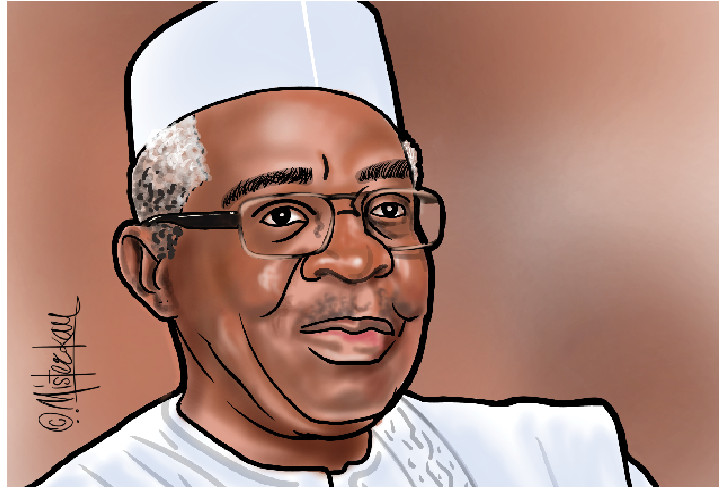
If there is any Northern Christian leader who has been—and continues to be—most harshly criticised as an enemy of Muslims and Islam by Northern Muslims, it is General Theophilus Yakubu Danjuma. Most of these criticisms are as parochial as they are sentimental. An objective assessment of the General, however, reveals quite the opposite.
It is an undisputed fact that General Yakubu Danjuma’s philanthropic activities in Northern Nigeria cut across religious and ethnic lines. The provision of potable drinking water to rural communities in the North through his Foundation has never been skewed in favour of Christians or Christian-dominated areas. His interventions in educational and health institutions across the region follow the same inclusive pattern.
These facts alone are sufficient to dispel the notion that General Danjuma is an enemy of Muslims and to establish beyond a reasonable doubt that he is a man deeply devoted to God and guided by divine principles of service to God and humanity in all his policies and actions.
What is even more remarkable is how General Theophilus Yakubu Danjuma consistently used his positions throughout his military and political career to uplift Northern Nigeria socially and economically in an indiscriminate manner—particularly in basic amenities, infrastructure, and entrepreneurship.
To support this argument, I cite the following policy example. Following the assumption of power by General Olusegun Obasanjo after the assassination of General Murtala Ramat Mohammed in February 1976, General Theophilus Yakubu Danjuma advised that the three highest-ranking Northern officers on the Supreme Military Council should meet regularly on the eve of each Supreme Military Council and Federal Executive Council meeting. The aim was to review the agenda in advance, deliberate collectively, and ensure that Northern interests were not disproportionately affected by decisions made at either council.
Shortly after the implementation of this policy, Muslim officers from the North factionalised the arrangement into two separate meetings: one for Muslim members and another for Northern members. This raises an important psychological question: if you were General Danjuma, how would you have felt? Undoubtedly, betrayed.
Yet, despite this fraternal betrayal, General Danjuma did not waver in his indiscriminate philanthropic activities across Northern Nigeria—services he regarded as acts of service to God and humanity, which he understood as the very purpose of human existence. To further emphasise this point, it is notable that projects carried out by his Foundation in the decade following this unfortunate episode far surpass, in both volume and cost, those undertaken from the beginning of his life up to that point.
Scriptural Foundations of Service
These remarkable acts of generosity were inspired by General Danjuma’s deep devotion to God and the Scriptures. The Holy Bible teaches:”You shall love the Lord your God with all your heart, with all your soul, and with all your mind… and you shall love your neighbour as yourself. On these two commandments hang all the Law and the Prophets.”
(Matthew 22:36–40).
The Holy Qur’an and the traditions of the Prophet Muhammad (peace be upon him) are in full alignment with this principle on matters of interpersonal conduct. The Qur’an states: “And I did not create the jinn and mankind except to worship Me.”(Qur’an 51:56)
Similarly, Hadith No. 13 of Sahih al-Bukhari states:
“None of you truly believes until he loves for his brother what he loves for himself.”
These doctrinal and theological truths demonstrate that General Theophilus Yakubu Danjuma’s attitude towards Muslims in the North genuinely reflects a commitment to service for God and humanity. It is, therefore, unfortunate that some uneducated Muslims, narrow-minded Islamic scholars, and uninformed preachers continue to accuse him of hostility towards Islam and Northern Muslims.
Another compelling example of General Danjuma’s objectivity, courage, and commitment to peace, security, and social order—both in the North and across the federation—is his public counsel urging residents of security-challenged areas to defend themselves when the state appears unable to protect them. He remains the first and only national figure of his stature to speak so bluntly on the matter.
When insecurity became overwhelming, General Danjuma openly urged Nigerians living in bandit-ravaged areas, especially in the North, to take up arms in self-defence against criminals as a necessary response to the crisis.
Community Awakening
My personal experience in the Dansadau Emirate of Zamfara State has confirmed his position. Readers may recall the tragic incident in Mutunji village, Maru Local Government Area, where 105 people were kidnapped in a single attack. Community leaders appealed for intervention. I reacted angrily, asking how a handful of bandits could invade a community, abduct such a large number of people, and escape unchallenged despite the presence of able-bodied youths.
The following day, the then General Officer Commanding (GOC) of the Sokoto Division visited the village. The residents expected sympathy and assurances. Instead, to their shock, the GOC rebuked them sharply and asked the same question I had posed. He concluded bluntly: “If you cannot assist us, we cannot protect you.”
The gravity of his remarks shocked the community into action. Within three days, the villagers acquired local arms and ammunition and launched what they called a Self-Protection Assault. They successfully rescued all the kidnapped victims, suffering only two casualties, while delivering heavy losses to the bandits.
Similarly, several villages in Dansadau—such as Male, Ruwan Tofa, and ’Yansawayyu—took up arms when the insecurity crisis began fourteen years ago. Despite repeated attempts by bandits to intimidate them, these communities have endured. Today, they are among the most secure, enterprising, and agriculturally productive areas in the emirate.
Notably, during the Hajj season, most pilgrims from the Dansadau Emirate come from these communities. These examples not only vindicate General Danjuma but also confirm his expertise and experience in modern security issues.
A Personal Gesture
Perhaps the most notable demonstration of General Danjuma’s dedication to peace in Northern Nigeria was his generous gesture towards me on the night before the 2019 Zamfara State governorship election, in which I was a candidate.
On the Tuesday before the election, Senator (Mrs.) Daisy Danjuma called me and said the General had asked about me. When he learned that I was contesting, he instructed her to ask me to send one of my children to collect a token of support. I complied the following day. By midday, my son Aliyu—whose mother is coincidentally from Taraba State—called to inform me that Senator Daisy Danjuma had given him $500,000 to deliver to me.
During my campaign, I sought a meeting with the Zamfara State Executive Committee of Jama’atu Izalatil Bid’ah Wa Iqamatis Sunnah (JIBWIS) to present my policy programmes on security, education, agriculture, and healthcare. I also outlined my plans to upgrade qualified Qur’anic schools into integrated Islamiyya primary and secondary schools that would combine Islamic education with Western curricula.
To my utter shock and disappointment, the state chairman responded by recognising the soundness of my plans—especially on security—but complained that I had not pledged to “carry them along” if elected. I hope readers understand what this phrase implies: personal interest.
I was deeply troubled that, while my focus was on peace, development, and the welfare of the people, some religious leaders were preoccupied with personal gain. It is this same group of Northern Muslims that often accuse General Yakubu Danjuma of hating Islam and Muslims—despite the fact that a Christian leader from Taraba State donated such an extraordinary sum purely in the interest of peace in Zamfara State, while local religious leaders concentrated on self-interest.
– Dansadau represented Zamfara Central Senatorial District from 1999-2007
We’ve got the edge. Get real-time reports, breaking scoops, and exclusive angles delivered straight to your phone. Don’t settle for stale news. Join LEADERSHIP NEWS on WhatsApp for 24/7 updates →
Join Our WhatsApp Channel