Nigeria’s unbroken democracy, which was inaugurated on 29 May 1999, turned 27 on 29 May 2026. Before the 2015 election of General Muhammadu Buhari, Democracy Day was always celebrated on 29 May.
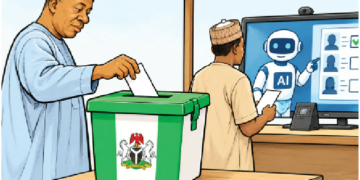
The former Head of State, who was elected in 2015, changed Nigeria’s Democracy Day to 12 June on 6 June 2018. Less than a year to his comeback bid in 2019, Buhari’s action was a masterstroke, considering the huge clouds of opposition hovering over his re-election prospects. By that singular action, the South-west votes were secured and pro-June advocates were sufficiently appeased, following the posthumous award of Grand Commander of the Federal Republic (GCFR) to the man who won the annulled 12 June 1993 poll. Whatever the plausibility or otherwise of changing the date of Democracy Day, it worked for Buhari. The ballot government, despite its manifest failings, has remained the popular form of government, anchored in mass participation, ever crafted by man.
New Horizons
For citizens who are always prone to lamentations of the present, the past is always sought after. This unbroken democracy, inaugurated in May 1999, was an aggregate story of resilience in restoring democracy after its overthrow in the last hours of 1984. In less than two years, the dialectics in power play led to the replacement of General Buhari with the then Chief of Army Staff, General Ibrahim Badamasi Babangida. Under IBB, Nigeria experienced several twists and turns in fashioning a new national democratic system, a process that proved monumental. The approval of a two-party system, which led to the formation of the National Republican Congress (NRC) and the Social Democratic Party (SDP), demonstrated the regime’s commitment to completing the military’s transition programme.
Amid sweeping anger and allegations that the gap-toothed General was unwilling to hand power to civilians, IBB stepped aside, allowing the then Head of the National Interim Government (ING), Chief Ernest Shonekan, to bring the transition to a conclusive end. The then Secretary of Defence, General Sani Abacha, toppled the Shonekan-led ING and declared himself Head of State on 17 November 1993. After nearly five years in power, Abacha passed away in June 1998. General Abdulsalami Abubakar would bring the transition programme to a hurried end with the election and swearing-in of Chief Olusegun Obasanjo as president on 29 May 1999.
Springing Hopes
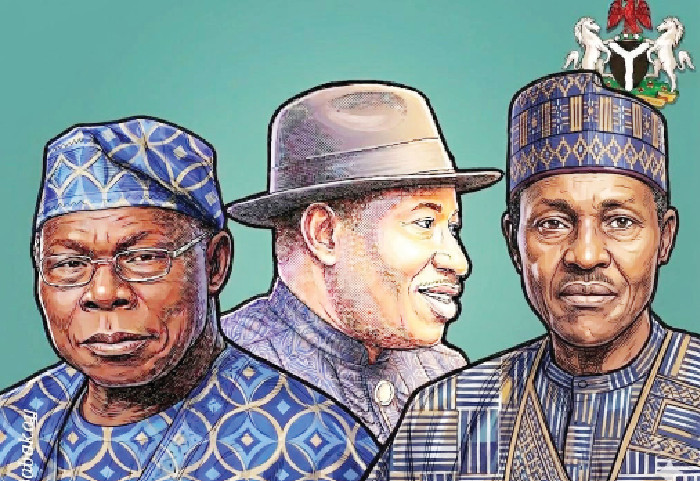
Between May 1999 and 2007, when the Ota Farmer served as president, confidence and hope for democracy were renewed. With the best minds assembled to run the country, Obasanjo’s performance profile ranks among the best since 1999. He launched a frontal assault on corruption by establishing anti-graft agencies nationwide. Obasanjo did little or nothing to deepen democracy by refusing to reform the electoral laws. After his tenure-extension plot failed, he turned himself into a bull in a China shop.
Angry and frustrated at his failed third-term project, Obasanjo brought in the former governor of Katsina state, Umaru Musa Yar’Adua, to succeed him. Obasanjo’s successor was plagued by many challenges, including a fragile health that kept him in hospitals more than in attendance to state matters. After his death on 5 May 2010, his deputy, Goodluck Jonathan, completed the remaining one year of the joint ticket. After the son of the Bayelsa fisherman was elected in 2011, the winds of insecurity proved insurmountable, and his capacity to rein in non-state actors’ activities came into question.
Verbal Promise
Buhari’s eight years in power, on the platform of the All Progressives Congress (APC), were marked by turbulence and frightening uncertainty. Insecurity reigned unchallenged, with nepotism adopted as the guiding principle. His first term concentrated on battling the leadership of the National Assembly, led by Senator Bukola Saraki. Buhari’s second term was without direction, as the nation drifted into the valley of hopelessness.
As the drumbeats of yet another general poll grew louder, citizens heaved a sigh of relief. They thronged to various worship centres to thank the divine powers for surviving Buhari’s era, which some described as one of the darkest periods in the nation’s history.
In recognition of the many plagues that almost overwhelmed the country after Buhari’s presidency, the ‘Renewed Hope’ agenda of President Tinubu is anchored. Within two years of his inauguration, despite the removal of the fuel subsidy and the floating of the naira, the country was on the path of economic recovery.
Insecurity that had once ripped across the country came under control as security agencies decimated terror groups and defeated them in some parts of the country. Three years after assuming power, the Tinubu-led administration is still engaged in fighting non-state actors. The war between us and Israel against Iran has destroyed the strides achieved in fighting inflation. Nigerians are now forced to pay nearly N1,400 for a litre of fuel, and this high cost has led to job losses in the transport sector.
No doubt, Tinubu has achieved some strides in the last three years, but insecurity and economic hardship remain the big elephants in the room. Even when the International Monetary Fund (IMF) reports better days ahead for Nigeria, no fewer than 60 per cent of the population is still trapped in poverty.
The economic hardship sweeping the land reflects crippling despair and offers voters too little hope. Hope in the ballot government must be renewed by focusing on micro-level economic policies to help people experiencing poverty. Whatever Tinubu says to Nigerians on 12 June, he will be judged on two areas: the capacity to ensure the security of lives and improve the quality of life for citizens.
We’ve got the edge. Get real-time reports, breaking scoops, and exclusive angles delivered straight to your phone. Don’t settle for stale news. Join LEADERSHIP NEWS on WhatsApp for 24/7 updates →
Join Our WhatsApp Channel