By Ismail Sani
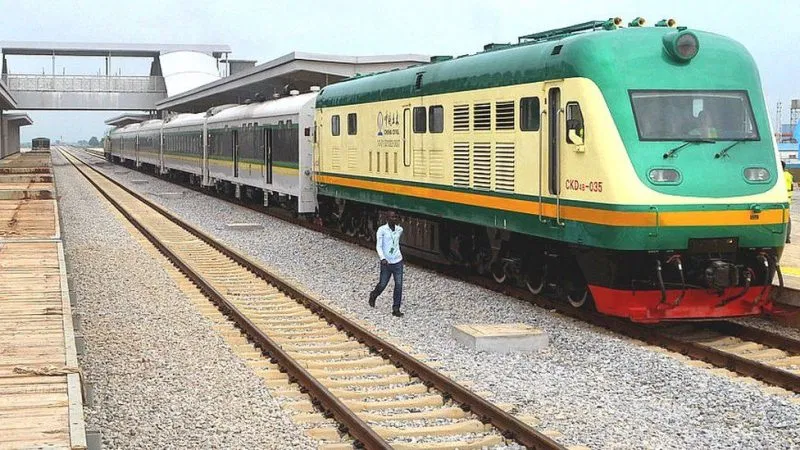
When the Nigerian Railway Corporation launched the Abuja–Kaduna standard gauge rail line in 2016, it signalled a new chapter for public transportation in Nigeria. Spanning 186 kilometres between the Federal Capital Territory and Kaduna State, the railway quickly evolved from a transport alternative into a vital lifeline for thousands of commuters.
The Abuja–Kaduna highway serves as the primary gateway to Nigeria’s North-West — the country’s most populous geopolitical zone. States such as Kaduna, Kano, Katsina, Kebbi, Jigawa, Sokoto, and Zamfara rely heavily on this corridor for commerce, governance, and everyday mobility. It is also the principal route through which travellers from Kano and beyond access the nation’s capital. For years, the highway has struggled under the weight of excessive traffic, infrastructure deterioration, and persistent security concerns. Heavy vehicular movement — from private cars to articulated trucks — has accelerated wear and tear. Despite ongoing road expansion and rehabilitation efforts, improvements have struggled to keep pace with demand.
The introduction of the Abuja–Kaduna rail line significantly eased pressure on the overstretched highway. At its peak, the service operated multiple daily trips in both directions, transporting thousands of passengers each day. It provided a predictable, affordable, and relatively secure alternative to road travel. Professionals began residing in Kaduna while commuting daily to Abuja for work. Business owners travelled between both cities within a single day. Passengers from Kano often drove to Kaduna to connect by rail to Abuja, avoiding long and sometimes risky highway journeys.
This shift reduced vehicle volume on the road, shortened travel times, lowered fuel consumption, and minimized exposure to security threats. Globally, rail transport remains one of the most efficient and cost-effective means of moving large numbers of people. A single modern train can replace hundreds of cars or dozens of buses in one trip. In Nigeria’s current economic climate — marked by rising fuel costs and inflation — the relative affordability of rail travel offers critical relief to citizens. Beyond passenger mobility, rail systems provide lower accident rates compared to highways, environmental advantages, and longer infrastructure lifespan when properly maintained. The Abuja–Kaduna railway has functioned not merely as a convenience, but as a stabilizing force in a region where mobility directly influences economic productivity.
The current operational reality is deeply concerning. From an initial schedule of approximately three trips daily in each direction, services have reportedly been reduced to just one trip per day — and even that has faced operational challenges. Limited availability has led to booking congestion, commuter inconvenience, and renewed strain on the already burdened highway. As demand continues to exceed supply, more passengers are forced back onto the road, increasing congestion and accelerating infrastructure deterioration.
Decisive intervention is urgently required to prevent further decline. Additional train coaches must be procured to restore and expand service frequency. Expanding operational capacity would enable multiple daily trips and rebuild public confidence. Rail infrastructure is capital-intensive and requires continuous technical assessments, timely repairs, and reinforcement of tracks to protect earlier investments. Security along the corridor must also be strengthened. A modern, reinforced steel fence from Abuja to Kaduna would help guard against vandalism and unauthorized access. Protection of critical national assets must remain a national priority.
Equally important is the need to fast-track completion of the Kaduna–Kano rail extension. Kano remains one of Nigeria’s largest commercial hubs and serves as a gateway to trade across the Sahel region. A fully operational Abuja–Kaduna–Kano corridor would significantly reduce highway pressure, lower business transportation costs, stimulate regional trade, and deepen national integration.
Ongoing road construction projects are commendable, but roads alone cannot sustainably meet Nigeria’s growing mobility demands. One train conveys far more passengers at once than hundreds of individual vehicles. Overreliance on road transport is precisely why highways deteriorate rapidly under excessive traffic loads. Strategic rail investment is therefore not a substitute for road development; it is an essential complement that ensures long-term national sustainability.
The Abuja–Kaduna railway has already demonstrated its value. It has eased commuter hardship, enhanced travel safety, promoted economic activity, and strengthened regional connectivity. Allowing it to decline would represent a costly setback for millions who depend on it daily.
The Federal Government, through the Nigerian Railway Corporation and relevant authorities, must urgently restore multiple daily trips, procure additional coaches, ensure sustained maintenance, reinforce corridor security, and prioritize completion of the Kaduna–Kano extension. Nigeria’s future depends on efficient, safe, and affordable mass transit systems. The Abuja–Kaduna rail line is not merely a transportation project — it is a strategic national asset deserving urgent attention and sustained commitment. The time to act is now.
– Ismail Sani writes from Abuja | [email protected]
We’ve got the edge. Get real-time reports, breaking scoops, and exclusive angles delivered straight to your phone. Don’t settle for stale news. Join LEADERSHIP NEWS on WhatsApp for 24/7 updates →
Join Our WhatsApp Channel