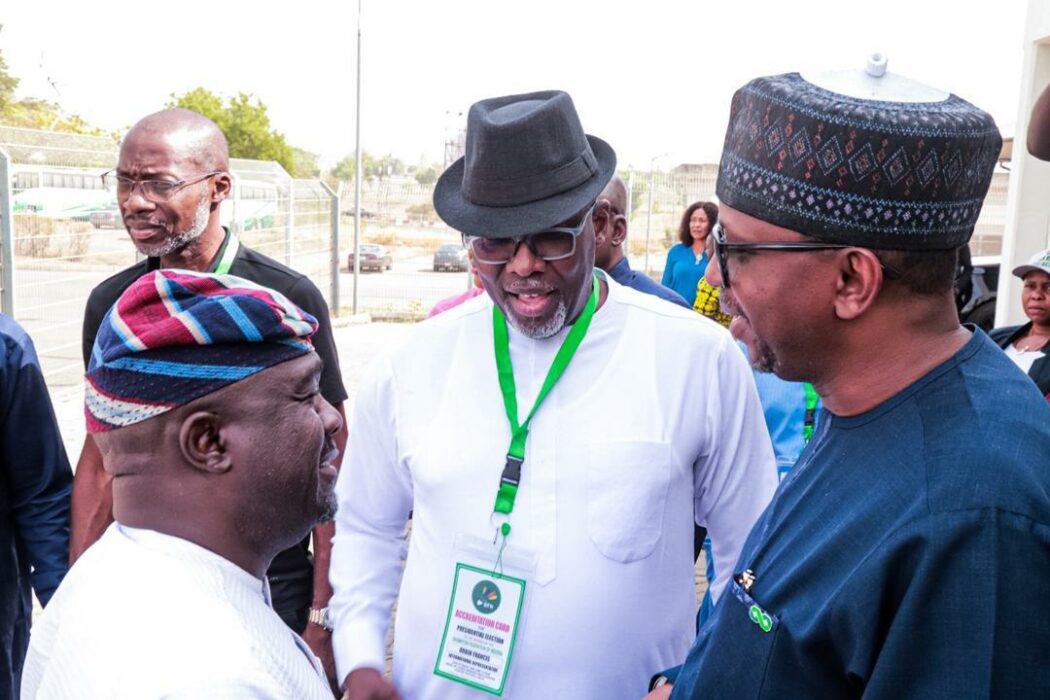
President of the Nigeria Rugby Football Federation (NRFF), Dr. Ademola Are, participated in the 17th Annual General Assembly of Rugby Africa held in Kampala, Uganda.
The assembly gathered leaders from across the continent to discuss and implement landmark decisions that will reshape the future of rugby in Africa.
The high-profile meeting brought together presidents and representatives from member unions to deliberate on key reforms aimed at enhancing governance, improving structures, and securing sustainable growth for the sport across the continent. Central to the discussions was the adoption of a “fit for purpose” Constitution, designed to tackle contemporary challenges facing federations. This new framework reaffirms Rugby Africa’s commitment to robust governance, environmental sustainability, and corporate responsibility while emphasising the core values of the sport.
The Congress also saw the appointment of new leadership, with Kevin Venkiah, President of Mauritius Rugby Union, elected as Treasurer of Rugby Africa, and Godwin Kayangwe, President of Uganda Rugby Union, elected to the Executive Committee.
Significant constitutional amendments were approved, clarifying the organisation’s official identity as “Rugby Africa,” updating address provisions, and introducing clearer definitions for key terms such as Constitution, General Assembly, Executive Committee, and Members. Outdated terminology was eliminated, and distinctions between calendar and working days were established, alongside the introduction of the term “Independent Member.”
Additionally, the regional structure was revised, replacing the former “Anglophone” and “Francophone” divisions with “North” and “South” groupings, aligning with global governance standards. Meeting procedures were strengthened with clearer quorum requirements, formalised voting rights, and standardised timelines for circulating agendas and minutes.
Organisational objectives were expanded to formally incorporate environmental sustainability, safeguarding, and player welfare. Executive Committee reforms included defining the EXCO size as comprising 7–11 members, including four officers and two Independent Members appointed for their professional expertise to enhance oversight. A gender diversity mechanism was introduced, alongside safeguards for gender balance in World Rugby Council representation. Term limits were established for all EXCO and Independent Members, with automatic cessation of office if a member no longer holds an elected position within their union. A new suspension mechanism for breaches of the Code of Conduct was also adopted.
Moving forward, decisions within the EXCO will primarily be reached by consensus. In cases where voting is necessary, outcomes will be recorded as unified EXCO decisions, reinforcing collective responsibility and internal solidarity.
Nigeria’s presence at the Congress underscores its commitment to governance excellence, structural reform, and the long-term development of rugby both domestically and across Africa. Dr. Are actively engaged in discussions aimed at enhancing collaboration among unions, improving regional and continental competitions, and creating sustainable pathways for emerging rugby nations.
The reforms adopted in Kampala are expected to enhance partnerships, unlock investment opportunities, accelerate talent development, and position African rugby for greater competitiveness on the global stage.
We’ve got the edge. Get real-time reports, breaking scoops, and exclusive angles delivered straight to your phone. Don’t settle for stale news. Join LEADERSHIP NEWS on WhatsApp for 24/7 updates →
Join Our WhatsApp Channel