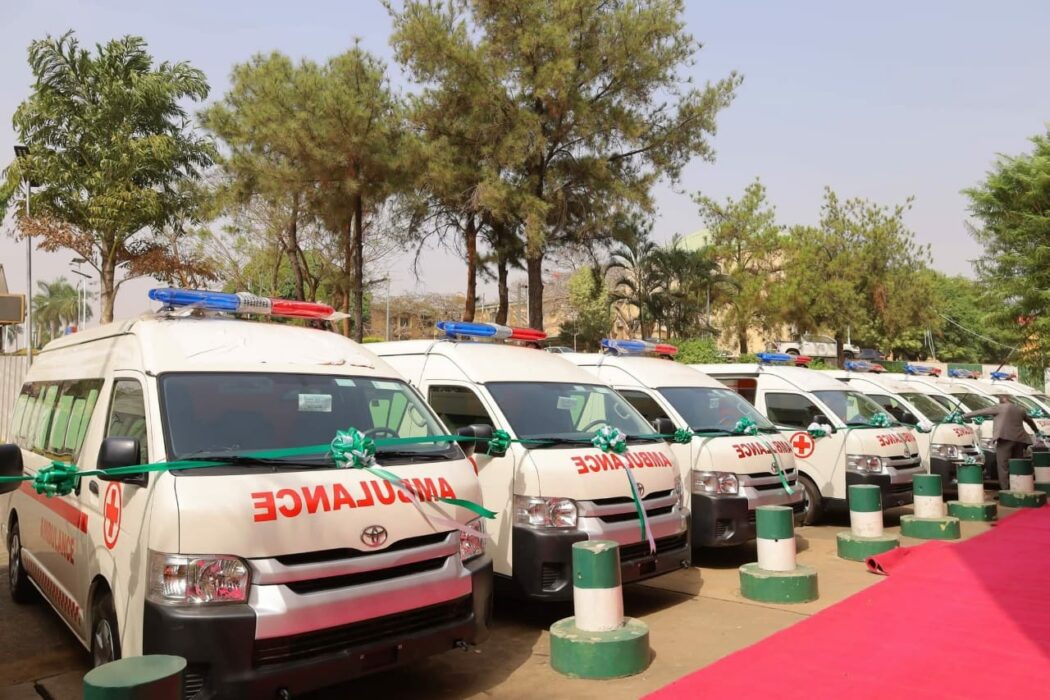
The National Emergency Medical Services and Ambulance System (NEMSAS) has intensified support for states to establish and operationalise ambulance services and emergency care structures across the country.
The national programme manager of NEMSAS, Dr. Emuren Doubra, said the programme has significantly strengthened state-level Emergency Medical Services (EMS) systems, contrary to recent reports that offered an incomplete picture of the intervention.
He noted that NEMSAS has worked with governments to set up structures that manage ambulance services and ensure free emergency care for poor and vulnerable citizens in public, private, and federal tertiary facilities.
According to him, all 36 states and the Federal Capital Territory now have NEMSAS-supported EMS structures, with 33 states and the FCT already operating state emergency medical services and ambulance systems at various levels.
Out of these, 21 states currently have functional ambulance operations, while others are preparing to commence service delivery, he said.
Although ambulance distribution remains uneven, Dr. Doubra emphasised that the systems now exist nationwide.
“We cannot yet say ambulance distribution is equitable, but we have ambulances operational in these states. No state is without an emergency medical treatment gateway under the Basic Health Care Provision Fund,” he said.
He added that the remaining three states without fully established EMS coordinating bodies are being served through empanelled federal tertiary hospitals, ensuring that no population is left without access to emergency medical coordination.
A major challenge, however, lies in public access to the 112 national emergency number managed by the Nigerian Communications Commission. A survey conducted by National Health Fellows revealed that although 80 per cent of states can access the number, many callers struggle to connect on the first attempt, with significant variations across mobile networks. Awareness of the number also remains low nationwide.
Dr. Doubra called on the NCC to improve the functionality of the 112 line and mount a national awareness campaign.
He also advocated for a Good Samaritan Law to protect citizens who assist victims during emergencies, noting that fear of police harassment discourages many from offering help.
Highlighting further progress, he pointed to the Rural Emergency Service and Maternal Transport (RESMAT) programme, which targets delays in transporting pregnant women and newborns during emergencies.
Operational in 123 LGAs, RESMAT has transported more than 40,000 pregnant women from hard-to-reach communities to health facilities for safe delivery. An additional 11,200 women were transported for obstetric emergencies and successfully treated at accredited CEmONC facilities, while 1,680 newborns with complications were also safely transported, he explained.
Dr. Doubra stressed that strengthening Nigeria’s emergency care requires collaboration across emergency response agencies and public optimism about ongoing reforms.
We’ve got the edge. Get real-time reports, breaking scoops, and exclusive angles delivered straight to your phone. Don’t settle for stale news. Join LEADERSHIP NEWS on WhatsApp for 24/7 updates →
Join Our WhatsApp Channel