
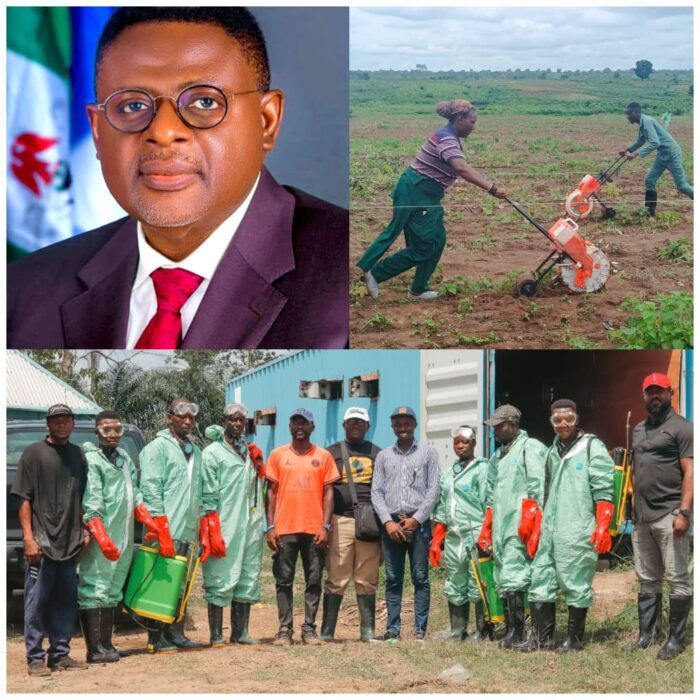
The Cross River State government is set to register approximately 17,000 cocoa, oil palm, and coffee farmers across the state through the State Traceability System.
This initiative was announced on Wednesday during a stakeholders’ engagement on the implementation of the Cross River State Traceability System in Calabar.
“The registration is in line with requirements of the European Union Deforestation Regulation, EUDR,” said Johnson Ebokpo, Cross River Commissioner for Agriculture.
Ebokpo explained that global agricultural trade is undergoing significant reform, and the EUDR now requires commodities like cocoa and other forestry products entering the EU market to be proven deforestation-free and environmentally resilient.
The commissioner stated, “Our objective is to establish credible technology that captures farmland data, integrates geolocation mapping, strengthens aggregation structures, and positions across the state.”
He acknowledged the support from Pula Advisors, the Lead Consultants for the Traceability Programme, for building technical capacity that meets international standards.
Dr. Adewole Bello, the Country Field Team Lead of Pula Advisors, said, “We will collect EUDR and traceability compliance data on 17,000 farmers in 17 local government areas across the state.”
The primary driver of the Cross River State Traceability System is the EUDR, which mandates that agriculture commodities exported to the European Union must be “traceable to the exact farm boundary, legally produced, and verifiably deforestation-free.”
We’ve got the edge. Get real-time reports, breaking scoops, and exclusive angles delivered straight to your phone. Don’t settle for stale news. Join LEADERSHIP NEWS on WhatsApp for 24/7 updates →
Join Our WhatsApp Channel