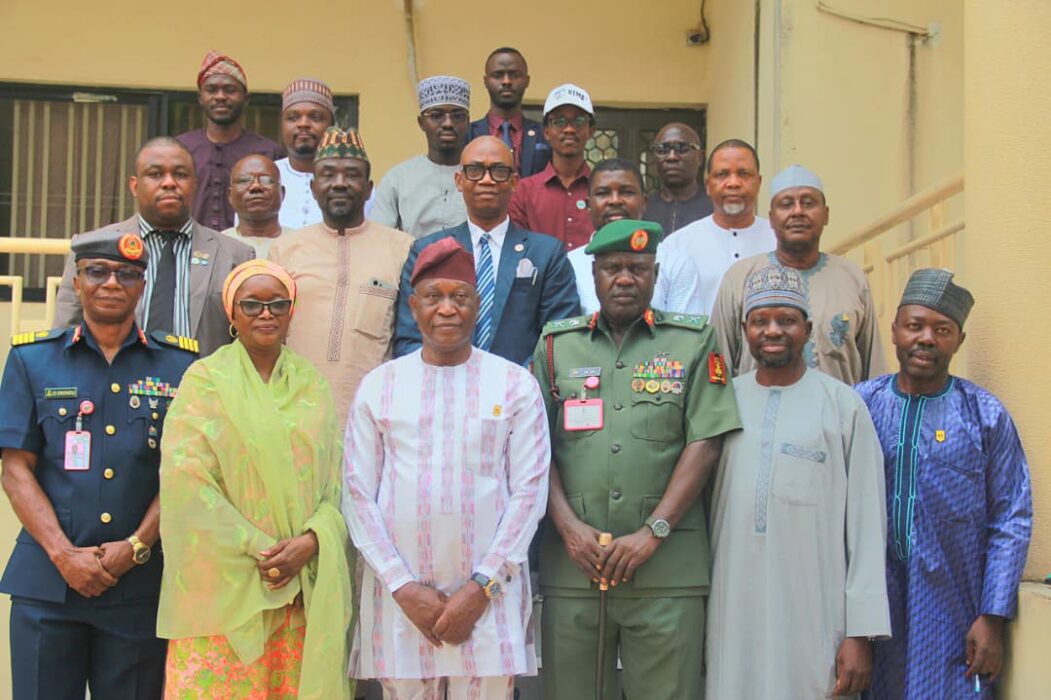
Security, media and technology experts have endorsed the establishment of an independent Crisis Communication Hub (CCHub) to strengthen Nigeria’s capacity to detect and respond to misinformation, disinformation and other digital threats capable of destabilising the country.
The resolution was reached during a maiden stakeholders’ meeting convened by the Centre for Crisis Communication (CCC) in Abuja, where participants deliberated on the operational framework and long-term sustainability of the proposed digital infrastructure.
The meeting brought together representatives of security agencies, information management institutions, media organisations, civil society groups and technology experts from both the public and private sectors.
Chairman of the Centre, Chris Olukolade, a retired major general, said the hub would serve as a platform for real-time monitoring, analysis and early detection of harmful online narratives.
Olukolade commended the Federal Ministry of Information and National Orientation and the National Information Technology Development Agency (NITDA) for supporting the initiative.
He explained that the project is aimed at preventing the spread of content capable of undermining national unity, security and social cohesion.
According to him, the proposed CCHub emerged as a key recommendation from the National Symposium on Digital Innovation in Crisis Communication organised by the centre in November 2025.
The symposium was based on a research study conducted for the centre by Yushau A. Shuaib titled “Artificial Intelligence in Crisis Communication in Nigeria: Challenges and Prospects,” which highlighted the need to modernise Nigeria’s crisis communication architecture in line with global best practices.
At the meeting, stakeholders noted the growing influence of social media platforms, artificial intelligence tools, deepfakes and disinformation campaigns, warning that digital spaces are increasingly being used to spread content capable of inflaming public sentiment and escalating political or communal tensions.
They stressed the need for a modern crisis communication system supported by 24-hour monitoring, artificial intelligence, open-source intelligence tools and sentiment analysis to track emerging threats and issue early warning alerts to relevant authorities.
Participants also observed that uncoordinated messaging during crises—often caused by delayed or conflicting statements from government agencies frequently worsens panic and confusion among the public.
They further identified capacity gaps among journalists, public relations officers and government spokespersons in areas such as digital verification, fact-checking and detecting AI-generated misinformation.
The stakeholders therefore recommended a multi-stakeholder governance structure involving government institutions, civil society, academia, technology companies and media organisations.
They also advocated the development of strong technological infrastructure, including secure servers, AI-powered monitoring systems, advanced data analytics and robust cybersecurity safeguards.
Another major proposal was the creation of a National Digital Risk Index to track misinformation trends, public sentiment and emerging digital threats, providing policymakers with data-driven insights to anticipate crises before they escalate.
Participants acknowledged that sustainable funding would be critical and recommended a diversified financing model combining government support, donor grants, corporate partnerships, research collaborations and revenue from specialised training programmes.
They also called for stronger cooperation with global technology platforms through agencies such as NITDA to enhance early detection and mitigation of harmful digital content.
The stakeholders resolved to continue consultations and develop a roadmap for the successful launch and long-term sustainability of the Crisis Communication Hub.
They noted that establishing a national community of crisis communication practitioners—linking government and security agencies, the media, civil society organisations and academic institutions—would improve coordinated communication during emergencies and strengthen public trust.
We’ve got the edge. Get real-time reports, breaking scoops, and exclusive angles delivered straight to your phone. Don’t settle for stale news. Join LEADERSHIP NEWS on WhatsApp for 24/7 updates →
Join Our WhatsApp Channel