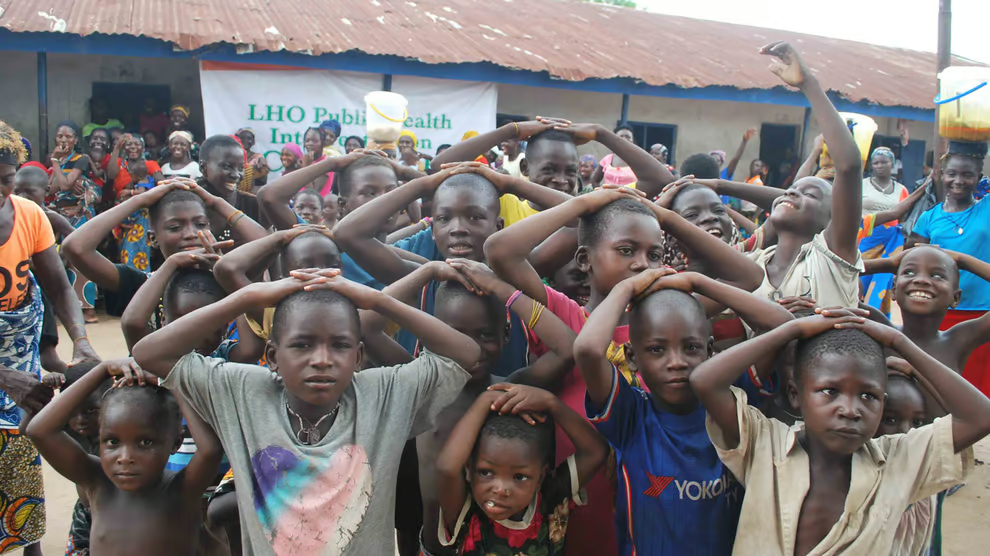
The stark reality confronting Nigeria is no longer a statistical abstraction but a generational emergency. Only 30 per cent of school-age children in the North attend formal school, meaning seven out of every 10 are out of the classroom. Nationally, United Nation’s Children Fund (UNICEF) and United Nation’s Educational, Scientific and Cultural Organisation (UNESCO) syntheses place the out-of-school children figure at over 20 million — the highest in the world. In the North-West and North-East, banditry and insurgency have closed or disrupted hundreds of schools, poverty keeps children at home or on the streets, gender norms disproportionately sideline girls, and a collapsing teacher pipeline undermines whatever learning still occurs. This is not merely an education crisis; it is a profound moral and strategic failure that feeds the very insecurity it seeks to escape from .
The link between out-of-school children and worsening insecurity is direct, vicious, and self-reinforcing. Banditry in Zamfara, Katsina, Sokoto and Kaduna has forced the closure or relocation of dozens of schools in recent months. Insurgency in Borno, Yobe and Adamawa continues to displace learners and teachers alike. When schools become targets or inaccessible, children are pushed into the streets or the arms of criminal networks. The cycle is cruelly logical: insecurity keeps children out of school; out-of-school children become easy recruits for bandits, insurgents and criminal gangs; and the resulting violence closes more schools. UNICEF’s 2025 State of Nigeria’s Children report and subsequent updates confirm that over 10.2 million primary-age and 8.1 million junior-secondary-age children are out of school, with the North bearing the heaviest burden. The human cost is incalculable — lost literacy, lost skills, lost dignity, and a lost future.
Philosophically, this crisis strikes at the heart of what it means to be a nation. Education is not a luxury or a sectoral policy; it is the social contract made visible. When a society fails to educate its young, it breaks faith with its own children and mortgages its tomorrow. Nigeria’s founding leaders — from Ahmadu Bello to Nnamdi Azikiwe and Obaseki Awolowo understood that human capital is the ultimate resource. Today, in parts of the North, we are witnessing the opposite: a deliberate or negligent surrender of that resource to chaos. The child who should be learning algebra is instead learning survival on the streets or the bush. The girl who should be in class is given off to street hawking or pressed into domestic servitude or even worse, early marriage. Each such child represents not only a personal tragedy but a collective national wound that festers into banditry, insurgency, and social fragmentation.
The establishment’s response has been characterised by declarations rather than transformation. Successive governments have announced safe schools initiatives, Almajiri integration programmes, and conditional cash transfers, yet the numbers keep worsening. Teacher qualification stands at only 53 per cent in many Northern states, with pupil-teacher ratios reaching 1:100 in some areas. Funding is announced, but implementation is patchy and often captured by political patronage. The Minimum Standards for Safe Schools remain largely aspirational in conflict zones. This is not mere incompetence; it reflects a deeper philosophical failure — the prioritisation of short-term political survival over long-term human development.
Yet there is a clear path forward, as repeatedly urged by Northern education stakeholders and development partners in recent months. It calls for a joint federal–state compact backed by donor co-financing: declare a National Education Emergency with a Northern focus; enforce Minimum Standards for Safe Schools with funding conditionality; launch a Teacher Workforce Rebuild programme targeting 150,000 new teachers with North-first deployment; sign a Northern Basic Education Compact among governors; and establish a Multi-Donor Trust Fund for safe schools retrofits, WASH facilities, solar power, learning acceleration and psychosocial support. The targets are ambitious but achievable — doubling Northern attendance from 30 per cent to 60 per cent by 2028, reopening thousands of schools, and significantly reducing the national out-of-school children figure.
The philosophical imperative is clear: education is the ultimate act of hope in the face of despair. It is the refusal to accept that a child born in Tsafe, Gwoza or Damaturu is destined for the gun rather than the classroom. Northern leaders, the Federal Government, development partners, traditional rulers, religious leaders and civil society must now move beyond rhetoric. The proposed compact is not just a policy document; it is a moral covenant with Nigeria’s children.
The Dorayi and Tsafe tragedies, the school closures, the recruitment of out-of-school boys into banditry — these are not isolated events. They are symptoms of a nation that has allowed its most precious resource to waste away. The time for half-measures is over. Nigeria must choose, decisively and urgently, between a lost generation and a redeemed one. The children of the North — and indeed of Nigeria — are waiting for that choice.
We’ve got the edge. Get real-time reports, breaking scoops, and exclusive angles delivered straight to your phone. Don’t settle for stale news. Join LEADERSHIP NEWS on WhatsApp for 24/7 updates →
Join Our WhatsApp Channel