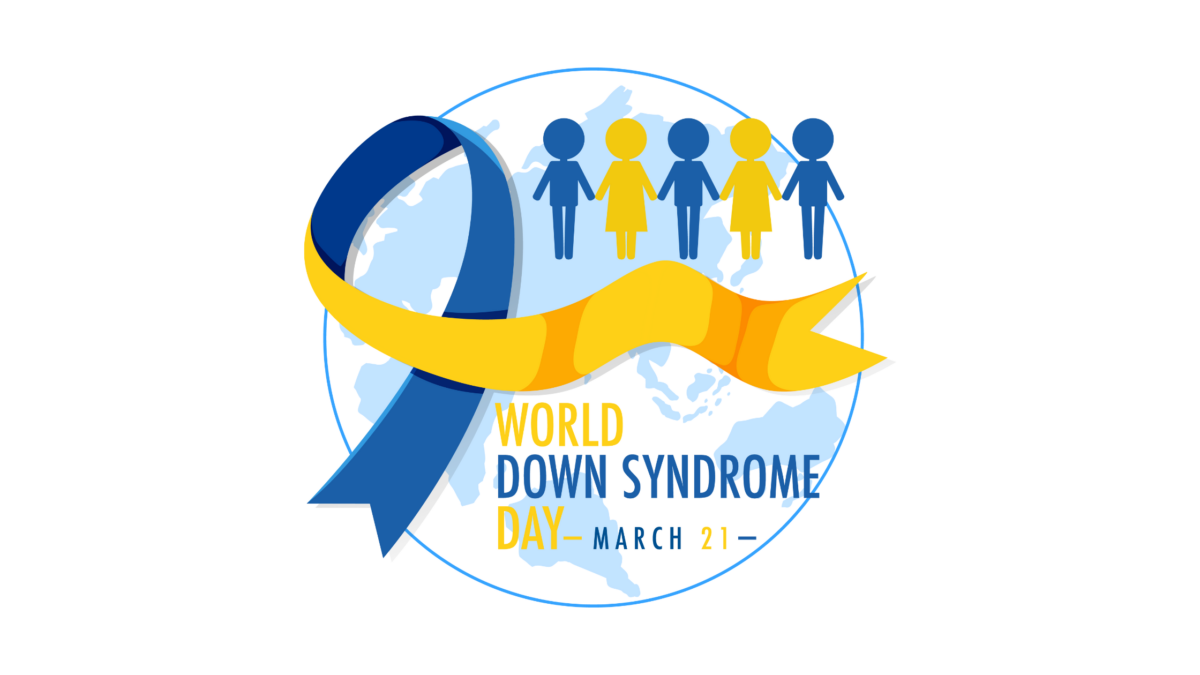
As the world marks the 2026 World Down Syndrome Day ,March 21, with the theme “Together Against Loneliness,” Nigerians must confront an uncomfortable truth: this country has barely moved past the stage of acknowledging that Down syndrome exists, let alone building the systems required to ensure that those living with the condition are not condemned to lives of isolation and neglect.
The theme chosen for this year’s observance is not an abstraction. Loneliness, for persons with Down syndrome and other intellectual disabilities, is not a mere emotional inconvenience. It is a health crisis – one that breeds depression, erodes self-worth, and shortens lives.
And in Nigeria, where stigma still masquerades as cultural belief and government support is practically non-existent, the loneliness is compounded by something worse: institutional abandonment.
It is instructive to note that Down syndrome is a genetic condition caused by the presence of an extra copy of chromosome 21, commonly referred to as Trisomy-21. It affects physical development, produces characteristic facial features, and results in varying degrees of intellectual disability.
Globally, about one in every 1,000 to 1,100 babies is born with the condition, translating to over six million people worldwide. In Nigeria, exact figures remain elusive due to poor data infrastructure, but a study covering nine years in a Nigerian hospital revealed an incidence of one in 865 live births ;a rate slightly higher than the global average.
Cytogenetic analysis of 386 patients in that study showed that 95.5 per cent of cases resulted from regular trisomy 21. These are not small numbers. Tens of thousands of Nigerian children are born with Down syndrome each year, and the question that should keep policymakers awake is: what kind of life awaits them?
The answer, for most, is bleak. Access to education remains one of the most formidable barriers. Inclusive education where children with Down syndrome learn alongside their peers with additional support from trained teachers is the gold standard recommended by disability advocates worldwide. In Nigeria, it is closer to a fantasy.
Parents who seek inclusive schooling for their children routinely encounter resistance from institutions that neither understand the condition nor have the capacity to accommodate it. Where inclusive schools exist, the fees are often prohibitive for ordinary families. The absence of structured government support means that the financial and emotional burden falls almost entirely on parents and caregivers, many of whom are already stretched thin.
Today, awareness has improved but stigma and misconception persist with stubborn tenacity. Many Nigerians still attribute Down syndrome to supernatural causes or interpret it as a curse. That ignorance does not just wound feelings. It drives exclusion from schools, workplaces, religious gatherings, and the ordinary social interactions that give life meaning. And exclusion, sustained over years, is what produces the loneliness that this year’s theme seeks to address.
Medical experts are clear that while there is no cure for Down syndrome because it is genetic ,individuals with the condition can live fulfilling and productive lives with proper care, early intervention, and sustained social support. Children with Down syndrome are slow learners, but they are learners. Once they acquire a skill, they retain it. They are capable of holding jobs, forming friendships, participating in community life, and contributing to society in ways that confound the low expectations imposed on them by prejudice.
The gap between what is possible and what Nigeria currently provides is vast, and it is a gap that government policy should be closing.
The Association for Intellectual and Developmental Disabilities of Nigeria, through its National President, Joko Omotola, has called for urgent action to tackle social isolation among persons with Down syndrome. The call is familiar. Advocacy groups have been making it for years. What is missing is the political will to translate these calls into concrete policy?
Nigeria needs a national framework for inclusive education that compels schools to accommodate children with intellectual disabilities and provides them with the trained personnel and resources to do so. The country needs community-based support services that extend beyond the major cities. It needs investment in caregiver support systems – mental health services, training, respite care, and financial assistance because the wellbeing of persons with Down syndrome is inseparable from the wellbeing of those who care for them.
With one of the largest populations of persons with Down syndrome in Africa, this country has both a responsibility and an opportunity to lead on disability inclusion across the continent. That leadership starts at home with policies that have teeth, budgets that reflect priorities, and a society willing to dismantle the prejudices that keep its most vulnerable members locked in isolation.
The theme “Together Against Loneliness” is a reminder that inclusion is not charity. It is a right. And it is not enough to place a child with Down syndrome in a classroom or a workplace and call it inclusion. True inclusion means active participation, meaningful relationships, and a sense of belonging. It means designing systems that accommodate difference rather than punishing it. Nigeria is far from that ideal. But the distance is not an excuse for inaction ,it is the reason action is urgent.
Every child born with Down syndrome in this country deserves more than survival. They deserve a society that sees them, includes them, and refuses to leave them alone.
We’ve got the edge. Get real-time reports, breaking scoops, and exclusive angles delivered straight to your phone. Don’t settle for stale news. Join LEADERSHIP NEWS on WhatsApp for 24/7 updates →
Join Our WhatsApp Channel