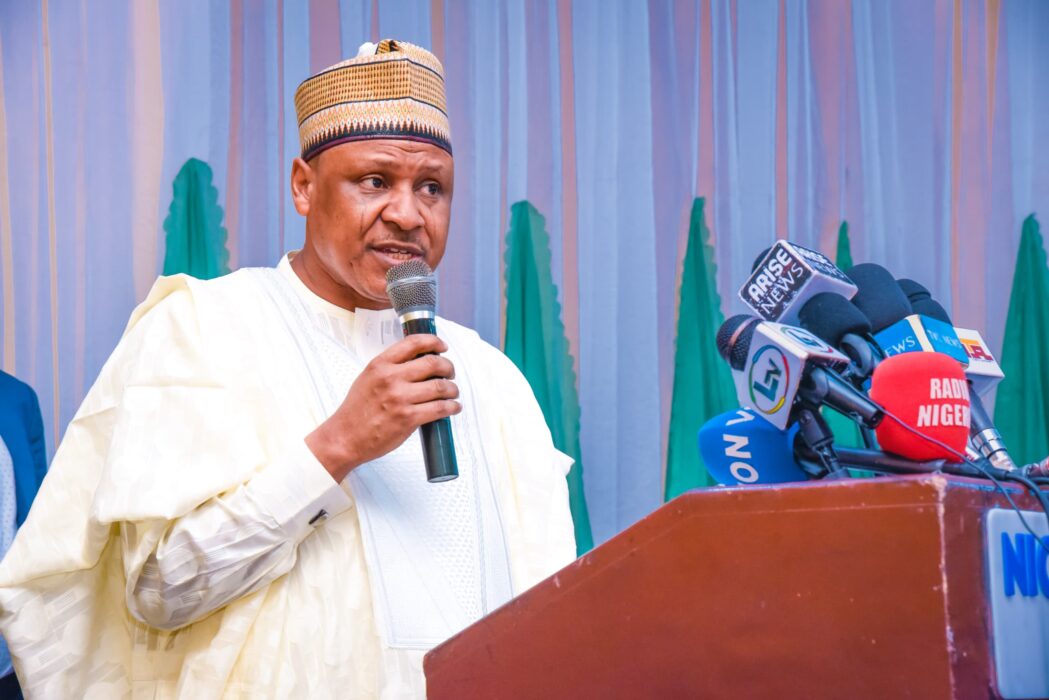
The Minister of Information and National Orientation, Mohammed Idris, has reaffirmed the critical role of the media in shaping national perception and promoting accountability, describing it as a powerful force in influencing the country’s direction.
He stated this in Abuja on Tuesday at the National Anti-Money Laundering and Counter Financing of Terrorism (AML/CFT) Media Outreach Programme with the themed, “The Role of Media in the Fight Against Corruption: Issues and Challenges.”
The Minister, who was represented at the event by the Executive Secretary and Chief Executive Officer of the Nigerian Press Council, Dili Ezughah, said the media plays a pivotal role in strengthening transparency and the fight against corruption.
“The media is not just an observer in society; it is a powerful force that shapes perception, drives accountability, and influences national direction. Through accurate reporting, investigative journalism, and sustained public enlightenment, the media empowers citizens and strengthens the fight against corruption,” he said.
Idris noted that the administration of President Bola Ahmed Tinubu has taken deliberate steps to tackle corruption and curb illicit financial flows, positioning Nigeria as a responsible player in the global fight against financial crimes.
According to him, ongoing reforms have strengthened financial intelligence systems, improved monitoring of suspicious transactions, and enhanced compliance with global anti-money laundering and counter-terrorism financing standards.
He highlighted the role of key institutions, including the Nigerian Financial Intelligence Unit, in improving coordination and enforcement, noting that increased collaboration among agencies has boosted the capacity to detect, investigate, and prevent financial crimes.
The Minister also pointed to reforms in the financial sector supported by the Central Bank of Nigeria, which he said are enhancing transparency and restoring confidence in the economy.
“At the regional level, Nigeria continues to work closely with partners such as the Intergovernmental Action Group Against Money Laundering in West Africa, reinforcing our shared commitment to combating cross-border financial crimes,” he added.
Idris explained that the government’s focus on digitalisation and accountability is helping to close loopholes that previously enabled corruption to thrive.
However, he acknowledged the challenges facing the media, including the complexity of financial crime reporting, misinformation, limited resources, and safety concerns.
“These challenges underscore the need for collective action. We must strengthen collaboration between government institutions and the media, invest in capacity building for journalists, and ensure timely access to accurate and credible information,” he said.
He urged journalists to build capacity in specialised reporting areas and uphold high ethical standards, assuring that the Federal Ministry of Information and National Orientation would continue to support the media through public enlightenment and improved access to information.
“The fight against corruption is a shared responsibility. The government and the media cannot do it alone. But together, we can build a Nigeria where transparency is the norm, accountability is demanded, and corruption has no place to hide,” he said.
The Minister also commended the organisers of the programme, noting that such engagements are vital for strengthening cooperation and advancing the anti-corruption agenda in Nigeria and across the West African region.
We’ve got the edge. Get real-time reports, breaking scoops, and exclusive angles delivered straight to your phone. Don’t settle for stale news. Join LEADERSHIP NEWS on WhatsApp for 24/7 updates →
Join Our WhatsApp Channel