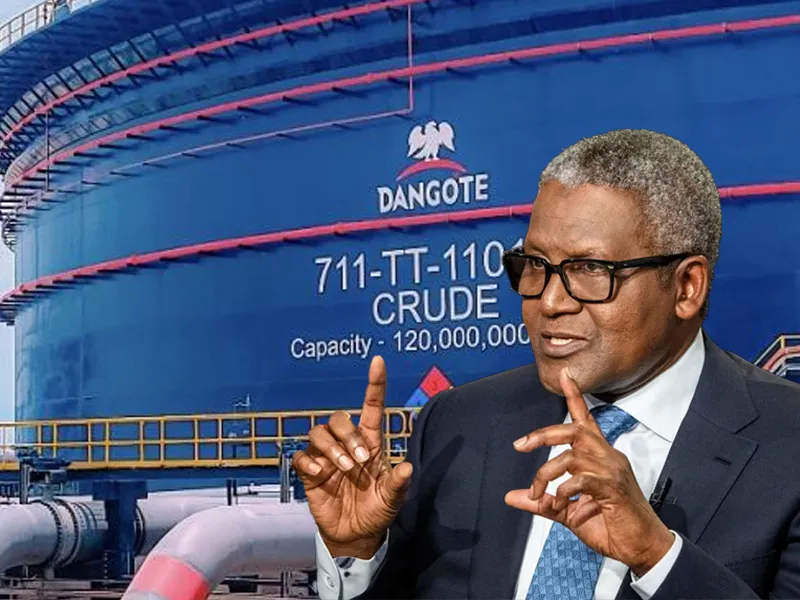
Prices of petrol in Nigeria has reached record-high levels, as maximum output from the Dangote Petroleum Refinery has failed to sustain and provide buffer for the country from the energy market impact of war in Iran.
The 650,000 barrels-per-day refinery, which became fully operational early this yea was designed to transform Nigeria into a major exporter of refined products after decades of inadequate refinery capacity.
In the past, that repeatedly led to fuel shortages but government subsidies kept pump prices low.
President Bola Tinubu removed this buffer when he took office in 2023, promising reforms that earned plaudits from international investors.
Nigerians currently face the shock of a 65 per cent price spike as the impact of the new refinery has been blunted by the need to import large volumes of expensive crude from abroad, even though Nigeria is Africa’s biggest oil producer.
Dangote, the biggest refinery in Africa which began operations in 2024, has already started exporting fuel to regions other than West Africa. The refinery started up in January 2024 with the launch of diesel and naphtha production and began producing gasoline in September 2024.
In the early days of the war in the Middle East, the refinery said it would keep its “unwavering commitment to serving as a stabilising force amid recent shocks in the international oil market.”
However, the cost of crude for the refinery has escalated along with the surge in international crude oil prices, as Dangote relies on crude imports to process fuels.
“The high crude cost is compounded by the fact that Nigeria upstream producers have failed to supply crude oil to the refinery as required under the PIA, forcing us to source a substantial portion through international traders who charge an additional premium,” Dangote’s management said on March 5.
Therefore, Nigerians now pay 65 per cent higher prices for gasoline, according to Reuters due to the refinery’s exposure to imports from the international markets.
Dangote’s CEO David Bird, said last week that the refinery currently receives only five local cargoes out of the 13-15 crude cargoes previously agreed.
“We try and maintain some stability within a commercially acceptable range but all our cost inputs—from crude to freight and insurance—are impacted,” Bird said.
Despite setbacks in petrol production last year, the Dangote refinery processed record volumes of crude per day in January 2026.
Just before the war, Dangote supplied 62 per cent of the country’s premium motor fuel, overtaking importers for the first time ever.
But now the international supply crisis has exposed the reliance on foreign crudes and the price Dangote is paying for such crude on the international market.
The constraint stems from Nigeria’s financing model as the Nigerian National Petroleum Company Limited’s joint‑venture crude is tied to oil-backed loans and pre‑export deals.
That means much of Nigeria’s roughly 1.5 million barrels-per-day of production goes to paying debts to international oil majors, banks and traders. The NNPC does not disclose its obligations, but analysts estimate they amount to about 400,000 bpd.
Bird, said the Dangote refinery can only source about five crude cargoes a month locally, far short of the 13–15 required. It has to import the rest at prices dictated by the impact of the Middle Eastern war. For Nigeria the size of a cargo is typically around a million barrels.
The difficulty is compounded because Nigeria does not have a strategic fuel reserve and the government has yet to begin action to set one up.
“A strategic reserve would have shielded Nigeria somewhat from the inflationary effects of price spikes and keep refineries supplied during prolonged disruptions,” Mikolaj Judson, an analyst at advisory company Control Risks, said.
The energy supply disruptions that have followed U.S.-Israeli attacks on Iran, which began at the end of February, are unprecedented. As a result of the conflict, shipment through the Strait of Hormuz, a route for about one-fifth of global energy supplies, is effectively closed for commercial shipping.
International oil prices have leapt to well above $100 a barrel, roughly 50% higher than before the war began, boosting the profits of many energy majors, while governments and ordinary consumers grapple with the risk of a surge in inflation.
In Nigeria, pump prices have risen by 65 per cent more than elsewhere in the region, where government price controls have limited the rise.
Between March 2 and March 21, fuel prices rose by about 10–17 per cent in Ghana, were unchanged in Kenya due to price controls, and increased by around 1 per cent in South Africa, according to industry and regulatory pricing data.
We’ve got the edge. Get real-time reports, breaking scoops, and exclusive angles delivered straight to your phone. Don’t settle for stale news. Join LEADERSHIP NEWS on WhatsApp for 24/7 updates →
Join Our WhatsApp Channel