
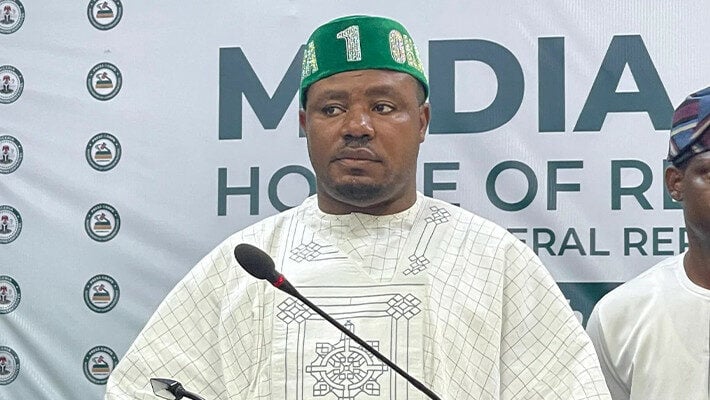
The Deputy Spokesperson of the House of Representatives, Philip Agbese, has cautioned against moves to fragment pipeline surveillance operations in the Niger Delta, warning that such actions could undermine coordination and reverse recent gains in oil infrastructure protection.
Agbese spoke in Abuja amid growing calls by some groups for the decentralisation of pipeline surveillance contracts currently handled by private firms, including Tantita Security Services Nigeria Limited.
While acknowledging concerns about inclusion and equity in the region, the lawmaker stressed that pipeline surveillance remains a critical national security responsibility that should not be subjected to political pressure or indiscriminate participation.
“Pipeline surveillance is not a contract that can be shared like political patronage. It is a strategic national security function aimed at safeguarding Nigeria’s economic lifeline,” he said.
According to him, the current centralised structure has contributed to improvements in crude oil production and a reduction in pipeline vandalism, attributing the progress to enhanced coordination and operational discipline.
He warned that dividing the responsibility among multiple actors could weaken accountability, create operational gaps, and expose the system to infiltration by criminal elements.
“When you proliferate such a sensitive responsibility among too many actors, you inevitably create gaps. Those gaps can be exploited,” Agbese added.
The lawmaker further noted that the involvement of unvetted actors could compromise intelligence gathering and embolden oil thieves, stressing that the protection of oil infrastructure is directly linked to Nigeria’s economic stability.
“Our oil assets are not just regional resources; they are national assets. Any disruption to their protection affects government revenue and the broader economy,” he said.
Agbese also cautioned against framing the debate as a struggle for entitlement, warning that such narratives could heighten tensions in the Niger Delta.
He urged stakeholders to adopt dialogue in engaging relevant authorities, rather than protests that could escalate the situation.
“At a time when the country is working to stabilise oil production and improve revenue, we must avoid actions that could derail progress,” he said.
The lawmaker emphasised the need to sustain existing surveillance frameworks that have demonstrated effectiveness, while ensuring continuous monitoring for transparency and accountability.
“Not every responsibility can be democratised. Some require precision, trust and a clear chain of command. Pipeline surveillance is one of them,” he added.
We’ve got the edge. Get real-time reports, breaking scoops, and exclusive angles delivered straight to your phone. Don’t settle for stale news. Join LEADERSHIP NEWS on WhatsApp for 24/7 updates →
Join Our WhatsApp Channel