
• Hausa Edition
  • Podcast
  • Conferences
  • LeVogue Magazine
  • Business News
  • Print Advert Rates
  • Online Advert Rates
  • Contact Us
Wednesday, September 9, 2026
Leadership Newspapers
No Result
View All Result
  • Home
  • News
  • Politics
  • Business
  • Sport
    • Football
  • Health
  • Entertainment
  • Education
  • Opinion
    • Editorial
    • Columns
  • Others
    • LeVogue Magazine
    • Conferences
    • National Economy
  • Contact Us
Hausa Edition
  • Home
  • News
  • Politics
  • Business
  • Sport
    • Football
  • Health
  • Entertainment
  • Education
  • Opinion
    • Editorial
    • Columns
  • Others
    • LeVogue Magazine
    • Conferences
    • National Economy
  • Contact Us
No Result
View All Result
Leadership Newspapers
No Result
View All Result

The Queen of Amada: How Barmani Choge Broke The Mould

Adejoke Alabi-Henry by Adejoke Alabi-Henry
5 months ago
in Feature
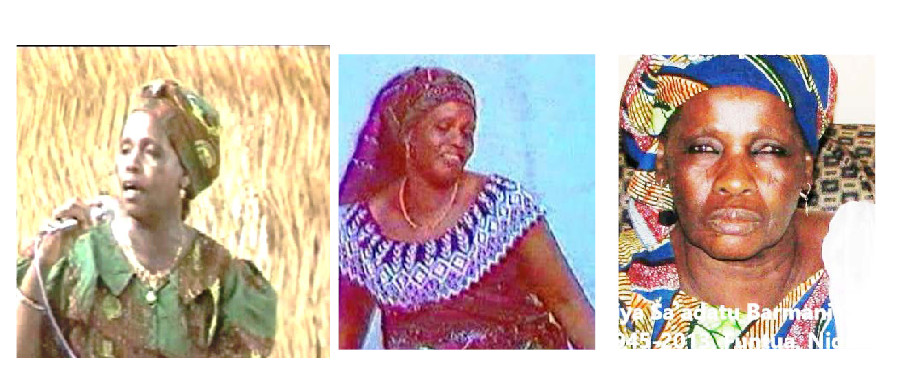
Hajiya Barmani Choge
Share on WhatsAppShare on FacebookShare on XTelegram

Long before the world danced to the global rhythms of modern Afrobeats, a bold, witty woman from Funtua, Katsina State, was already shaking the foundations of Northern Nigerian society. Hajiya Barmani Choge was not just a singer; she was a fprce wrapped in a wrapper, armed with a calabash and a voice that refused to be silenced.

In the 1970s and 80s, when the music scene was largely dominated by men, Barmani Choge emerged as the pioneer of Amada music. This was a traditional genre played primarily by women, using upturned calabashes floating in basins of water to create a hypnotic, rhythmic thump. While others sang praises of politicians and wealthy patrons, Barmani chose a different path: she sang for the everyday woman.

What made Barmani a true pioneer was her lyrical bravery. She used simple, earthy Hausa to discuss topics that were often considered “hush-hush” in conservative circles. She sang about the importance of female education, the dignity of trade, and even the complexities of polygamy. Her most famous songs, like “Sakarai Na Miji” (A Fool of a Husband) and “Dare Dubu Ne”, were more than just entertainment; they were social commentaries.

She didn’t just perform for the elite. Barmani was a staple at weddings and naming ceremonies, bringing joy to the “indoor” lives of women. Her music gave them a sense of identity and a reason to dance. She encouraged women to get up, start small businesses, and find their own voices in a rapidly changing world.

Barmani Choge’s influence stretched far beyond the North. Her style laid the groundwork for the “girl power” energy we see in African music today. She proved that a woman could lead a band, command a crowd, and speak her truth without losing her cultural essence.

RELATED NEWS

Taming The Gullies, Reclaiming The Future: The Inuwa Yahaya Erosion Control Legacy

NASENI: Three Years of Institutional Reform, Technology Commercialisation And Industrial Development Under Khalil Suleiman Halilu

The $250 Million Benue Food City Complex: Another Alia’s Touch

Even though she passed away in 2013, her rhythm lives on. Modern Hausa musicians and even contemporary pop stars draw inspiration from her “call-and-response” style and her ability to tell a complete story in just a few verses.

Barmani Choge remains a reminder that African music has always been a tool for empowerment. She wasn’t just a singer; she was a pioneer who taught us that the sound of a calabash could be just as powerful as any electric guitar. As we celebrate African icons, we must always save a seat at the table for the Queen of Amada, the woman who made the North dance and the world listen.

We’ve got the edge. Get real-time reports, breaking scoops, and exclusive angles delivered straight to your phone. Don’t settle for stale news. Join LEADERSHIP NEWS on WhatsApp for 24/7 updates →

Join Our WhatsApp Channel

Nigerians can invest ₦2.5million on premium domains and earn about ₦17-25Million. Earnings in USD. Rather than wonder, click here to find out how it works

Adejoke Alabi-Henry

Adejoke Alabi-Henry

Adejoke Henry is the Editor, Lifestyle & Culture at Leadership Newspaper, where she oversees editorial direction, content strategy, and brand storytelling. A dynamic media professional, she brings a strong footprint in Nigeria's publishing and lifestyle space to her leadership role.

OTHER NEWS UPDATES

Taming The Gullies, Reclaiming The Future: The Inuwa Yahaya Erosion Control Legacy
Feature

Taming The Gullies, Reclaiming The Future: The Inuwa Yahaya Erosion Control Legacy

13 hours ago
NASENI: Three Years of Institutional Reform, Technology Commercialisation And Industrial Development Under Khalil Suleiman Halilu
Feature

NASENI: Three Years of Institutional Reform, Technology Commercialisation And Industrial Development Under Khalil Suleiman Halilu

14 hours ago
The $250 Million Benue Food City Complex: Another Alia’s Touch
Feature

The $250 Million Benue Food City Complex: Another Alia’s Touch

15 hours ago
Next Post
NRS Takes Over Minerals Royalties Collection from Mining

NRS Takes Over Minerals Royalties Collection from Mining

Advertisement

LATEST UPDATE

Dangote Refinery IPO: Stanbic IBTC Commits To Market Access

12 minutes ago

Gabriel Jesus Marks Barcelona Champions League Debut With Goal In Feyenoord Rout

50 minutes ago

Nigerian Stocks Sustain Decline, Loss N1.67trn

51 minutes ago

FIFA U-20 Women’s World Cup: Nigerian Ambassador Lifts Falconets, Urges Focus On China Match

1 hour ago

Chad Opens First FIFA Arena As Country Plans 23 Mini-Pitches

2 hours ago
Load More
Advertisement
Facebook Twitter Instagram Youtube Whatsapp

© 2026 LEADERSHIP Media Group - All Rights Reserved | Hausa | Online Casino.

No Result
View All Result
  • Home
  • News
  • Politics
  • Business
  • Sport
    • Football
  • Health
  • Entertainment
  • Education
  • Opinion
    • Editorial
    • Columns
  • Others
    • LeVogue Magazine
    • Conferences
    • National Economy
  • Contact Us

© 2026 LEADERSHIP Media Group - All Rights Reserved | Hausa | Online Casino.