
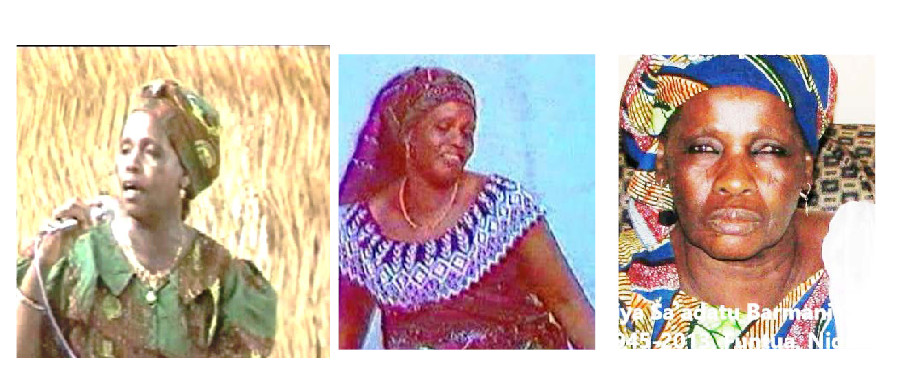
Long before the world danced to the global rhythms of modern Afrobeats, a bold, witty woman from Funtua, Katsina State, was already shaking the foundations of Northern Nigerian society. Hajiya Barmani Choge was not just a singer; she was a fprce wrapped in a wrapper, armed with a calabash and a voice that refused to be silenced.
In the 1970s and 80s, when the music scene was largely dominated by men, Barmani Choge emerged as the pioneer of Amada music. This was a traditional genre played primarily by women, using upturned calabashes floating in basins of water to create a hypnotic, rhythmic thump. While others sang praises of politicians and wealthy patrons, Barmani chose a different path: she sang for the everyday woman.
What made Barmani a true pioneer was her lyrical bravery. She used simple, earthy Hausa to discuss topics that were often considered “hush-hush” in conservative circles. She sang about the importance of female education, the dignity of trade, and even the complexities of polygamy. Her most famous songs, like “Sakarai Na Miji” (A Fool of a Husband) and “Dare Dubu Ne”, were more than just entertainment; they were social commentaries.
She didn’t just perform for the elite. Barmani was a staple at weddings and naming ceremonies, bringing joy to the “indoor” lives of women. Her music gave them a sense of identity and a reason to dance. She encouraged women to get up, start small businesses, and find their own voices in a rapidly changing world.
Barmani Choge’s influence stretched far beyond the North. Her style laid the groundwork for the “girl power” energy we see in African music today. She proved that a woman could lead a band, command a crowd, and speak her truth without losing her cultural essence.
Even though she passed away in 2013, her rhythm lives on. Modern Hausa musicians and even contemporary pop stars draw inspiration from her “call-and-response” style and her ability to tell a complete story in just a few verses.
Barmani Choge remains a reminder that African music has always been a tool for empowerment. She wasn’t just a singer; she was a pioneer who taught us that the sound of a calabash could be just as powerful as any electric guitar. As we celebrate African icons, we must always save a seat at the table for the Queen of Amada, the woman who made the North dance and the world listen.
We’ve got the edge. Get real-time reports, breaking scoops, and exclusive angles delivered straight to your phone. Don’t settle for stale news. Join LEADERSHIP NEWS on WhatsApp for 24/7 updates →
Join Our WhatsApp Channel