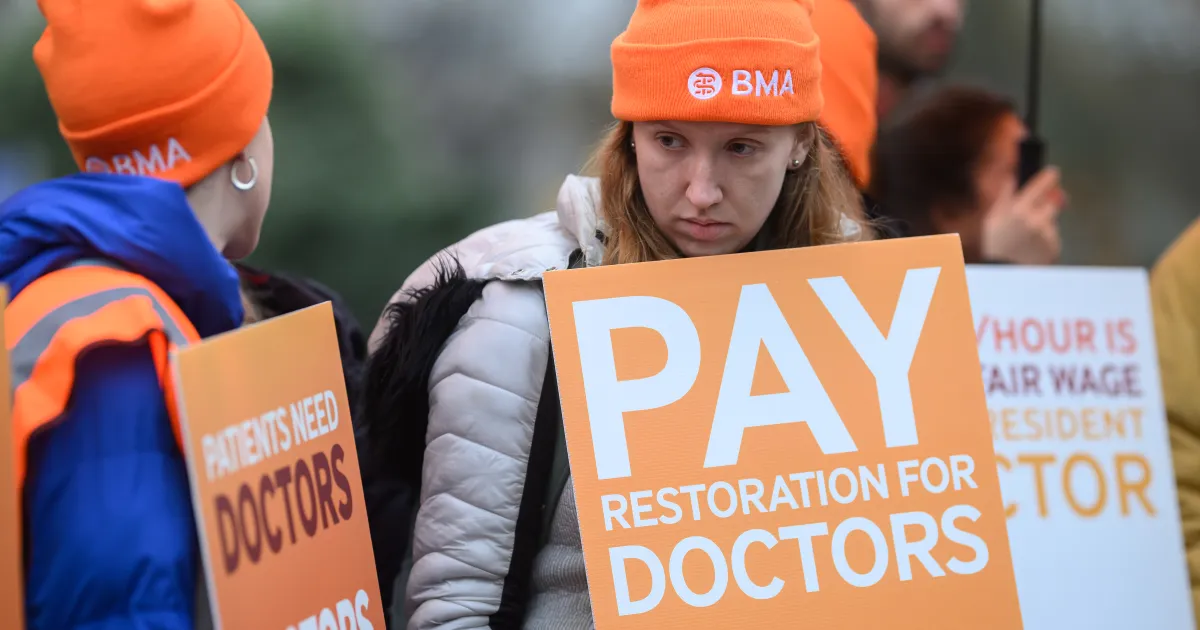
Doctors across England, on Tuesday, launched their 15th strike in just over three years, deepening an already protracted standoff with the government over pay and working conditions.
The latest industrial action, led by resident doctors, those below consultant level, will last six days, further straining the country’s state-funded National Health Service (NHS).
The walkout came despite doctors having secured a cumulative 28.9 per cent pay rise over the past three years following earlier strikes. However, the British Medical Association (BMA), which represents the medics, insisted that the increases fall short of restoring earnings eroded by years of inflation.
Health Secretary, Wes Streeting, criticised the union’s decision to proceed with the strike, describing doctors as the “standout winners of the entire public sector workforce when it comes to pay rises.”
“They have already received a whopping increase, yet they are rushing into further strike action,” Streeting told BBC television, warning that the stoppage could cost the NHS up to £300 million.
The BMA, however, remains firm in its demand for what it calls “full pay restoration” to 2008 levels, arguing that doctors’ real-term earnings have been significantly eroded over the past decade and a half.
Talks between both sides remain deadlocked, with the government maintaining that the current economic climate makes it impossible to meet the union’s demands in full.
In a bid to ease tensions, Streeting has agreed to prioritise UK-trained doctors for training placements over overseas applicants—one of the union’s key concerns.
Despite that concession, the dispute showed no immediate sign of resolution, raising concerns about prolonged disruption to patient care across England’s already stretched health system.
We’ve got the edge. Get real-time reports, breaking scoops, and exclusive angles delivered straight to your phone. Don’t settle for stale news. Join LEADERSHIP NEWS on WhatsApp for 24/7 updates →
Join Our WhatsApp Channel