By Bello Bala Shagari
As the North grapples with division and insecurity, it risks forgetting the statesmen who once embodied its unity.
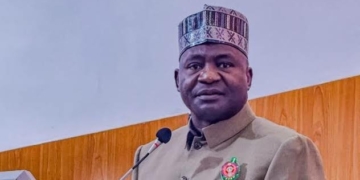
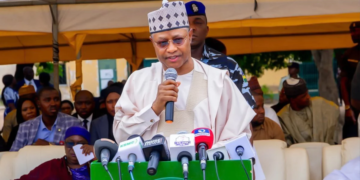
Two of the most consequential Northern leaders in Nigeria’s history are still alive today: Gen. Yakubu Gowon and Gen. Theophilus Yakubu Danjuma. They are not only among the most important figures the North has produced, they are also among the most significant statesmen Nigeria has ever had. Yet paradoxically, in the very region that produced them, they are not always accorded the respect and recognition they deserve.
These are men whose actions shaped the survival and trajectory of Nigeria itself. Without their roles at critical moments in the country’s history, Nigeria might have evolved into something entirely different or perhaps might not have remained one country at all.
General Gowon, in particular, belongs to the generation of African leaders who defined the continent’s post-independence political era. Figures such as Idi Amin are remembered as dominant personalities of that period, leaders whose actions left deep marks on their countries and on Africa’s political history. Gowon stands within that same generation, but with a legacy that ultimately emphasized national unity and reconciliation after the Nigerian civil war. In that sense, he should be regarded not only as a Northern or Nigerian elder statesman, but as an African statesman.
What is often forgotten is the extraordinary caliber of leadership that existed within the government he led. During Gowon’s administration, Nigeria witnessed a remarkable convergence of national figures within one governing structure. His cabinet and leadership circle included men who would later become some of the most important leaders in Nigeria’s history including Obafemi Awolowo. Leaders such as Murtala Mohammed, Shehu Shagari, and Olusegun Obasanjo all served within the Gowon government.
At the same time, a younger generation of officers who would later shape Nigeria’s political trajectory were also rising within that same system Including Theophilus Yakubu Danjuma. Among them were, Shehu Musa Yar’Adua, Muhammadu Buhari, and Ibrahim Babangida. Few periods in Nigeria’s history assembled such a concentration of influential figures within one government.
Perhaps one of the most remarkable but often overlooked facts about that period is that within the span of a few years, Gowon’s government contained individuals who would later produce three future Nigerian heads of state and one elected president, alongside some of the most influential civilian politicians in the country. It was an extraordinary moment in Nigeria’s leadership history, one administration that, in many ways, shaped several decades of national leadership.
General Danjuma’s legacy is also evident beyond his military and political career, particularly through his commitment to philanthropy. The work of the TY Danjuma Foundation has supported numerous initiatives across Nigeria, especially in healthcare, education, and community development. The foundation’s work emphasizes dignity, local empowerment, and sustainable support for vulnerable communities.
A closer understanding of these efforts was possible through interaction with the late Prof. Jean Herskovits, who once chaired the foundation. Through that connection, one could see clearly the seriousness and vision behind the foundation’s work and the values that guide its interventions.
Yet paradoxically, these two figures are not always accorded the respect and recognition they deserve in the very region they come from. In today’s North, instead of honoring them as elder statesmen, they are sometimes sidelined. The uncomfortable truth is that religion plays a role. Because they are Christians, some hesitate to give them the place they deserve within the Northern political and moral hierarchy.
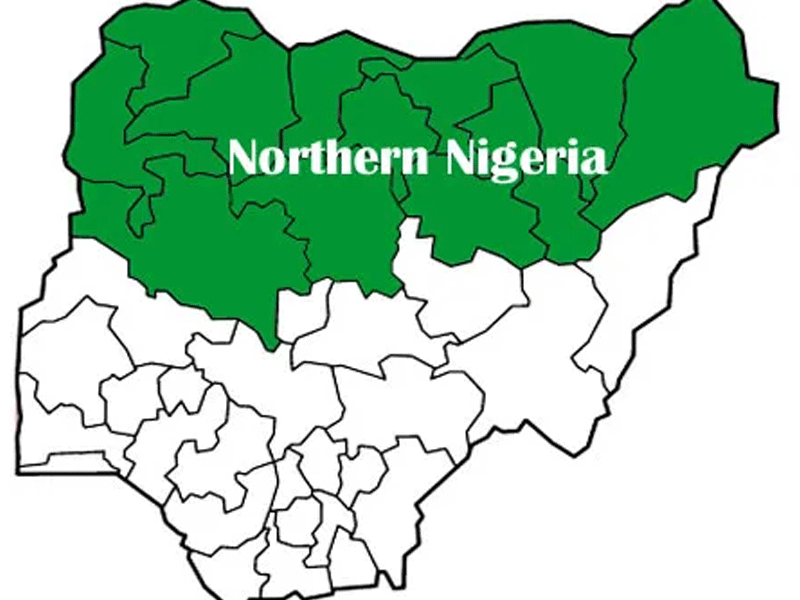
What this reveals is a deeper problem. The North that once spoke with a strong sense of shared destiny is gradually becoming divided along ethnic and religious lines. Suspicion is slowly replacing the spirit of solidarity that once defined the region, and communities that once saw themselves as part of a broader Northern identity now retreat into narrower identities defined by tribe or religion.
Religious clerics have also, unfortunately, played a role in deepening these divisions. Instead of serving as bridges between communities, some have amplified narratives that reinforce sectarian boundaries. Their influence over society is immense, and with that influence comes responsibility. If religious voices have contributed to hardening these divisions, they must also become part of the effort to heal them.
There was a time when the North was guided by a broader vision. Under leaders such as Sardauna of Sokoto Ahmadu Bello, the region cultivated a sense of unity that transcended ethnicity and religion. The North of that era was not free of differences, but its leaders understood that unity was a political necessity, not a convenience. It was within that political culture that leaders like Gowon and Danjuma emerged.
The truth is that the North has historically been strongest when it acted with a sense of collective purpose. Its influence in Nigeria did not come merely from population or geography, but from a political culture that emphasized cohesion and strategic thinking. When that unity weakens, the region inevitably loses its ability to shape national direction or protect its own interests.
Today, the consequences of this fragmentation are becoming painfully clear. Large parts of Northern Nigeria are grappling with banditry, terrorism, communal conflict, and widespread insecurity. Yet a region divided against itself finds it far more difficult to mobilize the collective resolve required to confront these threats. When suspicion replaces trust and identity politics replaces shared purpose, even the most serious challenges become harder to address.
The consequences of these divisions are also visible in the narratives emerging from the region. Recently, accusations of “Christian genocide” in Northern Nigeria have gained international attention, so much that it even threatened our sovereignty. Yet even respected voices such as Rev. Matthew Hassan Kukah have found themselves in difficult positions trying to articulate the situation because of its complexity. The violence in the region is real and devastating, but the deeper tragedy is that our divisions have made it increasingly difficult to speak about these problems with clarity and collective purpose. When communities no longer trust one another, even the language used to describe their suffering becomes contested.
If the mindset of a past generation has been poisoned by division, then the responsibility of the present generation must be different. We must find a way to heal that mindset, or at the very least immunize ourselves against inheriting it.
The North cannot afford to neglect its own statesmen, nor can it afford to pass its divisions on to the next generation. The choice before the region is simple: rediscover the spirit of unity that once defined Northern Nigeria, or continue down a path where division weakens its ability to confront the challenges of the present.
– Shagari is a former President of the National Youth Council of Nigeria. He writes from Abuja.
We’ve got the edge. Get real-time reports, breaking scoops, and exclusive angles delivered straight to your phone. Don’t settle for stale news. Join LEADERSHIP NEWS on WhatsApp for 24/7 updates →
Join Our WhatsApp Channel