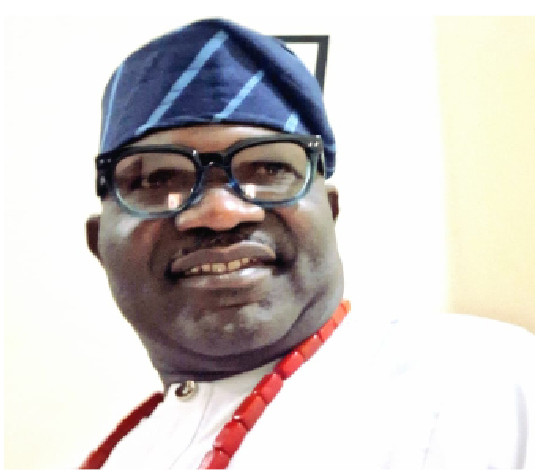
The Social Democratic Party (SDP) National Publicity Secretary, Araba Rufus Aiyenigba, speaks with Helen Onyemowo Foster on the party’s internal crisis, preparations for the 2027 elections, and the party’s expectations for electoral reforms from INEC.
The Social Democratic Party has been embroiled in a leadership crisis that has recently been put to rest with the suspension and expulsion of your former National Chairman and others. What is the way forward for the party in terms of rebuilding and repositioning itself for the 2027 elections?
The way forward for the party is to continue with the reforms and restructuring that have been ongoing. We have taken steps to strengthen our internal structures, improve our governance, and increase transparency and accountability. We are committed to building a strong, united, and credible party that can offer a viable alternative to Nigerians in 2027.
Regarding the expelled national chairman, Alhaji Shehu Musa Gabam, and other National Working Committee (NWC) members who were aledgedly indicted and also expelled, we have a total of 15 NWC members by our constitution, but as we speak, we have 11 members in office presently, with four vacant positions as a result of the expulsion of Alhaji Shehu Musa Gabam; the National Youth Leader, Uche Okechukwu Ogbonna; National Welfare Secretary, Judith Israel Shuaibu, and the National Auditor, Nze Clarkson Nnamdi, who voluntarily resigned his appointment.
At the last NEC meeting of the party, held on March 9, 2026, in Abuja, the suspension and expulsion of these fellows were ratified by NEC, the executing organ of the national convention. The NEC has the final power to approve or disapprove every decision of the National Working Committee, which is saddled with the day-to-day running of the party.
Some critics argue that the SDP is yet to present a clear vision and strategy to differentiate itself from other opposition parties, and that this perceived lack of preparedness undermines its credibility as a viable alternative. How do you respond to these concerns, and what message do you have for Nigerians who are sceptical about the SDP’s ability to deliver change?
After carrying out the internal cleansing within the party to make it truly attractive as a disciplined, credible political party that can stand the test of time in terms of operations and to make it a party that can be trusted with the capacity to lead Nigeria, we went further to strengthen its structures both at the national and sub-national level: the zonal, state and local government structures, including units and wards.
Recently, the leadership of the party has been engaging in mobilisation around the country across the zones. We just came back from the South-West, where we had engagements with the state structures in that zone. We were in Osun State in the last few days in our effort to consolidate on the gains we have made because the momentum is building across the states. Members of the party are greatly and visibly happy that a new order has been engendered in the party.
We just came back from Ilesa in Osun state, where we attended the General Assembly of Afenifere, a formidable and reputable socio-cultural organization Afenifere joined the SDP.
Afenifere has its political roots in the Egbe Omo Oduduwa, from which the Action Group took its roots.
Afenifere has adopted and joined the SDP because it’s a political bloc, a political critical mass.
With the multiple aspirants that will likely vie for the SDP’s presidential nomination, concerns have been raised about the potential for internal conflict and perceptions of favouritism within the party. How does the SDP plan to ensure a transparent, fair, and inclusive process for selecting its presidential candidate?
SDP as a party is open to aspirants who want to use the platform to contest for elections. In our last press conference, the Party’s national chairman boldly declared to the world that SDP is open to new entrants for the race for our presidential ticket. Presently, we have two aspirants who have declared to run, and we still hope more will come.
We have our 2023 presidential candidate, Prince Adewole Adebayo, and Major Hamza Al-Mustafa as the two, who are vying for the SDP Presidential ticket for 2027, and they have been going around the country, consulting with the stakeholders of the party, and our grassroots structures.
In 2022, eight aspirants vied for the SDP presidential ticket up to the day of the primary at the national convention, where Prince Adebayo emerged as the candidate in a primary that was highly commended as transparent.
So, we are open. Our process is the cleanest, the most credible, and most transparent among all political parties in the country today. By the grace of God, we are going to repeat the same at the national convention, and as soon as the candidate emerges, we will begin to mobilize for mass campaigns.
The momentum we are building presently is in terms of national acceptability, quality, and accountability to encourage more people to come into the party.
SDP is poised to re-enact the 1993 feat when the late MKO Abiola won the presidential election, defeating Alhaji Bashir Tofa of the National Republican Congress (NRC), even in Kano, his home state.
It’s going to be a trial of Nigerian democracy in the 2027 general election because the current government has lost touch with the aspirations of the people. The killings, massive corruption, and the unaccounted humongous loans.
The government of President Bola Tinubu lacks the capacity to unite Nigeria; stop the killings, and secure lives and properties. The government has failed in its primary obligation, according to Chapter 2 Article 14 of the 1999 Nigerian Constitution (as Ammended).
The Independent National Electoral Commission (INEC) has acknowledged a trust deficit and announced plans to implement reforms to regain public confidence. Given the concerns about voter apathy, electoral violence, and other issues, what specific reforms would you advise INEC to prioritize to restore trust and ensure a credible electoral process in 2027?
We are worried as a party, and we have written, granted interviews, and made comments on the issues and concerns of the electoral body on national television, citing as reference points, the last FCT Area Council elections, where the turnout was abysmally low. So, what accounted for that?
Two things: one was the very wrong disposition of the dictators that we have in the country running our affairs.
INEC also contributed to voter apathy in the FCT elections. Although there were no glitches recorded, the process was somewhat compromised because, obviously, they disenfranchised a critical mass of voters who would have voted for the opposition Candidates, thereby allowing the candidates of the ruling APC to win.
The recent wave of defections from opposition parties to the ruling All Progressives Congress (APC) has sparked concerns about politicians prioritizing personal interests over the welfare of their constituents. How do you view this trend, and what advice would you give to political actors who are considering switching parties, in terms of balancing their personal ambitions with the expectations and trust of the voters who elected them?
Defection is not new in Nigerian politics. The precedent was set in 1951, during the days of Awolowo’s Action Group and Nnamdi Azikiwe’s NCNC in the Western Region Regional House of Assembly.
After the 1951 regional assembly elections, some members of the NCNC, which won more seats in the Western Region House of Assembly, moved to the side of the AG, thereby preventing Azikwe, the leader of the NCNC from becoming the Premier of the Western Region.
It happened that on the day that the government was to be formed, the elected members from the NCNC simply left the side of their party and walked across the red carpet to the Action Group. That was how carpet-crossing became part of Nigeria’s politics. So, it’s not new, but it has not been this bad.
The defections will not, in reality, have any serious impact on the result of elections in 2027 because their records are not only unimpressive, but the governors are only entitled to one vote. With what’s going on in the country, Nigerians are not ready to reinforce failure. The electorate will not be coerced into voting for non-performance.
For example, in the last general election, about seven governors lost the bids to deliver their chosen successors or proceed to the Senate. Among them were the former governor of Enugu State, Ifeanyi Ugwuanyi, the former Benue State governor, Samuel Ortom, and others.
The recent passing of one of your senators from Nasarawa State has left a vacancy in the Senate. Will the Social Democratic Party (SDP) be fielding a candidate from the same zone for the upcoming by-election? Additionally, the Senate has declared some seats vacant, and by-elections are scheduled. Can you confirm whether the SDP will be contesting for these other seats?
Of course, with the vacant seats in the Senate, especially with the late SDP senator’s demise, Godiya Akwashiki from Nasarawa State, and others, we will field candidates for all the vacant seats.
The former Deputy Governor of Nasarawa State and Minister of Information, Labaran Maku, recently joined our party, and he is vying for the vacant Nasarawa-North Senate seat. There are also other aspirants for the seat from the same zone in the SDP.
The SDP manifesto is designed to make us different in the area of being people-centred and a critical developmental agenda to be implemented by our members who get elected to political offices, and other actors in the system, to make the country a true giant of Africa and the pride of the black race.
We’ve got the edge. Get real-time reports, breaking scoops, and exclusive angles delivered straight to your phone. Don’t settle for stale news. Join LEADERSHIP NEWS on WhatsApp for 24/7 updates →
Join Our WhatsApp Channel