
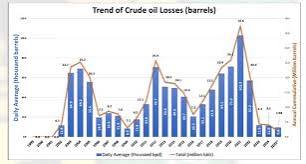
Nigeria has been urged to urgently reform its export systems and maritime governance framework as systemic inefficiencies and leakages continue to cost the country over $10 billion annually.
This is according to a report by the Sea Empowerment and Research Centre (SEREC), which warned that poorly governed export processes, weak industrial linkages, entrenched cartels and policy inconsistencies are driving massive value erosion across the maritime sector.
The report, made available to newsmen, described Nigeria’s ports, originally designed as engines of trade and economic expansion, as increasingly functioning as channels for capital flight and untracked resource extraction.
Titled “Port of Plenty, Pipelines of Loss: A National Reawakening Call on Maritime-enabled Resource Leakages,” and signed by SEREC’s Head of Research, Dr Eugene Nweke, the document presents a detailed critique of how structural weaknesses have turned the maritime ecosystem into a conduit for economic losses.
According to the report, despite Nigeria recording annual cargo throughput exceeding 1.5 billion metric tonnes, including crude oil exports, non-oil exports still account for less than 10 per cent of total export earnings, highlighting the country’s limited value addition capacity.
Central to the challenge is trade mis-invoicing and under-valuation. SEREC estimates that Nigeria loses between $5 billion and $8 billion annually due to under-declaration, misclassification and poor export documentation, particularly in the solid minerals sector.
The report noted that although Nigeria is richly endowed with resources such as iron ore, gypsum and crude oil, it continues to export raw materials at low value while importing refined petroleum products and finished goods at significantly higher costs.
This imbalance, it said, has created a persistent cycle of economic disadvantage, with estimated opportunity losses of between $15 billion and $20 billion yearly due to the absence of local value addition and industrial processing.
SEREC further warned that these practices weaken foreign exchange inflows, distort national trade data and deprive government of critical revenue needed for development.
The situation is compounded by weak institutional oversight in Nigeria’s trade engagements, particularly with foreign partners, and vulnerabilities linked to opaque resource-backed financing arrangements.
The report identified additional structural gaps, including poor monitoring of export volumes and valuation, limited enforcement of international best practices and fragile domestic institutions.
It also highlighted operational inefficiencies within the ports, citing fragmented digital systems across port, customs and shipping operations, lack of real-time cargo visibility and persistent reliance on manual processes.
SEREC described Nigeria’s ports as dual-purpose corridors that facilitate the export of raw resources and the import of refined goods, a pattern that continues to reinforce trade imbalances, industrial stagnation and rising cost of living.
The Centre called for comprehensive reforms, including stronger regulatory oversight, improved digital integration across maritime operations and policies aimed at promoting local value addition, warning that failure to act could further deepen economic losses.
We’ve got the edge. Get real-time reports, breaking scoops, and exclusive angles delivered straight to your phone. Don’t settle for stale news. Join LEADERSHIP NEWS on WhatsApp for 24/7 updates →
Join Our WhatsApp Channel