
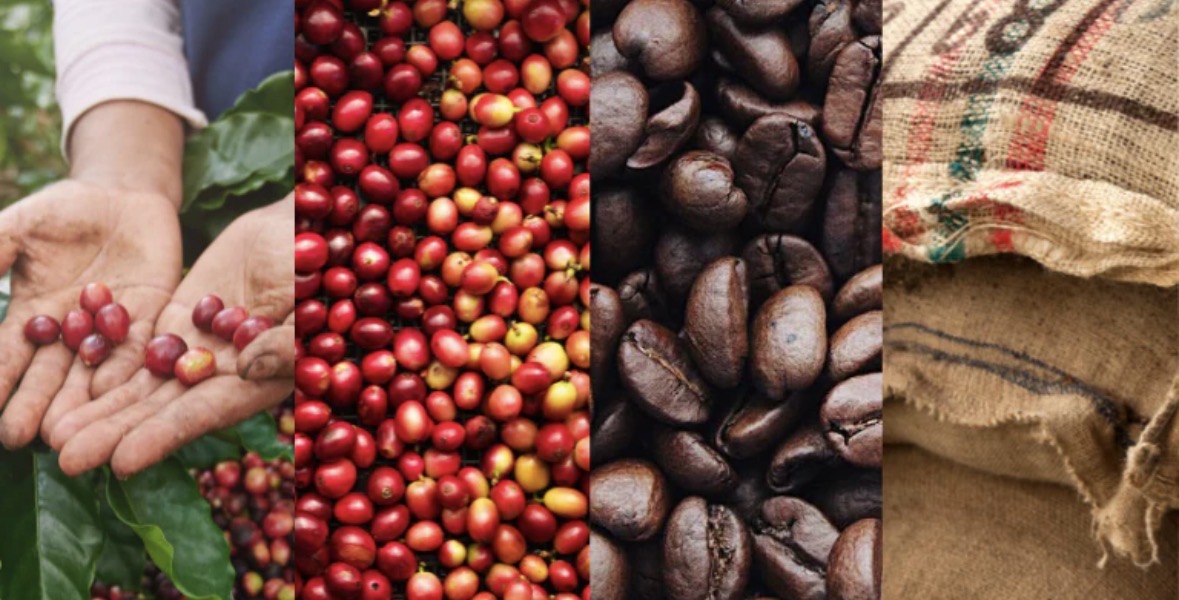
Global coffee industry is faced with declining prices offering as prices reportedly declined across major commodity markets since the start of 2026, as improving supply prospects ease concerns that drove prices higher in recent years.
Data from the Intercontinental Exchange show that Arabica coffee closed at $6,110 per ton in New York on June 16, down from $7,300 per ton on January 16, a decline of 16 per cent.
Robusta prices have also moved lower over the same period. On the London market, the variety closed at $3,545 per ton on June 16, compared with $3,925 per ton on January 16, a drop of 9.7 per cent.
According to analysts at Dutch cooperative bank Rabobank, the downturn largely reflects improving supply expectations as production increases in the world’s leading coffee-producing countries.
That assessment is supported by the latest forecasts from the U.S. Department of Agriculture (USDA). Although the agency has yet to release its global outlook for the 2026/27 marketing year, available country-level projections point to a significant improvement in supply.
Four of the world’s five largest coffee exporters are expected to post larger harvests in 2026/27. The countries include Brazil, Vietnam, Colombia, and Ethiopia. Indonesia is the only exception. Together, those five nations account for around 70 per cent of global coffee exports each year.
Brazil, the world’s largest coffee producer, is expected to harvest 71.9 million bags, or 4.31 million tons, during the 2026/27 marketing year (one bag equals 60 kilograms). If achieved, that would represent a 14 per cent increase from the previous season.
The USDA attributes the optimistic outlook to the positive effects of the biennial production cycle in the country’s main coffee-growing regions, favorable weather conditions, and strong international prices in recent years.
Those factors have encouraged growers to expand coffee acreage. Vietnam, the world’s second-largest coffee producer, is expected to increase output by 2.5 per cent year over year, reaching 32.5 million bags, or 1.95 million tons.
“Productivity gains and the adoption of climate-resilient varieties continue to support steady growth in Robusta production, while acreage devoted to Arabica remains stable,” the USDA said of the Southeast Asian country. Colombia is expected to post the second-strongest growth among the top producers after Brazil. Coffee output in the South American nation is forecast at 13.4 million bags, or 804,000 tons, in 2026/27, up 7.2 per cent from the previous season.
In Ethiopia, USDA forecasts point to a 4.73 per cent increase in production during the same marketing year, with output expected to reach 12.1 million bags, or 726,000 tons. If these projections materialize, stronger harvests could help rebalance a global market that has faced weather-related disruptions and supply shortages in recent years. Under those conditions, coffee prices could continue to decline over the coming months.
We’ve got the edge. Get real-time reports, breaking scoops, and exclusive angles delivered straight to your phone. Don’t settle for stale news. Join LEADERSHIP NEWS on WhatsApp for 24/7 updates →
Join Our WhatsApp Channel