
Across Nigeria, renewed attention is being given to maternal health as stakeholders push to reduce preventable deaths linked to pregnancy and childbirth through a new national advocacy drive known as ‘Saving Our Mothers”.
The campaign, formally inaugurated in Abuja by the senior special assistant to the President on Women’s Health, Dr Adanna Steinacker, is positioned as a structured national framework to strengthen maternal health advocacy, improve health literacy, and increase the utilisation of existing maternal and neonatal health services across communities.
While Nigeria has over the years introduced multiple programmes and policies to improve maternal and child health outcomes, implementation gaps, particularly at community level continue to limit impact. Many women still lack timely information, trust, or access to skilled care during pregnancy, delivery and the postnatal period.
Dr Steinacker said the challenge is no longer only about the availability of services, but about ensuring that women are able and willing to use them when needed.
“Maternal deaths often occur at the point where services exist but women are unable to access or use them. That is where we must now concentrate our national efforts,” she said.
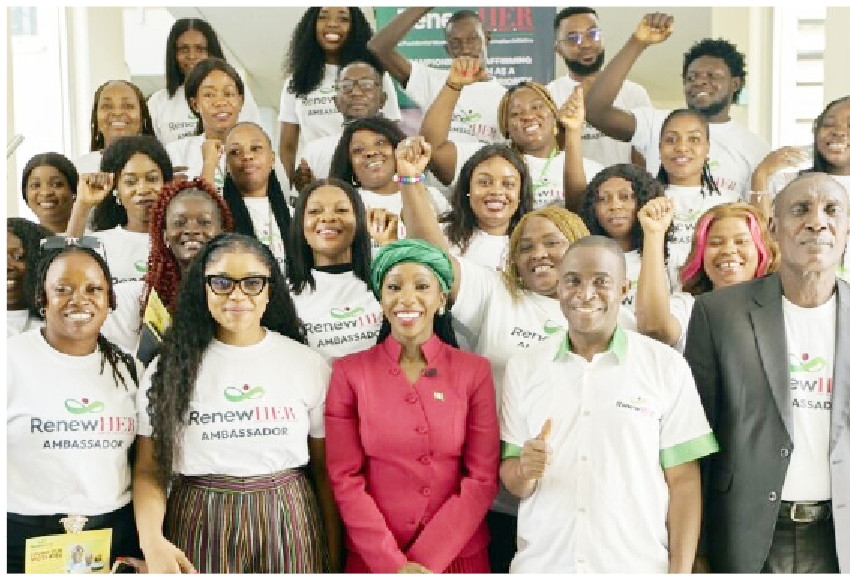
She explained that the “Saving Our Mothers” campaign forms the advocacy and health literacy pillar of the broader RenewHER platform, which seeks to bridge the persistent gap between health systems and the communities they are meant to serve. According to her, the initiative is designed to move beyond policy conversations into structured community mobilisation and accountability.
As part of the rollout, the programme also inaugurated RenewHER state ambassadors drawn from the 36 states and the Federal Capital Territory. These ambassadors are expected to drive grassroots advocacy, coordinate awareness efforts, and support behavioural change around maternal health practices.
Dr Steinacker emphasised that the model is intentionally designed as an implementation framework rather than a symbolic gesture.
“This is not symbolic; it is a delivery framework. This is the moment to move from goodwill to concrete partnerships,” she said, noting that the initiative will rely on collaboration across government institutions, civil society, and community actors.
The campaign will be implemented in partnership with the Maternal and Neonatal Mortality Reduction Innovation Initiative (MAMII) and the Federal Ministry of Health and Social Welfare’s Department of Family Health. It is expected to reinforce existing safe motherhood interventions while improving community-level uptake of services such as antenatal care, skilled delivery, emergency obstetric care, and postnatal follow-up.
The Director of Reproductive Health Division at the Federal Ministry of Health and Social Welfare, Dr Samuel Oyeniyi, said the campaign aligns with national priorities aimed at improving maternal outcomes and reducing preventable deaths.
He urged stronger collaboration between government agencies, development partners, civil society organisations, and private sector actors, noting that maternal health outcomes are shaped by factors that extend beyond the health sector alone.
Also speaking at the event, the Mandate Secretary, Health Services and Environment at the Federal Capital Territory Administration (FCTA), Dr Adedolapo Fasawe, said the initiative complements ongoing efforts to strengthen primary healthcare systems and expand access to skilled birth attendants at community level.
She noted that reforms under the current administration are increasingly focused on bringing healthcare closer to families, particularly in underserved and hard-to-reach areas.
According to her, the RenewHER approach reflects a more integrated model that combines advocacy, service delivery, and accountability mechanisms aimed at ensuring that women do not fall through the cracks of the health system.
Adding a broader public health perspective, the Senior Special Assistant to the President on Public Health and Nutrition, Mrs Uju-Rochas Anwukah, said the initiative also aligns with national efforts to improve nutrition outcomes across all 774 local government areas of the country.
She explained that maternal and child health cannot be addressed in isolation, as nutrition, healthcare access, and social conditions are deeply interconnected.
Anwukah said the administration is prioritising underserved populations, particularly women and children in rural communities, through improved coordination, strengthened financing, and better use of health data for decision-making.
She also stressed that maternal wellbeing should not be defined solely by physical survival, but also by emotional and mental health support systems that enable women to thrive within families and communities.
Despite ongoing interventions, Nigeria continues to face significant challenges in reducing maternal mortality, with disparities between urban and rural areas, uneven access to skilled care, and varying levels of health literacy still affecting outcomes.
The success of the campaign, however, will likely depend on how well it translates from national advocacy into consistent action at the lowest levels of care, where many maternal health outcomes are ultimately determined.
We’ve got the edge. Get real-time reports, breaking scoops, and exclusive angles delivered straight to your phone. Don’t settle for stale news. Join LEADERSHIP NEWS on WhatsApp for 24/7 updates →
Join Our WhatsApp Channel