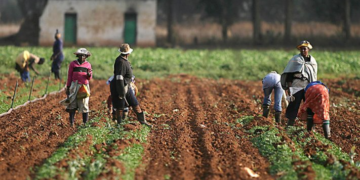
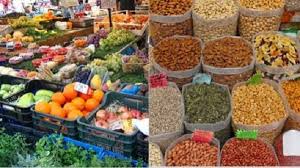
The federal government has detailed a combination of short, medium and long-term agricultural policies aimed at stabilising food prices, boosting local production and restoring confidence in the food system amid persistent inflationary pressures.
The policy direction was outlined at a ministerial policy dialogue held during Nigeria Public Relations Week in Kaduna, where stakeholders examined the theme, “Nigeria’s Food Security: From Policy Paper to Public Plates; The Imperatives of Public Relations.”
The session focused on translating policy frameworks into measurable outcomes for consumers and producers across the country.
Representing the minister of agriculture and food security, Abubakar Kyari, the executive-secretary of the National Agricultural Development Fund (NADF), Mohammed Ibrahim, said the government’s approach centres on market correction mechanisms designed to address food inflation and supply chain disruptions.
He noted that immediate interventions, particularly the reduction of import tariffs on critical agricultural inputs and commodities have helped ease price pressures.
Beyond short-term relief, the government is advancing policies to strengthen domestic production through targeted support for farmers and agro-processors.
Ibrahim explained that programmes promoting access to subsidised inputs and encouraging backward integration in agro-processing are being prioritised to ensure sustainable growth across the value chain.
He further highlighted ongoing tax and fiscal reforms targeting agriculture, stressing that food security now extends beyond production to include effective communication, policy coordination and stakeholder engagement. According to him, recent data indicates a moderation in food inflation, though challenges such as high input costs persist, particularly for smallholder farmers.
He added that the NADF continues to play a central role in financing and implementing agricultural initiatives nationwide. Its interventions span crop production, livestock, fisheries and agro-forestry, alongside concessional financing, research funding, extension services and emergency support.
He noted that programmes such as the Ginger Recovery, Advancement and Transformation for Economy Empowerment (GRATE) initiative and the Farm Input Support Programme (FISP) have supported tens of thousands of farmers, while new fertiliser support schemes are being scaled up ahead of the 2026 wet season.
According to him, the fund has mobilised significant investments through partnerships with state governments, financial institutions and development agencies, supporting projects in rice, maize, cassava and fertiliser production. Its blended finance model has also attracted private sector participation, expanding access to credit and reducing borrowing costs for agribusinesses.
He said, “Food prices this time last year were astronomically high, but some of the direct policies we introduced, especially around import tariff reductions, have helped stabilise the situation.
We have focused on farm input support programmes and agro-processing. We are providing subsidised inputs to processors with backward integration models. Strengthening both the farm and the factory is critical to ensuring agricultural policies succeed.
“Food security today is not just about agriculture. Clear communication, shaping narratives and influencing policy are equally important in building trust and ensuring impact,” Ibrahim noted.
As we continue to implement these programmes, our goal is clear, to ensure that Nigeria can feed itself sustainably while creating economic opportunities across the agricultural value chain,” he added.
We’ve got the edge. Get real-time reports, breaking scoops, and exclusive angles delivered straight to your phone. Don’t settle for stale news. Join LEADERSHIP NEWS on WhatsApp for 24/7 updates →
Join Our WhatsApp Channel