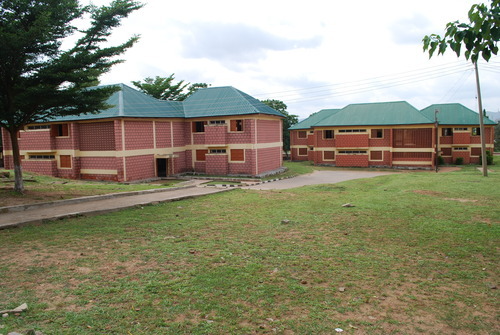
In many parts of Northern Nigeria, classrooms stand eerily silent. Desks remain unoccupied, blackboards gather dust, and teachers call out names that receive no response. This is not the result of holidays or teacher strikes. It is the visible consequence of fear. Reports from mid-April 2026 confirm that persistent threats of kidnapping and general insecurity continue to keep thousands of children away from school, perpetuating one of the most tragic dimensions of the region’s education crisis. In states such as Niger, Kebbi, Zamfara, Katsina and Borno, parents now weigh the risk of sending their children to school against the certainty of keeping them alive at home. The result is a generation being robbed of its future, one empty desk at a time.
Nigeria already bears the shameful distinction of having the world’s highest number of out-of-school children, estimated at over 18.3 million, with the North bearing the heaviest burden. UNICEF and UBEC data show that only about 30 per cent of school-age children in the region regularly attend formal school. In the Northwest and Northeast, girls account for up to 60 per cent of those excluded. The crisis is not new, but insecurity has dramatically worsened it. The mass abduction of over 300 students and teachers from St. Mary’s School in Papiri, Niger State, in November 2025, followed by the kidnapping of 25 girls from Government Girls Comprehensive Secondary School in Maga, Kebbi State, triggered widespread panic. Many schools were subsequently closed or operated with drastically reduced attendance. Even where schools have reopened, fear lingers. Parents keep children at home, especially girls, believing that the classroom has become a hunting ground for bandits and insurgents seeking ransom.
This phenomenon of fear emptying classrooms reveals a deeper governance and security failure. Bandits and terrorist groups deliberately target schools because they know the emotional and financial leverage that abducted children provide. The 2014 Chibok abduction shocked the world, yet over a decade later, the tactic persists. Each successful kidnapping reinforces the perception that schools are soft targets. The military and state governments have responded with operations, school security guidelines and occasional deployment of vigilantes, but the results remain uneven. In some communities, parents have formed local vigilante groups or resorted to moving children to urban boarding schools they can scarcely afford. Others have simply withdrawn their children permanently from formal education, pushing them into street hawking, early marriage or farm labour. The long-term consequence is a lost generation — poorly educated, unskilled and vulnerable to radicalisation or criminality — which in turn fuels the very insecurity that keeps classrooms empty.
Philosophically, this crisis strikes at the heart of the social contract. Education is not a privilege but a fundamental right and the surest pathway to breaking cycles of poverty and violence. When the state fails to create a safe environment for learning, it betrays its constitutional responsibility to secure the welfare of citizens and promote their development. The persistence of empty classrooms in the North, while other regions make incremental progress, also highlights dangerous regional inequality. A child denied education today becomes an adult denied opportunity tomorrow. This breeds resentment, widens the gap between the North and the rest of the country, and threatens national cohesion. Moreover, it undermines the moral legitimacy of leadership that promises transformation while children in its care remain trapped in fear and ignorance.
The human and national cost is immense. Every empty classroom represents not only lost learning but also lost potential. Nigeria’s future workforce, innovators and leaders are being short-changed. In a region already battling hunger, desertification and governance fatigue, denying children education compounds every other crisis. Without educated citizens, agricultural recovery, peace-building and economic development remain distant dreams. The cycle becomes self-reinforcing: insecurity keeps children out of school, and uneducated, idle youth become easy recruits for the very groups that perpetuate insecurity.
Yet despair is not the only response. This moment demands urgent, coordinated action. First, the federal and state governments must treat school safety as a national security priority, implementing the Safe Schools Declaration with concrete funding and technology — including perimeter fencing, surveillance and rapid response teams. Second, community-based solutions, such as parent-teacher security committees and alternative learning centres in safer locations, should be scaled up. Third, massive investment in education infrastructure and teacher welfare in the North is non-negotiable. Fourth, addressing root causes — poverty, youth unemployment and weak governance — through targeted social programmes is essential to reduce the appeal of criminality.
The silence of empty classrooms in Northern Nigeria is a loud indictment of our collective failure. It is a silent alarm that the future is being stolen from an entire generation. Nigeria must answer this alarm with urgency, moral courage and sustained commitment. When fear no longer empties the classroom, hope can finally take its rightful place. Only then can the North — and by extension the entire nation — begin to harvest the dividends of a truly educated citizenry.
We’ve got the edge. Get real-time reports, breaking scoops, and exclusive angles delivered straight to your phone. Don’t settle for stale news. Join LEADERSHIP NEWS on WhatsApp for 24/7 updates →
Join Our WhatsApp Channel