The Senate yesterday rejected a proposal to investigate military spending despite growing concerns over worsening insecurity and rising cases of kidnapping across the country.
This follows a motion sponsored by Senator Abdulfatai Buhari (Oyo North), who drew attention to the abduction of 49 persons and the killing of school teacher Michael Oyedokun, alongside several others, including a toddler.
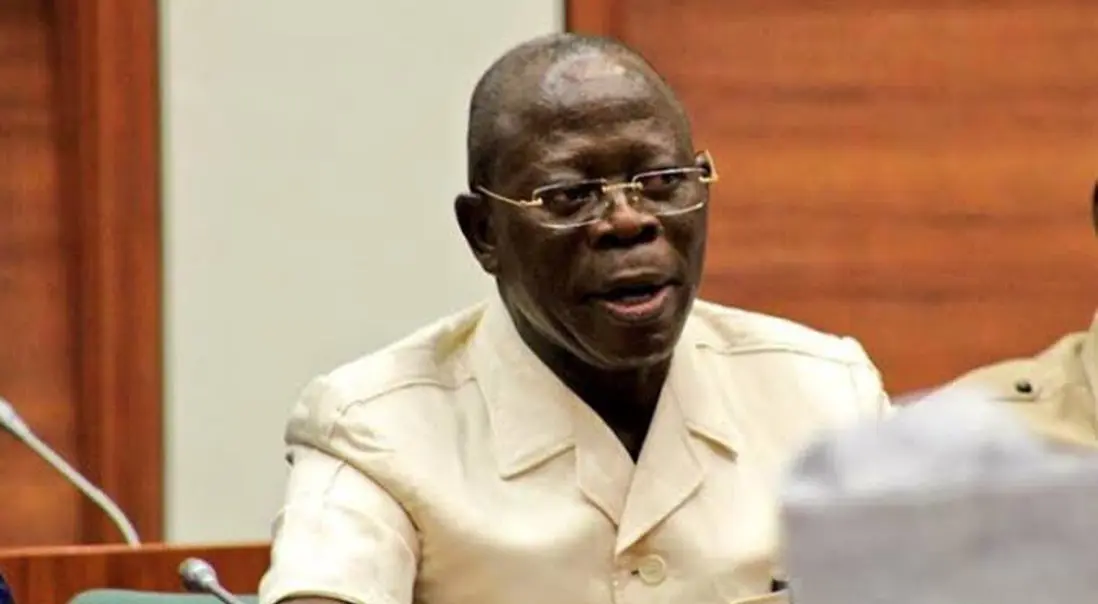
During the debate, former Edo State Governor and Senator representing Edo North, Adams Oshiomhole, called for a comprehensive audit of Nigeria’s security operations and expenditure, arguing that repeated Senate resolutions on insecurity had yielded little tangible outcome.
The session began with senators observing a solemn moment in honour of victims of violent attacks across the country before deliberating on the deteriorating security situation.
Contributing to the debate, Oshiomhole expressed concern over the growing wave of kidnappings affecting Nigerians across all age groups and social classes.
“Whether for children, adults, men or women, people are being abducted from their homes, schools and communities, subjected to dehumanising treatment, and families are forced to pay ransom. Yet, in some cases, victims are still killed,” he said.
The lawmaker questioned the effectiveness of previous Senate resolutions on insecurity, noting that many had been adopted without any visible implementation or accountability.
“We have passed several resolutions in the past. The question is: what specific actions have been taken as a result of those resolutions? If previous resolutions changed nothing, why should today’s be any different?” he asked.
Oshiomhole recalled the mass abduction of schoolchildren in Kebbi State and cited reports that military personnel stationed near the affected school had allegedly been withdrawn shortly before the attack.
According to him, the Senate had previously requested that the military authorities identify the officer responsible for the withdrawal and explain any disciplinary measures taken, but no response had been received.
“If the armed forces are not accountable, and we fail to conduct proper oversight of the resources appropriated for security, then we cannot continue lamenting the deterioration of security across the country,” he said.
He subsequently proposed a comprehensive security audit covering defence spending, procurement procedures and operational effectiveness.
Supporting the call for greater accountability, Senator Mohammed Sani Musa (APC, Niger East) argued that despite enormous budgetary allocations to defence over the years, insecurity remained a major national challenge.
He noted that successive administrations had invested heavily in military hardware, personnel recruitment and reforms within the armed forces.
“If the United States Secretary of Defence can be publicly scrutinised over military spending and operations, then it is time for Nigeria’s service chiefs to account for the resources appropriated by the National Assembly,” Musa said.
The senator questioned why insecurity persisted despite defence consistently receiving one of the largest shares of the national budget.
“Every year we allocate huge resources to security, yet we still hear complaints about a lack of equipment and unpaid allowances. We need to ask: where is the money going?” he queried.
Musa urged lawmakers to strengthen oversight of security agencies and ensure accountability for resources committed to military operations.
He also questioned whether the huge defence investments were delivering the expected results, citing recurring complaints about inadequate equipment and unpaid allowances for security personnel.
Deputy President of the Senate, Barau Jibrin, who presided over the session, acknowledged the concerns raised by lawmakers and agreed that calls for accountability in security spending were legitimate.
However, when Oshiomhole sought to include a probe of military expenditure among the Senate’s resolutions, the proposal failed to secure a seconder and was subsequently dropped.
An attempt by Musa to amend the resolution to accommodate the proposal also failed to gain support.
The Senate thereafter adopted its resolutions on the motion without any provision for an investigation into military spending, effectively rejecting calls for a formal probe despite concerns over the country’s worsening security situation.
We’ve got the edge. Get real-time reports, breaking scoops, and exclusive angles delivered straight to your phone. Don’t settle for stale news. Join LEADERSHIP NEWS on WhatsApp for 24/7 updates →
Join Our WhatsApp Channel