
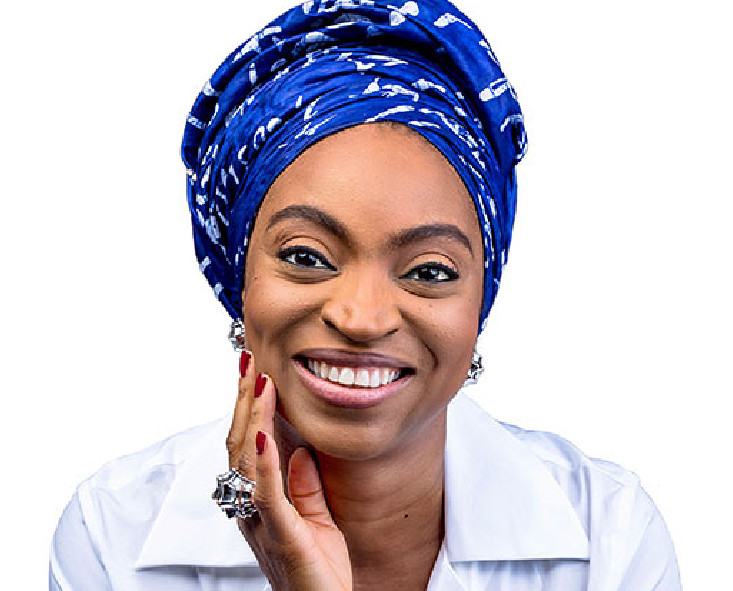
On the sidelines of the 2026 International Monetary Fund/World Bank Spring Meetings in Washington DC, Nigeria’s Minister of Industry, Trade and Investment, Jumoke Oduwole, in this interview with journalists, says ongoing reforms are positioning the economy for growth, job creation and increased private sector investment, even as she addresses concerns over rising poverty levels. BUKOLA ARO-LAMBO was there for LEADERSHIP Weekend.
The meetings this week have been very focused on job creation, prosperity and growth. Can you provide more details about your participation in the session?
So the meetings this week have been very focused on job creation, obviously, prosperity and growth. This particular session was asking, there were three ministers on the panel from Egypt, Argentina and I, the World Bank, VP for Latin America, and then the private sector, asking what Nigeria has been doing, two, three concrete examples of what we have done to support MSMEs and how to grow.
Can you highlight some concrete steps Nigeria has taken to support MSMEs?
The first example is the single window, which Mr President inaugurated a committee to implement last year; the single window was launched in the first phase on 27 March. Now, what that does is facilitate trade, making sure that businesses have a single portal to submit their applications and make their payments. So, it has been a long-overdue reform of great importance. That’s the national single window.
Another example is our tax architecture, four legislations implemented in 2025 that went live on January one, and in those tax legislations, the architecture, looking at how MSMEs from 25 million exempt, was increased to 100 million, also exempting a number of VAT processes, allowing automation. So our tax architecture, not just smaller businesses, even larger businesses, has now just a single developmental levy. And so that architecture, the tax reform, is very important for our business climate, for investors and our MSMEs.
Another example is the Nigerian commodities exchange. At the President’s directive, we have been working on a framework for the commodities exchange since 2024. The new governance board was inaugurated about two weeks ago.
How will the commodities exchange impact Nigeria’s economy?
What the commodities exchange does is to ensure aggregation for processing. You recall, with our shea butter, with ginger, with sesame, with cocoa, with cashew, all the commodities that Nigeria is competitive on, how do we make sure that we can aggregate in Nigeria for local production? How do we also ensure we can export with value addition to the African Continental Free Trade Area and beyond? I mentioned our collaboration with an African bank, also on the commodities exchange, and how we’re leveraging that. These are some of the policies and reforms that are supporting MSMEs in scaling up and not just staying at that stage. And that’s what this panel was talking about, because the more they can scale, the more jobs they create.
Are these recent reforms already delivering visible results?
On the launch of that single window and tax architecture, definitely, in terms of time, speed, transparency of doing business for the private sector, and being able to leverage. Like some of the meetings I had this week in DC, some very large investors were looking, they’ve studied the tax legislation, and they are looking at the new categories that they can use and leverage to bring even more billions of dollars of investments into the country, and how that will be implemented. So, the world has noticed.
Companies in Nigeria have also noticed the national single window, as domestic investors have. More and more are using the capacity. It started like, you know, and within record time, a number of businesses are accessing it, with SON, with customs, with NAFDAC, they are all on the portal. And so, this is what Nigeria has been waiting for. This is what this economy has been waiting for. The reform has been long overdue, and the President mandated it, and it has happened. And really, the only way is up. So we are really grateful that we’re able to showcase some of the Tinubu reforms on this global stage.
The World Bank reports rising poverty levels in Nigeria. Do you agree, and is enough being done to create jobs?
So what I had to say on that is that the government’s role is to enable. That is why we have done these landmark enabling reforms. What is it to support the private sector? It is the private sector that will continue to key into the reforms. It is the private sector that will continue to have the transparency and the efficacy to create more jobs.
There is always a lag when reforms are implemented. We are not in a vacuum. We are looking at global trends across the world, but this Tinubu administration, since 2023, has taken bold and decisive steps that have resulted in Nigeria’s GDP growing at the fastest rate, over four per cent, in more than a decade. It has also ensured that critical areas that Nigerians have wanted addressed are a priority for the administration and the Federal Ministry of Industry, Trade and Investment. It has continued to prioritise, and it’s really a privilege and honour to serve.
We’ve got the edge. Get real-time reports, breaking scoops, and exclusive angles delivered straight to your phone. Don’t settle for stale news. Join LEADERSHIP NEWS on WhatsApp for 24/7 updates →
Join Our WhatsApp Channel