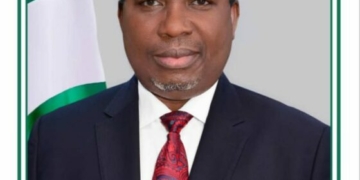
Peoples Democratic Party (PDP) presidential candidate, former vice president Atiku Abubakar, yesterday said Nigeria can only shift from being a “net importer” to a “net exporter” through extensive reforms to restore investor confidence which is currently at its lowest ebb.
He further said it is regrettable that Nigeria’s core infrastructure sectors are not operating efficiently.
Atiku stated this while reacting to observations by the National Union of Electricity Employees (NUEE) to his agenda on the development of the critical infrastructure needed to unleash the full potentials of the nation’s economy.
Atiku, in a statement signed by his media aide, Paul Ibe, said Nigeria must increase the stock and improve the quality of its infrastructure to build it economy, adding that inadequate infrastructure has been identified as the most problematic factor for doing business in Nigeria.
The PDP candidate who stated that the reaction of NUEE was reflective of the fact that Atiku’s policy prescriptions contained in “My Covenant With Nigerians” are getting due attention,
said, it is important to emphasise that actively promoting private sector participation in infrastructure development will be beneficial to the economy.
“It is also inevitable that we incentivize the private sector to take risk and invest in the economy for the following reasons.
“There is no telling that Nigeria’s huge infrastructure deficit is making businesses uncompetitive and stunting economic growth.
of efficient infrastructure, including roads and rail transportation, communication, adequate power etcetera is extremely important for the economy to grow and create much-needed jobs.
“Therefore, to build the economy of our dreams, we must increase the stock and improve the quality of our infrastructure. Inadequate infrastructure has been identified as the most problematic factor for doing business in Nigeria.
“In terms of actual spending, Nigeria currently spends less than 1% of its annual GDP on infrastructure as against the required levels of between 3%-5% of annual GDP. This shortfall has created a deficit, estimated at USD 3 Trillion over the next 30 years. Our overwhelmed public sector does not have the resources or expertise to deliver. While our financing requirement is approximately 100 billion USD per annum, Nigeria’s entire budget is only USD 30 billion. The National Development Plan envisages that 80% of all investments will come from the private sector.
“Regrettably, Nigeria’s core infrastructure sectors are not operating efficiently. Almost all the infrastructure sectors from roads, railways, housing, power, and energy are operating below potential. Over the years, we have observed how these enterprises consume huge public resources while offering poor quality services. Many of these State-owned Enterprises have become a source for political patronage, corruption, and rent seeking to the detriment of Nigeria’s long-term economic growth.
“For example, Nigeria’s refining infrastructure remains poor despite the perennial injection of unending public resources for turnaround maintenance. The country’s refining capacity per capita is 0.002 bpd/capita compared to Libya’s 0.06 bpd/capita and South Africa’s 0.01 bpd/capita. As of today, Nigeria imports over 80% of its refined products to meet its current needs and is said to be the largest importer of PMS in the world, with significant balance of trade implications.
“Sadly, the fiscal cost of maintaining these State-Owned Enterprises is enormous, and it comes with even greater opportunity costs. By holding unto these underperforming enterprises, Nigeria is sacrificing investments in critical areas, including education, health, water, sanitation, and rural infrastructure.
“For example, the first phase in the rehabilitation of Nigeria’s refineries is expected to gulp US$1.55 billion! With its current precarious fiscal position and daunting development challenges, Nigeria cannot afford to forego productivity enhancing investments in human capital development and channel scarce resources to moribund enterprises.
“We need to stress that the vision of Atiku Abubakar as encapsulated in “My Covenant With Nigeria” is to drive private investment to shift Nigeria from being a “net importer” to a “net exporter” of petroleum products and become the refining hub of the entire West Africa region. We cannot hope to achieve this without extensive reforms to restore investor confidence which is currently at its lowest ebb. The active participation of the private sector in the downstream sector will help drive efficiency and healthy competition in the oil and gas sector.
“According to the Bureau of Public Enterprises 67% of the 142 privatized firms are performing. It must be noted that several firms, not just liberalised enterprises, are facing business environment challenges in Nigeria. Many have closed and or been forced to relocate to neighbouring countries because of the poor business environment.
“There is no denying the fact that Nigeria has derived enormous benefits from the creation of a liberal environment to facilitate private sector participation in key sectors of the economy. Today, the IT sector is undeniably the fastest growing services sector in the Nigerian economy. We need to replicate these efforts by extending the reform initiatives to other sectors.
“Of course, different countries have implemented liberalisation programmes with varied outcomes and over time and space just as other policies. But it is easier to point to success stories around the world: from Vietnam to Mexico; from Indonesia to South Africa and Egypt etcetera than outright failures. For the avoidance of doubt, liberalisation and deregulation programmes have supported the private sector to unleash its growth potentials and enabled these governments focus on investing in education, healthcare, poverty alleviation, water and sanitation with such proceeds.
“Every reform measure has the potential to create difficulties especially in the short-term, but with a positive impact on incomes, employment, and poverty, over the medium and long-term. Liberalised firms may face difficulties as they transit from the old culture of rent seeking and dependence on government for survival, to a new business culture that is driven by efficiency and competition. But Atiku Abubakar will ensure that his economic reform measures are accompanied by a series of mutually supportive activities aimed at easing these difficulties and making the reform measures impactful.
“Finally, we shall not hold brief for the BPE, as they are best suited to answer some of the questions raised by NUEE for example, who bought the companies and what process was followed etcetera,” he said.
We’ve got the edge. Get real-time reports, breaking scoops, and exclusive angles delivered straight to your phone. Don’t settle for stale news. Join LEADERSHIP NEWS on WhatsApp for 24/7 updates →
Join Our WhatsApp Channel