
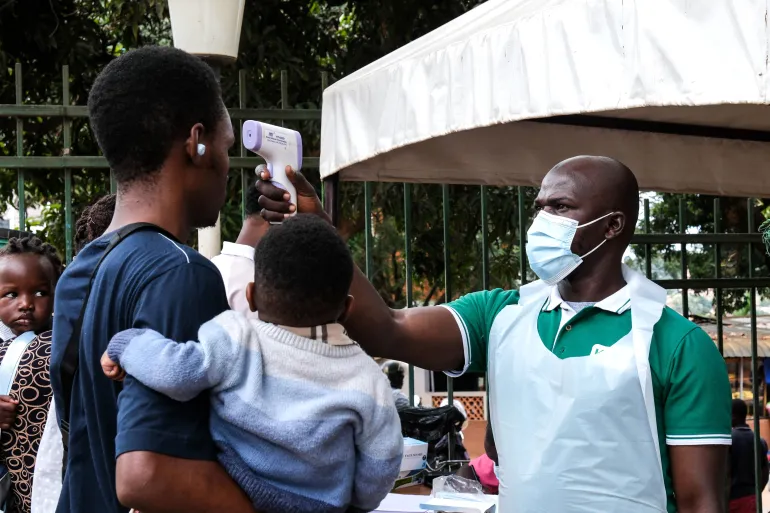
The World Health Organisation (WHO) has declared the ongoing outbreak of Ebola disease caused by the Bundibugyo virus in the Democratic Republic of the Congo (DRC) and Uganda a Public Health Emergency of International Concern (PHEIC) citing rapid spread, rising deaths, and high regional risk.
The declaration followed consultations with authorities in both affected countries and an assessment of the escalating situation in Ituri Province, where the outbreak was first detected.
As of 16th May, 2026, the DRC has recorded eight laboratory-confirmed cases, 246 suspected cases, and 80 suspected deaths across at least three health zones: Bunia, Rwampara, and Mongbwalu.
Uganda has confirmed two unrelated cases in Kampala, both detected within 24 hours among travelers from the DRC, while another confirmed case has been reported in Kinshasa, involving a returnee from Ituri.
WHO expressed concern over unusual clusters of community deaths, suspected cases in both Ituri and North Kivu, and the deaths of at least four healthcare workers, raising alarms about possible hospital-linked transmission and gaps in infection prevention and control.
The organisation warned that the outbreak is likely larger than currently detected, pointing to a high positivity rate, eight out of 13 initial samples tested positive and growing syndromic reports across affected areas.
WHO said ongoing insecurity, a humanitarian crisis, high population mobility, and a dense network of informal health facilities are further compounding the risk of spread.
Unlike the more common Zaire strain of Ebola, no approved vaccines or targeted treatments currently exist for the Bundibugyo variant, making the situation particularly dangerous.
WHO noted that international spread has already occurred, with the two Kampala cases and high risk to neighbouring countries due to cross-border movement and trade.
The organisation advised immediate activation of national emergency operations, enhanced surveillance, community engagement, strengthened infection prevention, rapid testing capacity, and the establishment of specialized treatment centers.
Health workers are to receive improved protective equipment, IPC training, and timely payment, including hazard allowances.
WHO also called for strict travel restrictions for confirmed cases and contacts, mandatory exit screening at airports and land borders, and suspension of mass gatherings until transmission is controlled.
Neighbouring countries have been urged to scale up preparedness, including active surveillance, laboratory readiness, rapid response teams, and stronger border health measures.
We’ve got the edge. Get real-time reports, breaking scoops, and exclusive angles delivered straight to your phone. Don’t settle for stale news. Join LEADERSHIP NEWS on WhatsApp for 24/7 updates →
Join Our WhatsApp Channel