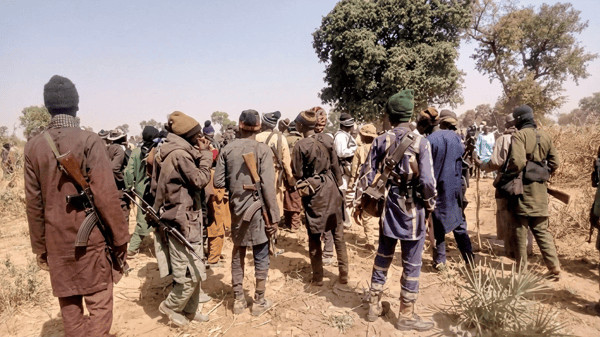
Something shifted last weekend in Oriire Local Government Area of Oyo State, and it was not merely another abduction. When armed men swept through Ahoro Esinele community and carted away 39 students and seven teachers from three schools in a single, coordinated raid, they were not just committing a crime.
They were issuing a declaration that no part of Nigeria is safe anymore, that the South-West’s relative insulation from the mass abduction epidemic that has ravaged the North is finished, and that the state has lost the most basic contest it must win: keeping children safe in classrooms.
Eleven years have passed since Boko Haram took 276 girls from their dormitory in Chibok, Borno State, and detonated a global crisis. In that time, this country has watched school abduction morph from an ideological weapon wielded by terrorists into a commercialised ransom industry run by armed bandits who have no ideology beyond profit.
The Chibok girls were taken for doctrine. The children seized in Kankara in 2020, in Jangebe in 2021, in Kuriga in 2024, in Papiri in 2025 ,303 students and 12 teachers from St. Mary’s School alone were taken for money. The machinery is now so established, so lucratively refined, that it has migrated south. This is not expansion; it is metastasis.
Between 1,600 and 1,700 schoolchildren have been abducted directly from Nigerian schools since 2014. Over 180 have been killed. Nearly 90 injured. At least 60 school staff kidnapped, 14 of them dead. These figures, compiled by Amnesty International, UNICEF, and Save the Children, represent a decade of policy failure so consistent and so deep that it can no longer honestly be attributed to circumstance. It is the product of decisions and non-decisions.
Governments that negotiated rather than dismantled criminal networks. Security establishments that responded after attacks rather than pre-empting them. A political class that condemned each incident with outrage and then did nothing durable before the next one.
President Bola Tinubu condemned the Oyo attack as barbaric. That word is correct. But it is a word Nigerian presidents and governors have deployed so many times over so many abductions that it has worn smooth. The President’s statement also contained something more substantive,a renewed push for state police.
This newspaper supports that position. The federal police structure has demonstrably failed to secure schools across the country’s vast and varied terrain. States need security architecture they can direct, fund, and hold accountable. The National Assembly should stop stalling on this.
But state police, even if legislated tomorrow, will not arrive in time for the 46 people currently in captivity in Oyo .What is more immediately troubling is Governor Seyi Makinde’s statement that his government was “ready to listen to the demands” of the abductors. The governor’s anguish is understandable. A teacher has already been killed, and the video evidence of that killing lands on a parent government with full force.
But willingness to negotiate with kidnappers, however compassionately motivated, is a policy with consequences that extend beyond the immediate hostages. Every ransom paid, every demand met, every negotiated release tells the next set of bandits planning the next raid that the model works. Oyo State’s schools will not become safer by settling this particular bill. The opposite is nearer the truth.
This is the dilemma at the heart of the school abduction crisis, and Nigerian governments have consistently chosen the path of least immediate resistance. Release the children, pay what must be paid, make a statement, conduct an investigation that produces no conviction, and wait for the next attack. The cycle does not end because the criminal incentives sustaining it are never actually destroyed.
There have been at least 17 to 20 recorded mass school abductions in Nigeria over the past decade meaning they occur roughly twice a year on average, and that figure excludes the hundreds of smaller, underreported incidents that never make the national news. Save the Children tracked at least 10 distinct school kidnappings affecting more than 670 children in one recent reporting period alone. The trend is not flattening.
The educational damage is catastrophic and it compounds with each attack. UNESCO and UNICEF estimate that roughly 19 to 20 million Nigerian children are currently out of school, with insecurity and fear of abduction among the major driving factors.
When parents in Oyo State , parents who previously sent their children to school without that particular dread in their stomachs now weigh whether a classroom is a place their child might be taken from, the national school enrolment numbers will shift. They always do after attacks.
Children withdrawn in fear do not always return. The pipeline to poverty, illiteracy, and eventually further insecurity gets longer with every abduction.
What must now change is the framework of response. First, military and intelligence operations must prioritise the destruction of kidnapping networks their logistics suppliers, informants, and financiers not merely the rescue of individual victims. Governor Makinde noted that six suspects have been arrested, including alleged informants and logistics suppliers. That is the right trail to follow, and it must lead to prosecution, conviction, and sentences that communicate genuine deterrence.
Second, schools in vulnerable areas must have security frameworks designed specifically around their vulnerability not police posts that arrive after gunmen have already left.
Third, this newspaper repeats its long-held position: those who kidnap and kill in the course of abduction must face murder charges, not the softer accommodations that have let perpetrators walk free or rehabilitated.
The children of Nigeria did not choose this country’s security failures. They deserve to sit in classrooms without calculating the odds of returning home safely. That is not an aspiration. It is the irreducible minimum obligation of any government that still deserves the name.
We’ve got the edge. Get real-time reports, breaking scoops, and exclusive angles delivered straight to your phone. Don’t settle for stale news. Join LEADERSHIP NEWS on WhatsApp for 24/7 updates →
Join Our WhatsApp Channel