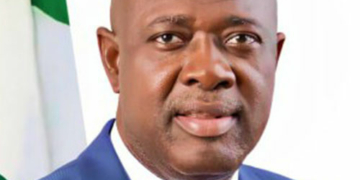
Central Bank of Nigeria (CBN) Governor Olayemi Cardoso has set ambitious targets for digital payments adoption, fraud reduction, and cash displacement as CBN launches Payment System Vision 2028.
Mr. Cardoso sets a target of 95 per cent financial inclusion by 2028, a goal that would bring an estimated 50 million additional Nigerians — including market women, farmers, and young people — into the formal financial system.
PSV 2028 is a new strategic framework designed to deepen financial inclusion, strengthen digital payments, reduce transaction frictions and position Nigeria as a leading hub for digital finance, trade and investment in Africa.
Cardoso said the vision represents a roadmap for the next phase of Nigeria’s payments transformation and is aimed at building a payment ecosystem that is secure, inclusive, resilient and globally competitive. “Today, we unveil more than a payments strategy. We unveil a vision for how Nigerians will transact, trade, save, invest and participate in an increasingly digital economy,” he said.
Speaking at the launch of the Nigeria Payment System Vision 2028 (PSV 2028), Cardoso said the vision goes beyond technology and transactions, describing it as a tool for poverty reduction, job creation, and income growth. “One of the fastest ways to take a large number of people out of poverty is through an efficient payment system,” he said, urging stakeholders not to treat the initiative lightly.
On payment speed, Cardoso said the CBN aims to ensure that every Nigerian — from Maiduguri to Brass — can send and receive money faster than they can blink by 2028.
On cash displacement, the governor expressed concern over the continued dominance of physical currency, saying he was dismayed that a number of traders still refuse digital payments. He set a target to reduce cash outside the banking system to below 40 per cent of money in circulation, backed by the deployment of 10 million QR codes and tap-to-phone terminals across markets, bus parks, and farm gates.
Cardoso also emphasised trust and security as non-negotiable pillars, pledging that the CBN will work to significantly reduce fraud in the payments ecosystem by 2028. He stressed that a payment system is only as strong as the trust people place in it.
The governor warned against the pitfall of well-designed but poorly executed plans, insisting that the success of PSV 2028 would be measured not by the quality of its documentation but by execution and impact on GDP. “The last thing we can do is launch a lovely document, have a great conversation, and come back in another year or two and discuss the same issues,” he said.
With the launch of PSV 2028, the CBN is seeking to strengthen Nigeria’s position as a regional leader in digital payments while creating a more efficient, secure and inclusive financial system capable of supporting the country’s long-term economic ambitions.
Earlier, the Deputy Governor in charge of Economic Policy, Dr. Muhammad Sani Abdullahi, said PSV 2028 was developed in response to the growing importance of efficient payment systems in an increasingly digital and interconnected global economy.
He described the framework as a strategic blueprint for strengthening payment infrastructure, fostering innovation, facilitating trade and improving economic competitiveness.
Abdullahi said the vision is anchored on five strategic priorities: the development of modern, interoperable and resilient payment infrastructure capable of supporting a digital economy at scale; financial inclusion, consumer protection and financial literacy to ensure broader participation in the formal financial system; promotion of innovation and emerging technologies.
The new framework is intended to address emerging challenges in the global payments environment, where increasing demand for speed, security, interoperability and seamless cross-border transactions is redefining the role of payment systems.
He stressed that efficient payment infrastructure is no longer merely a financial utility but a strategic national asset capable of reducing the cost of doing business, improving productivity, strengthening transparency and supporting economic participation.
Cardoso explained that PSV 2028 forms part of the broader reform agenda being implemented by the CBN since 2023 and is expected to support efforts to stabilise the economy, facilitate trade and remittance flows, deepen investor confidence and strengthen Nigeria’s external position over time.
He said the vision would also help Nigeria take advantage of opportunities created by expanding digital commerce and the African Continental Free Trade Area (AfCFTA).
He added that stronger payment infrastructure would contribute to job creation, income growth and poverty reduction by making commerce easier and more accessible.
According to him, one of the priorities is to position Nigeria as a leading hub for cross-border payments and regional financial integration by leveraging initiatives such as the Pan-African Payment and Settlement System (PAPSS) and the AfCFTA framework.
He said the project will reduce payment frictions and settlement costs and facilitate commerce, improve export competitiveness and strengthen regional economic integration, while also regulating risk management and cybersecurity to ensure that innovation and growth are supported by strong consumer confidence, financial stability and system security.
Deputy Governor Abdullahi said successful implementation of the framework would improve how money moves across the economy, strengthen the participation of micro, small and medium-sized enterprises in domestic and cross-border trade, encourage innovation and enhance Nigeria’s overall competitiveness.
Both officials emphasised that the success of the vision would not be measured solely by faster transactions but by its contribution to economic growth, productivity, investment, job creation and long-term national prosperity.
Cardoso called for collaboration among government agencies, financial institutions, fintech companies, technology providers, development partners and consumers to ensure successful implementation of the framework.
He expressed confidence that Nigeria possesses the scale, talent, entrepreneurial capacity and institutional foundations needed to build one of Africa’s most advanced payment ecosystems. “The countries that will thrive in this new era will be those that invest in trusted, resilient and forward-looking financial infrastructure,” he said.
We’ve got the edge. Get real-time reports, breaking scoops, and exclusive angles delivered straight to your phone. Don’t settle for stale news. Join LEADERSHIP NEWS on WhatsApp for 24/7 updates →
Join Our WhatsApp Channel